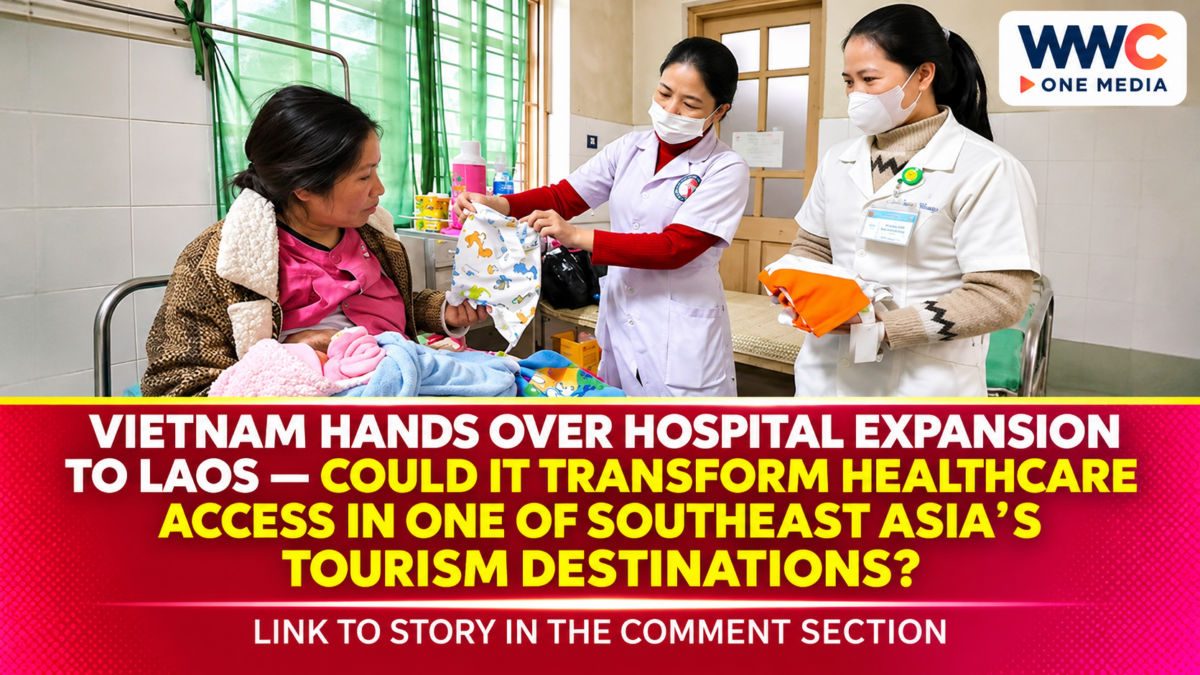
VIENTIANE, LAOS — Vietnam has handed over the Vang Vieng District Hospital expansion project to Laos, marking another milestone in bilateral cooperation and healthcare infrastructure development in Southeast Asia.
The inauguration and handover ceremony took place on Nov. 23, 2026, in Viengkeo village, Vang Vieng district, Vientiane province. Vietnamese Ambassador to Laos Nguyen Minh Tam participated in the event alongside Lao provincial representatives.
The Vietnam Laos hospital expansion project was presented as a gift from Vietnam to the Lao people, demonstrating how international development cooperation can contribute directly to community infrastructure.
However, the significance of the project extends beyond the opening of additional hospital facilities.
For Laos, the bigger challenge is ensuring that healthcare infrastructure investments translate into accessible, affordable and sustainable medical services.
Vietnam Laos hospital expansion strengthens regional cooperation
The handover represents a practical dimension of the relationship between Vietnam and Laos, placing healthcare infrastructure at the centre of bilateral development cooperation.
The ceremony was organised by the Vientiane Provincial Department of Health in coordination with the construction unit.
Vietnamese and Lao representatives also toured medical facilities and equipment during the inauguration.
For communities outside major metropolitan centres, investments in district hospitals can potentially improve access to medical services closer to home.
Additional healthcare infrastructure may also reduce the need for some patients to travel considerable distances for treatment, depending on the services and specialists available locally.
The economic implications extend beyond healthcare itself.
Access to dependable medical services can support household financial stability, workforce participation and confidence in local public institutions.
Nevertheless, the handover of a hospital expansion does not automatically establish that every new service is fully operational or accessible to every patient.
Those outcomes depend on staffing, funding, equipment availability and effective administration.
Why Laos needs sustainable healthcare infrastructure
The hospital expansion comes as Laos implements its 10th Five-Year Health Sector Development Plan, covering 2026–2030.
The country’s Ministry of Health convened its 18th Health Sector Working Group Policy-Level Meeting in Vientiane in October 2026 to examine healthcare priorities and the transition towards greater financial self-reliance.
The discussions identified sustainable healthcare financing, service quality and workforce development as important national priorities.
As international development assistance declines, Laos faces the challenge of maintaining essential services while increasing its capacity to finance healthcare through domestic resources.
For district hospitals, this means infrastructure investment must be supported by dependable operating budgets.
Medical equipment requires maintenance, healthcare professionals require appropriate training, and hospitals need reliable access to medicines and essential supplies.
The consequences of insufficient healthcare capacity are explored in WWC ONE MEDIA’s coverage of hospital overcrowding and infrastructure expansion in Oriental Mindoro.
Although healthcare systems differ between countries, the underlying management challenge remains relevant: constructing additional facilities is only one component of delivering dependable medical services.
Healthcare investment could support local economic development
District hospitals are not simply medical institutions. They can also contribute to the economic and social infrastructure of the communities they serve.
When appropriate healthcare is available locally, patients may be able to reduce transportation expenses and avoid unnecessary disruption to employment or family responsibilities.
Reliable medical facilities may also improve confidence among businesses and visitors evaluating regional destinations.
However, these benefits should be assessed through actual service utilisation, patient outcomes and healthcare accessibility rather than assumed from construction expenditure alone.
The relationship between healthcare investment and regional economic development is examined in WWC ONE MEDIA’s coverage of AC Health’s proposed medical campus and international healthcare partnerships.
Unlike a privately financed commercial hospital, the Vietnam-backed expansion in Laos represents international development assistance.
Its success should therefore be evaluated primarily through its contribution to public welfare and healthcare delivery rather than commercial profitability.
Healthcare professionals remain central to the project’s success
Laos has identified healthcare workforce development as an important element of its national health strategy.
Its October 2026 health sector discussions highlighted professional training, recruitment, workforce retention and quality standards, particularly in rural and remote communities.
These priorities are directly relevant to the effective use of expanded hospital infrastructure.
A hospital can possess modern equipment and additional treatment areas, but its ability to provide medical services ultimately depends on the availability of appropriately qualified healthcare professionals.
International cooperation can potentially help through professional exchanges, technical assistance and training programmes.
The importance of cross-border healthcare workforce development also features in Japan’s expanding healthcare cooperation with the Philippines.
For Laos, future international healthcare partnerships could provide opportunities to strengthen clinical expertise and institutional management.
However, such cooperation should be supported by specific programmes, appropriate funding and measurable improvements in healthcare delivery.
Digital healthcare could become another area of opportunity
Laos is also examining how digital technology can improve healthcare accessibility and operational efficiency.
Its national health sector discussions have identified reliable information systems, data quality, workforce readiness and responsible artificial intelligence adoption as important considerations.
Digital healthcare tools could potentially help medical professionals coordinate patient information, manage referrals and communicate with other healthcare institutions.
For district hospitals, these capabilities may become particularly valuable when patients require specialist consultations or treatment unavailable locally.
However, implementing digital healthcare requires appropriate infrastructure, cybersecurity safeguards, privacy protections and professional training.
No specific artificial intelligence or telemedicine deployment has been independently established for the Vang Vieng hospital expansion.
Any such initiative should be treated as a potential future development rather than an existing project feature.
What happens next for Vang Vieng District Hospital?
Following the inauguration, attention should shift towards the hospital’s operational performance.
The most meaningful indicators will include staffing levels, available medical services, patient volumes, equipment reliability and the affordability of treatment.
Healthcare infrastructure also plays a role in supporting confidence among international visitors, although providing medical assistance to travellers is different from developing a commercial medical tourism industry.
This distinction is explored in WWC ONE MEDIA’s analysis of healthcare infrastructure and the wider medical tourism economy.
For Vietnam and Laos, the hospital expansion provides an opportunity to demonstrate how international cooperation can create practical benefits for local communities.
For Lao healthcare administrators, the priority is ensuring that the infrastructure remains adequately funded, properly maintained and accessible to patients.
The ultimate measure of Vietnam’s hospital gift will not be the inauguration ceremony itself.
It will be whether the expanded facility continues delivering meaningful healthcare improvements in the years ahead.
Frequently Asked Questions
What hospital project did Vietnam hand over to Laos?
Vietnam handed over the Vang Vieng District Hospital expansion project in Vientiane province, Laos.
When was the hospital expansion inaugurated?
The inauguration and handover ceremony took place on Nov. 23, 2026.
Where is Vang Vieng District Hospital located?
The hospital expansion project is located in Viengkeo village, Vang Vieng district, Vientiane province, Laos.
Why is Vietnam supporting hospital infrastructure in Laos?
The project represents bilateral development cooperation and was presented as a gift from Vietnam to the Lao people.
What is Laos’ current healthcare development strategy?
Laos is implementing its 10th Five-Year Health Sector Development Plan for 2026–2030, with priorities involving healthcare financing, service quality, workforce development and responsible digital transformation.