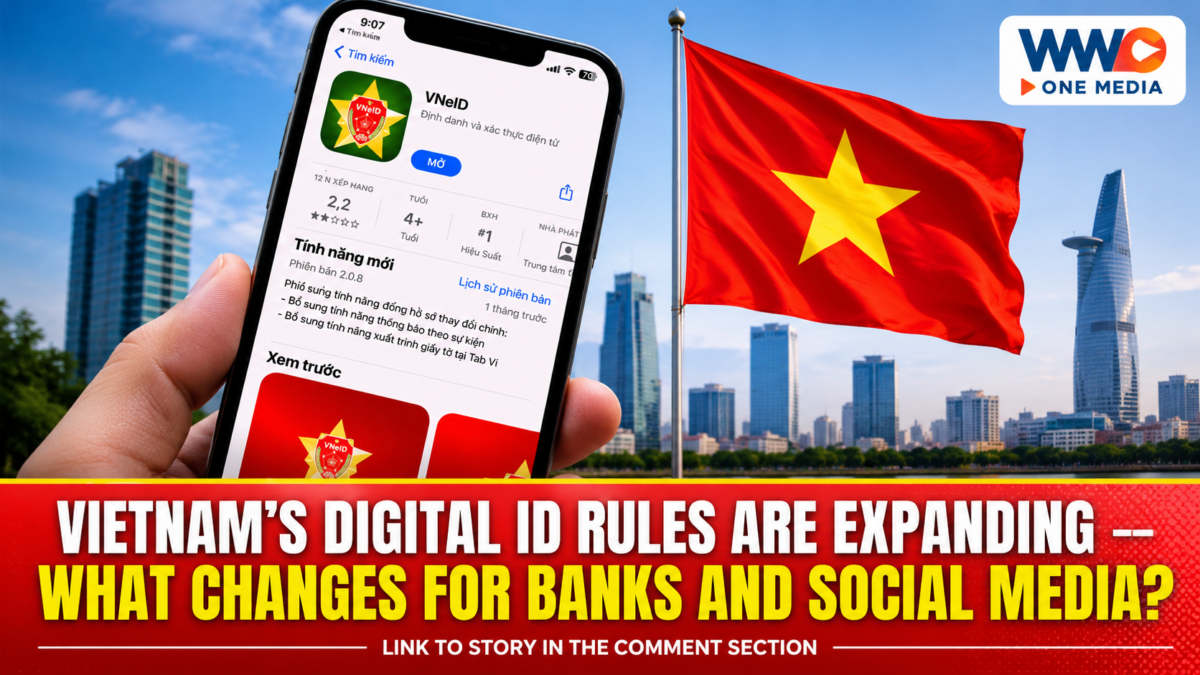
HANOI — Vietnam’s National Assembly passed a new Law on Electronic Identification and Authentication on November 20, 2026, establishing a legal framework that will require electronic transaction accounts in specified sectors to be linked to verified digital identities from July 1, 2027. The measure comes as a separate government decree is already setting deadlines for existing accounts on social media, banking, e-commerce and other digital platforms.
The two measures form part of Vietnam’s wider effort to connect online activity with verified identities. For businesses and users, however, the practical issue is not simply whether digital identification will become mandatory. It is which accounts are covered, when they must comply and how personal information will be handled.
The distinction is important because some account-linking obligations are already approaching, while the new law will take effect next year. Treating the measures as one blanket deadline could leave users and businesses confused about what they must do now.
Vietnam digital ID rules have two separate timelines
The first major deadline comes from Government Decree No. 320/2026/ND-CP, which amended the country’s electronic identification and authentication rules. The decree was issued on August 13 and took effect on September 28, 2026.
It requires electronic transaction accounts on digital platforms serving specified sectors to be linked and authenticated with electronic identification accounts. The listed fields include education, digital literacy, securities, telecommunications, banking, e-commerce, electronic invoicing, transport, tourism, pharmaceuticals, medical examination and treatment, and social networks operating in Vietnam.
For accounts created before the decree took effect, the transition deadline is December 31, 2026, for the covered sectors other than banking. Existing banking-sector accounts have a later deadline: June 30, 2027.
The decree also sets December 31, 2026, as the deadline for national digital platforms to integrate electronic identification accounts for authentication, login and transactions.
These are not merely proposed dates. They are transition requirements written into a government decree that is already in force.
The new law adds a wider legal framework
The National Assembly passed the Law on Electronic Identification and Authentication on November 20. The official parliamentary announcement states that the law contains seven chapters and 45 articles and will take effect on July 1, 2027.
The Government’s explanation identifies banking, securities, telecommunications, e-commerce and social media accounts among the areas where electronic identities must be verified. It describes the requirement as applying to transaction accounts in high-risk sectors and says verification may be performed directly or through an electronic authentication service provider, depending on the risk level of the transaction.
The government has framed the policy as a way to reduce the use of false identities and impersonation in online fraud and other unlawful activity.
For users, this means the digital identity system is becoming more closely connected to access and transactions across important online services. For platforms, it means identity verification is increasingly a compliance issue rather than an optional account feature.
The full implementation details of the new law will matter. The government has indicated that further guidance will govern how electronic identities are verified and linked, so the July 2027 commencement date should not be mistaken for a complete explanation of every technical procedure.
What the rules mean for social media and online sellers
Social media is among the sectors explicitly covered by the decree and the new law’s government summary. The decree also identifies e-commerce accounts used by sellers, livestream sellers and affiliate marketers under applicable e-commerce rules.
That distinction matters because a digital platform may host several kinds of activity. A person who simply views content does not necessarily use an account in the same way as someone operating a seller account or conducting transactions. The legal text focuses on electronic transaction accounts serving activities in covered sectors.
Businesses using social media and online marketplaces should therefore examine which accounts they operate and whether those accounts are used for covered transactions. They should not assume that every profile, login or casual browsing account has an identical compliance obligation.
The commercial impact could extend beyond identity checks. Platforms may need to review account-registration processes, authentication systems, customer support procedures and the way they handle identity information. These are practical implementation considerations, not a claim that every company has already announced a particular system change.
WWC has previously examined the importance of verified identities in digital financial access, including the role of the Philippine National ID in helping users open verified GCash accounts through community-based registration activities.
Privacy safeguards will be central to implementation
The government’s explanation of the new law includes safeguards for personal information. It says the collection and use of information for verification must be based on user consent unless otherwise provided by law. Information collected for verification may be retained only for as long as necessary for that purpose.
There is also a specific retention requirement for verification results: they must be stored for at least five years so they can be inspected and cross-checked when disputes arise or signs of violations are detected.
That requirement creates an important distinction between the information used to establish identity and the verification result that must be retained. The government’s published explanation does not, by itself, answer every question about what data each platform will collect, how it will secure that information or which parties will be permitted to access it.
Those details will be important to public confidence. A system intended to reduce impersonation and fraud must also protect the identity information it brings together. Poor security or unclear data-handling practices could create a different set of risks for the same users the policy is meant to protect.
The issue is familiar to countries building digital public infrastructure. WWC’s coverage of reported data breaches involving Philippine government agencies illustrates why data protection and incident response remain important alongside the expansion of digital services.
Why Vietnam’s approach matters to the digital economy
The policy reaches several parts of the digital economy at once: financial services, online commerce, telecommunications and social networking. These sectors depend on users being able to establish identity and access services through digital channels.
For businesses, verified identities may help strengthen account accountability and reduce some opportunities for impersonation. But the benefits will depend on how accurately the system works, how accessible verification is and whether implementation creates unnecessary friction for legitimate users.
There is also a practical challenge for platforms serving different types of customers. A large financial institution, a social media company and a small online seller do not have identical systems or compliance resources. Clear technical guidance and workable transition arrangements will therefore be important.
Vietnam’s policy also sits within a regional conversation about digital trade and trust. The ASEAN Digital Economy Framework Agreement, recently signed in Manila, includes digital identity among the areas of regional cooperation. As discussed in WWC’s report on what must follow the ASEAN digital pact’s signing, regional digital integration will depend on how governments translate broad commitments into workable rules and systems.
What happens next
The immediate milestone is December 31, 2026. By that date, covered existing electronic transaction accounts outside banking must be linked and authenticated under Decree No. 320/2026/ND-CP. National digital platforms also face a December 31 integration deadline.
Existing banking-sector accounts covered by the decree have until June 30, 2027. The new Law on Electronic Identification and Authentication takes effect on July 1, 2027.
Users and businesses should watch for implementation guidance explaining the verification process, the platforms and accounts covered, and the practical steps required to complete linking. The key question is how the rules will be applied in everyday transactions while preserving the privacy protections described by the government.
Frequently asked questions
1. When does Vietnam’s new digital identity law take effect?
The Law on Electronic Identification and Authentication takes effect on July 1, 2027.
2. Which online sectors are covered by Vietnam’s digital identity requirements?
The government identifies banking, securities, telecommunications, e-commerce and social media in its explanation of the new law. Decree No. 320/2026/ND-CP lists additional sectors, including education, transport, tourism and healthcare.
3. When must existing social media and e-commerce accounts be linked to VNeID?
Existing covered accounts outside banking must meet the decree’s December 31, 2026 deadline.
4. Do existing bank accounts have the same deadline?
No. Existing covered banking-sector accounts have until June 30, 2027, under Decree No. 320/2026/ND-CP.
5. How long must verification results be retained?
The government’s explanation of the new law says verification results must be stored for at least five years.