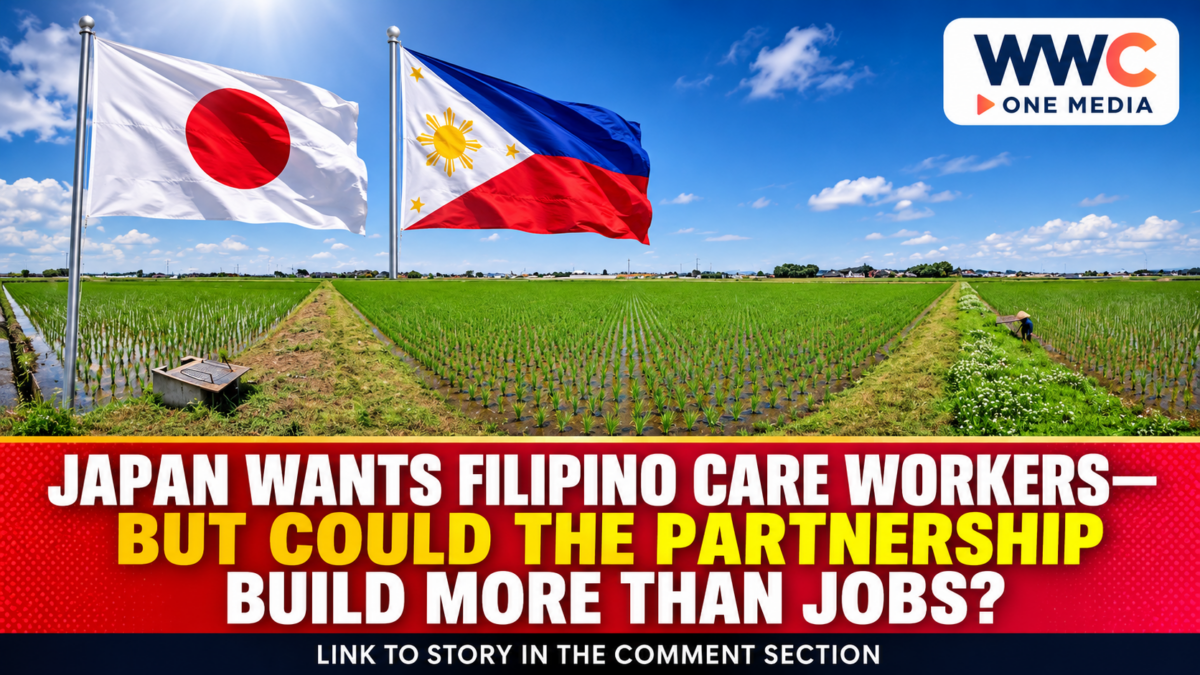
Japan and the Philippines are expanding cooperation in healthcare, with elderly care, universal health coverage and disaster health management among the areas identified for joint work. The latest high-level healthcare meeting between the two governments took place on August 19, 2026, under a bilateral framework established through a memorandum of cooperation signed in February 2019.
The partnership matters as Japan prepares for a growing demand for care services and continues to welcome Filipino healthcare workers through an established government-to-government programme. But the larger question is whether cooperation can create benefits beyond overseas employment, including stronger skills, technology and healthcare capacity in the Philippines. cas.go.jp+1
For Filipino nurses and careworkers, Japan remains a destination with formal recruitment channels. For the Philippines, the opportunity is to ensure that international cooperation also strengthens the country’s own healthcare system.
Japan care partnership moves beyond worker recruitment
The fourth Joint Committee Meeting on Healthcare between Japan and the Philippines was held on August 19, 2026. The Japanese Cabinet Secretariat said the discussions covered three areas: elderly care, universal health coverage and disaster health management.
The meeting operates under the Asia Health and Wellbeing Initiative, or AHWIN, which Japan established to promote healthier ageing societies in partner countries. The initiative seeks to support cooperation through healthcare products and services provided by Japanese private-sector businesses, alongside collaboration with partner countries. cas.go.jp
The bilateral framework began with a memorandum of cooperation signed by Japan and the Philippine Department of Health in February 2019. The two governments subsequently established the Joint Committee Meeting as a forum for high-level discussions on healthcare cooperation.
This structure matters because it gives both governments a formal channel to discuss shared priorities rather than treating every healthcare issue as a separate recruitment or commercial arrangement.
The latest meeting confirmed progress in the three cooperation areas and discussed ways to deepen the relationship. The public summary does not, however, provide a complete list of newly approved projects, funding commitments or implementation targets.
Japan’s care workforce needs are expected to rise
Japan’s ageing population is creating long-term pressure on its healthcare and social care services. Its Ministry of Health, Labour and Welfare estimates that the country will need approximately 2.4 million care workers in fiscal 2026 and 2.72 million by fiscal 2040.
The projections are based on expected care-service demand under Japan’s ninth long-term care insurance planning period. They indicate the scale of workforce planning required, not a count of unfilled jobs or a promise that all positions will be open to foreign applicants. mhlw.go.jp
The ministry lists several measures to address the need. These include improving working conditions and compensation, supporting career development and training, using information and communications technology to improve productivity, making care work more attractive and preparing better conditions for foreign care workers.
Japan’s demographic situation has already been covered in WWC’s report on the country’s record elderly population and changing workforce. The workforce projections add another dimension: the challenge is not only that more people are ageing, but that the care system must have enough trained personnel to support them.
Filipino nurses and careworkers already have a formal route
The Philippines and Japan have an established recruitment channel under the Japan-Philippines Economic Partnership Agreement, commonly known as JPEPA.
In June 2026, the Embassy of Japan in the Philippines reported that the 18th batch of Filipino nurse and certified careworker candidates consisted of 211 people: 17 nurses and 194 careworkers. The group was scheduled to leave for Japan that month after completing six months of preparatory Japanese-language training in the Philippines. Embassy of Japan in the Philippines
The candidates were also scheduled to undergo another six months of Japanese-language training after arriving in Japan before beginning assignments at hospitals and caregiving facilities. The training was provided without charge and included daily living allowances.
The embassy said the programme began deploying candidates in 2009 and had involved more than 4,000 Filipino nurse and certified careworker candidates by June 2026. Embassy of Japan in the Philippines
A separate recruitment announcement in April 2026 listed 50 nurse and 300 careworker positions for the forthcoming batch. It also described the six-month training arrangements in both countries and the expected three-to-four-year work period at Japanese healthcare facilities. Embassy of Japan in the Philippines
The programme is not an automatic route to permanent employment. Candidates are encouraged to obtain the relevant Japanese professional licences, which can provide opportunities for longer-term work. The licensing process and language requirements remain important parts of the pathway.
Why the distinction between recruitment and cooperation matters
Japan’s health ministry describes the nurse and careworker candidate programme under the Economic Partnership Agreements with Indonesia, the Philippines and Vietnam as a mechanism to strengthen economic ties. Its official explanation says the programme was negotiated following requests from partner countries and was not established as a direct response to Japan’s labour shortage. mhlw.go.jp
That distinction is important when assessing the broader relationship. The JPEPA programme provides a structured opportunity for Filipino candidates to gain overseas experience, while the separate healthcare cooperation framework covers areas such as elderly care, universal health coverage and disaster health management.
For the Philippines, the potential value of cooperation should not be measured only by the number of workers who leave for Japan. It could also include stronger training systems, exchange of technical knowledge, improved care practices and access to relevant healthcare technology.
Those are possible areas for cooperation, not proof that every benefit has already been delivered. The publicly available summary of the August meeting confirms the areas of discussion but does not establish the scale of technology transfers, new investments or specific training projects.
This distinction is especially relevant as Japan and other economies compete for skilled foreign workers. WWC’s coverage of Japan’s changing demand for foreign professionals provides wider labour-market context, although that report concerns a broader group of professionals rather than the JPEPA careworker programme.
What Filipino workers and policymakers should watch
For Filipino applicants, the formal JPEPA route offers a government-to-government recruitment channel with language preparation before deployment. The details of each recruitment batch matter, including the number of positions, eligibility requirements, training arrangements and the professional qualifications needed in Japan.
For policymakers, the bigger issue is how to make overseas opportunities complement local healthcare priorities. International employment can offer individual workers valuable experience, but the Philippines also needs enough trained personnel to serve communities at home.
Worker protection should remain part of that discussion. Recruitment transparency, clear employment terms and access to assistance are important safeguards for Filipinos accepting jobs overseas. WWC’s report on the Philippines’ role in the new ASEAN migrant workers pact examines the regional push for fairer and more sustainable recruitment.
The strongest version of the Japan-Philippines partnership would therefore connect mobility with long-term capacity: workers should have clear and fair opportunities abroad, while both countries continue building healthcare systems that can meet the needs of ageing populations.
What happens next
The two governments have confirmed that healthcare cooperation will continue through the Joint Committee Meeting established under their 2019 memorandum. The August 2026 meeting identified elderly care, universal health coverage and disaster health management as continuing areas for collaboration.
The next measure of progress will be the details of specific programmes: what projects are implemented, how training is shared, whether healthcare technology cooperation expands and how both sides assess results.
For Filipino workers, future JPEPA recruitment announcements will remain the immediate source of information about available positions and application requirements. For the wider public, the more important question is whether the partnership can produce benefits for both countries—not only through the movement of workers, but also through stronger healthcare capacity.
Frequently asked questions
Can Filipino nurses and careworkers apply to work in Japan?
Yes. The Japan-Philippines Economic Partnership Agreement has a government-to-government programme for Filipino nurse and certified careworker candidates. Recruitment details and available positions vary by batch.
How many Filipino candidates were in Japan’s 18th JPEPA batch?
The 18th batch consisted of 211 candidates: 17 nurses and 194 careworkers, according to the June 2026 announcement by the Embassy of Japan in the Philippines.
Do JPEPA candidates receive Japanese-language training?
Yes. The 18th batch completed six months of preparatory Japanese-language training in the Philippines and was scheduled to undergo another six months of training after arriving in Japan.
What are Japan and the Philippines discussing in healthcare?
Their latest Joint Committee Meeting covered elderly care, universal health coverage and disaster health management under the Asia Health and Wellbeing Initiative.
How many care workers will Japan need by 2040?
Japan’s Ministry of Health, Labour and Welfare estimates that approximately 2.72 million care workers will be needed by fiscal 2040. This is a workforce projection, not a count of vacant positions.