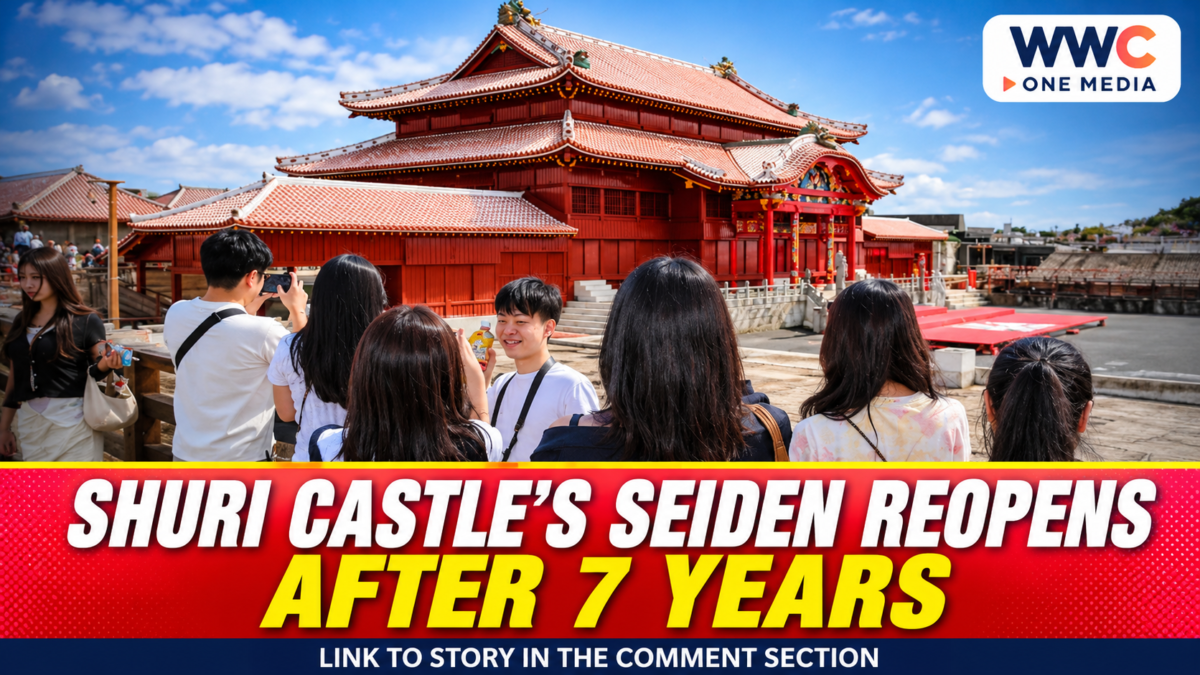
The Seiden’s public opening began at noon on November 23. Shurijo Castle Park introduced timed reservations for visitors who want to enter the main hall’s interior. The system assigns visitors a designated date and time, with entry slots arranged at 30-minute intervals. The park says the restrictions are intended to support safe viewing, reduce crowd concentration and protect the cultural property. 首里城 ‐ 琉球王国の栄華を物語る 世界遺産 首里城+1
The distinction between entering the main hall and visiting the wider park is important. Visitors without an interior reservation can still purchase admission to the paid area and view the Seiden’s exterior and the elevated observation deck. The interior reservation is therefore not a requirement for every visitor entering the broader castle grounds. 首里城 ‐ 琉球王国の栄華を物語る 世界遺産 首里城+1
The demand was already visible on opening day. The park’s November 21 visitor notice said reservations for the Seiden interior on November 23 had reached capacity. It also warned that visitors without bookings would not be admitted inside, although the paid area and exterior viewing remained available. 首里城 ‐ 琉球王国の栄華を物語る 世界遺産 首里城
For travellers, the practical lesson is to distinguish between a general castle visit and an interior viewing. Arriving at the park does not guarantee access to the Seiden itself.
New Admission Fees Reflect the Cost of Operating the Restored Site
The reopening also brought revised admission prices for the park’s paid area. From November 23, individual admission costs ¥1,000 for adults, ¥760 for high school students and ¥370 for elementary and junior high school students. Children under six enter free. Separate rates apply to groups of 20 or more, while eligible Okinawa residents aged 70 and above and visitors with qualifying disability certificates receive free admission. 首里城 ‐ 琉球王国の栄華を物語る 世界遺産 首里城
The park said the fee revision takes account of stronger disaster-prevention and fire-protection measures, as well as rising operating costs. The revised charge is for entry to the paid area; the timed reservation system governs access to the Seiden interior. 首里城 ‐ 琉球王国の栄華を物語る 世界遺産 首里城
This distinction matters for visitors planning a trip. The reservation is not a separate premium ticket for the interior, but a required time slot linked to the applicable admission arrangements. Annual-pass holders also need a separate timed reservation for the interior, although the park says there is no additional charge for making that reservation. 首里城 ‐ 琉球王国の栄華を物語る 世界遺産 首里城
The new system reflects a wider management issue for heritage attractions: visitor access must be balanced against the physical limits of historic buildings. In this case, the park has made crowd control part of the reopening plan rather than relying only on admission capacity across the wider grounds.
The 2019 Fire Changed the Restoration Mission
The reconstruction follows the fire that broke out at Shuri Castle on October 31, 2019. The park’s restoration record says eight structures were destroyed, including the Seiden. oki-park.jp+1
The main hall’s reconstruction began in November 2022 under the government-approved restoration schedule. The work did not simply aim to reproduce the building’s previous appearance. The park says the latest restoration incorporates findings from research conducted after the earlier reconstruction, including changes to roof-tile patterns, wood and stone carvings, and lacquer finishes. 首里城 ‐ 琉球王国の栄華を物語る 世界遺産 首里城+1
The restoration timeline also records the completion of lacquer work inside the main hall and its two corridors on September 17, 2026. Earlier milestones included the installation of the large dragon pillars in July and the completion of the elevated viewing deck in May. 首里城 ‐ 琉球王国の栄華を物語る 世界遺産 首里城
These details show how reconstruction depends on specialist craft as much as structural engineering. The appearance of a historic building is shaped by its materials, decorative work and construction techniques. Recreating those elements requires time and expertise that cannot be measured simply by the date a building reopens.
Shuri Castle’s Importance Goes Beyond Tourism
Shuri Castle was the political and ceremonial centre of the Ryukyu Kingdom, whose history and external relations helped shape Okinawa’s distinctive cultural identity. The park describes the castle as a place influenced by exchanges with China, Japan and other neighbouring societies, while retaining architectural features unique to the Ryukyuan tradition. oki-park.jp
That history gives the Seiden a significance beyond its role as a visitor attraction. Its architecture reflects the kingdom’s diplomatic and cultural connections, and its restoration gives visitors a way to understand a period of Okinawan history that is not always visible in itineraries centred on Tokyo, Osaka or Kyoto.
The regional connections remain relevant today. WWC has previously reported on cultural ties between Okinawa and Taiwan, including the participation of an Okinawan association in a Taipei Confucius Temple ceremony. For Filipino travellers, the wider appeal of Japan is also reflected in the growing interest in Japan, Vietnam and Taiwan for year-end holidays.
The castle’s reopening adds another cultural destination to Japan’s tourism landscape. It also arrives as the country continues to record strong overseas visitor numbers; WWC’s report on Japan’s October visitor-arrival record provides a broader picture of the tourism environment in which Okinawa is welcoming visitors.
The Main Hall Is Open, but the Wider Restoration Continues
The completion of the Seiden does not mean every damaged building has been restored. Shurijo Castle Park’s earlier planning notice said that the Hokuden north hall, Nanden south hall and other facilities would be reconstructed in stages after the main hall. 首里城 ‐ 琉球王国の栄華を物語る 世界遺産 首里城
That makes the reopening both an achievement and a transition. The site is moving from a reconstruction-focused period into a new phase of public use, maintenance and ongoing restoration.
The park’s operating rules also show that heritage protection will remain part of the visitor experience. Timed entry, revised fees and restrictions on the number of people entering the main hall are not incidental details. They are part of how the restored building is being managed.
What Happens Next
The next stage will be measured by how the park maintains the Seiden while continuing work on the wider complex. Visitors should check the official reservation system before travelling, especially if entering the main hall is central to their itinerary. The park’s public notices also recommend checking transport information and allowing extra time during busy periods.
For international visitors, including travellers from the Philippines, Shuri Castle offers an opportunity to explore Okinawa’s history beyond the usual metropolitan destinations. But a successful visit will require planning: a general admission ticket and an interior reservation are not the same thing.
The Seiden has reopened. The larger task is to ensure that the restored hall remains protected and that the rest of Shuri Castle’s historic environment continues to recover.
Frequently Asked Questions
1. When did Shuri Castle’s Seiden reopen?
The restored main hall opened to the public at noon on November 23, 2026.
2. Do visitors need reservations to enter the Seiden?
Yes. Visitors need an advance reservation for a designated date and time to enter the main hall’s interior. The park uses 30-minute time slots.
3. Can visitors see Shuri Castle without an interior reservation?
Yes. Visitors can still enter the paid area and view the Seiden’s exterior and elevated observation deck, subject to the park’s admission rules.
4. How much is admission to Shuri Castle?
From November 23, 2026, individual admission is ¥1,000 for adults, ¥760 for high school students and ¥370 for elementary and junior high school students. Children under six enter free.
5. Is the entire Shuri Castle complex restored?
No. The Seiden’s reconstruction is complete, but other buildings, including the north and south halls, are scheduled for restoration in later stages.