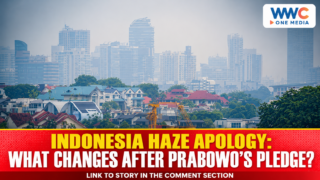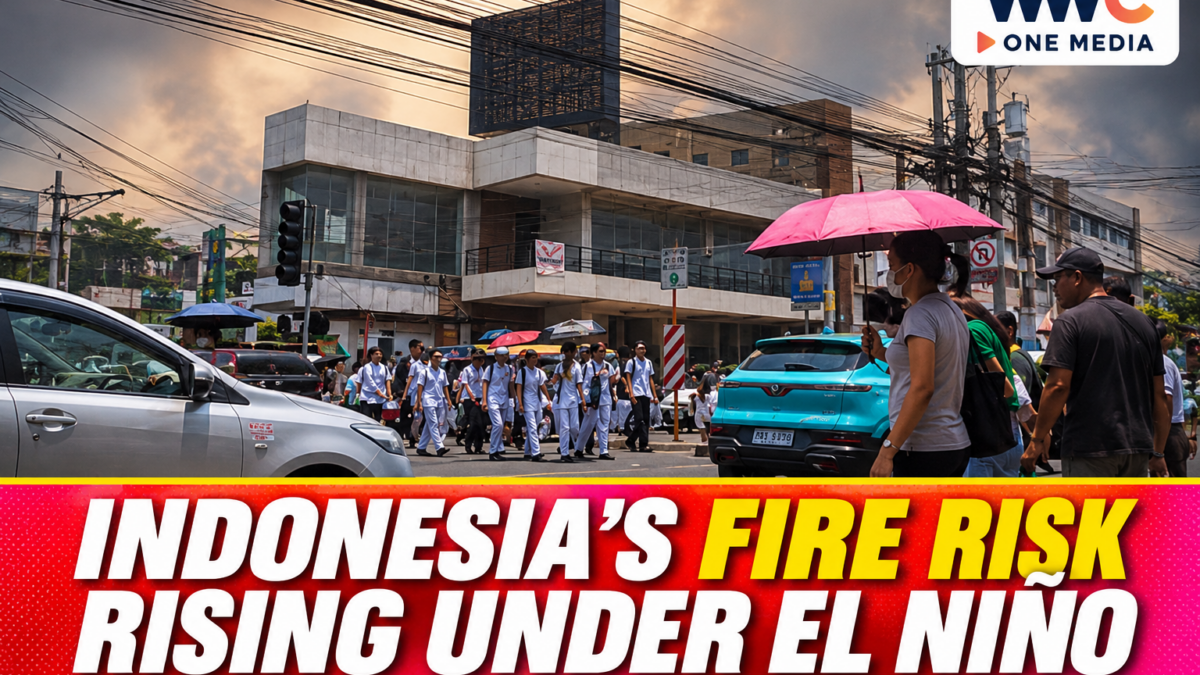
The threat of forest and land fires in Indonesia is drawing renewed attention as a very strong El Niño continues across the tropical Pacific, with regional weather agencies documenting dry conditions and elevated fire indicators in parts of the country.
For Mindanao, the concern is not simply whether fires are burning across the sea. It is whether prolonged dryness could support new fires and whether changing wind patterns could eventually carry smoke towards the Philippines.
Indonesia’s dry conditions are raising fire concerns
Indonesia’s Meteorology, Climatology and Geophysics Agency, known as BMKG, reported on Nov. 6 that satellite monitoring had detected high-confidence hotspots in several parts of the country.
The largest concentrations in its reported monitoring period were in South Papua, with 615 hotspots, followed by Central Kalimantan with 255 and East Kalimantan with 223. These are satellite-detected indicators, not a count of confirmed fires or a measurement of burned land. BMKG
The agency also recorded 543 observation points with very long to extremely long periods without rain. It warned that dry conditions could increase the risk of forest and land fires, particularly in areas with limited rainfall.
The warning is relevant to Indonesia’s peatlands. Fires in these landscapes can burn below the surface, making them difficult to detect and extinguish. BMKG specifically advised the public against uncontrolled burning and land clearing in peat areas, scrubland and forests. BMKG
El Niño is affecting more than one country
The climate pattern is not confined to Indonesia. A regional climate bulletin issued by the World Meteorological Organization’s Regional Climate Centre for Southeast Asia, with DOST-PAGASA serving as its climate monitoring node, identified rainfall deficits across most parts of Indonesia, Borneo and the Philippines in September 2026.
The bulletin linked the regional rainfall pattern to the ongoing El Niño and atmospheric conditions that can suppress rainfall over parts of Southeast Asia. seacm.pagasa.dost.gov.ph
PAGASA’s Nov. 4 advisory separately confirmed a very strong El Niño in the tropical Pacific, expected to persist until the first half of 2027 and potentially peak by the end of 2026.
The Philippine weather agency said five provinces experienced meteorological drought in October, 11 were under dry spell and 10 experienced dry conditions. It forecast below-normal to way-below-normal rainfall over most of the country in November. PAGASA Public Files
These figures describe rainfall and drought conditions, not the extent of fire damage. But they demonstrate why environmental agencies across the region need to monitor both drought and fire indicators.
Why smoke can become a regional problem
Forest and peatland fires can produce fine particles that travel beyond the areas where the fires begin. Whether smoke reaches another country depends on wind direction, wind speed, atmospheric conditions, the location and intensity of fires, and how long emissions continue.
This makes transboundary haze difficult to predict from hotspot numbers alone.
A hotspot detected in Indonesia does not automatically mean that smoke will reach Mindanao. Likewise, a favourable wind pattern on one day does not guarantee that conditions will remain unchanged.
The Philippines has previously experienced air-quality problems associated with smoke from Indonesian fires. In September, WWC reported on very unhealthy air-quality readings in Metro Cebu during an Indonesian haze episode.
That earlier episode is a reminder that regional smoke movement can affect communities far from the original fire locations. It does not establish that Davao is currently experiencing the same conditions.
What Davao residents should watch
For Davao Region, the important indicators are local particulate-matter readings, official air-quality classifications and updates on wind conditions.
PM2.5 refers to fine particles small enough to penetrate deep into the respiratory system. PM10 covers a wider range of airborne particles. Both are monitored because smoke and other pollution sources can affect air quality.
Residents should rely on official Environmental Management Bureau monitoring updates rather than assume that conditions in one city represent the entire region.
The agency’s monitoring network and local government advisories are particularly important when smoke movement is possible. If air-quality levels deteriorate, residents should follow the precautions issued by local authorities.
The region also needs to consider the wider effects of El Niño. Prolonged dry conditions can place pressure on water supplies, agriculture and other essential services even when there is no transboundary haze.
WWC has previously examined Davao communities preparing for possible dry spells and water shortages that have already prompted emergency distribution in Manay. These developments show why climate preparedness must cover more than one type of hazard.
What happens next
Indonesia’s fire risk will depend on how rainfall develops, whether dry conditions persist in vulnerable landscapes and how effectively authorities prevent and contain fires.
BMKG’s Nov. 14 climate assessment continued to classify the El Niño event as very strong, with a Niño 3.4 sea-surface temperature anomaly of +3.4°C for the first 10 days of November. BMKG
For the Philippines, the priority is to keep monitoring air quality and regional weather conditions rather than assume that smoke will or will not cross the sea.
The available climate records establish a serious regional dryness and fire-risk concern. They do not, by themselves, establish that Indonesian smoke is currently moving towards Davao or that the region’s air quality has deteriorated.
The bigger test is whether Indonesia can prevent new fires while Philippine authorities remain ready to respond if changing winds bring smoke back across the region.