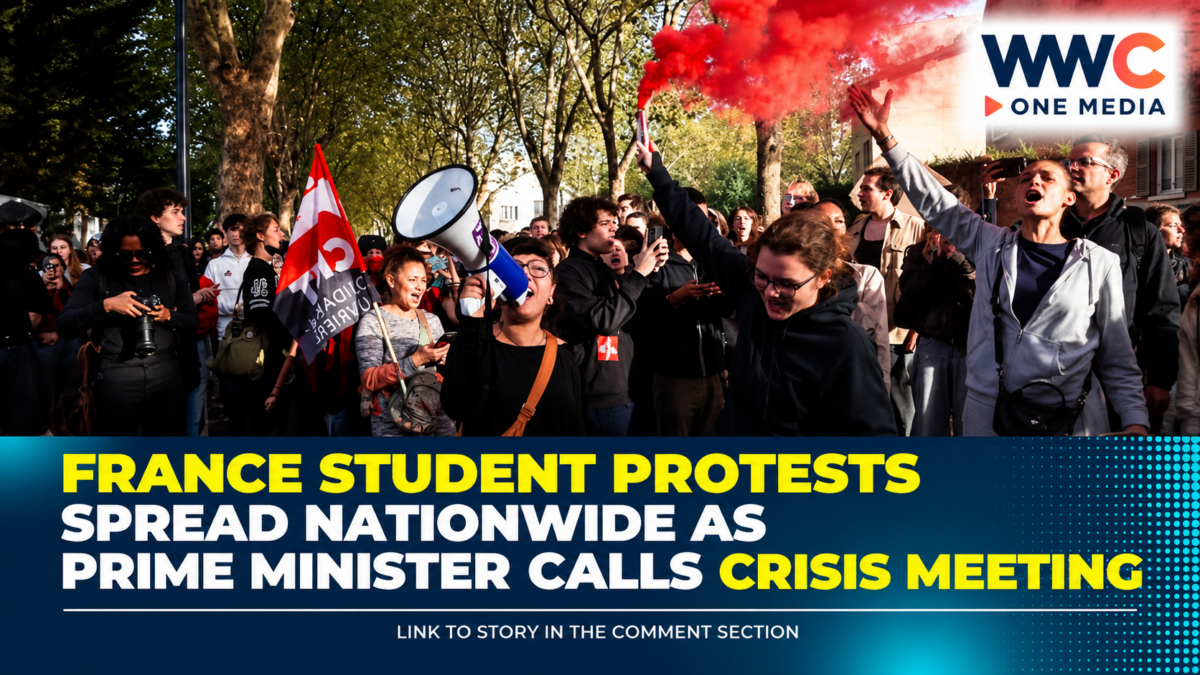
France is facing a growing wave of high school student protests, with demonstrations and school blockades spreading across the country as students demand better funding, more teachers and improved conditions in schools.
Prime Minister Sébastien Lecornu called a crisis meeting on Thursday, October 1, and asked ministers to cancel planned trips so the government could focus on the unrest. The demonstrations began in the Paris region last week before expanding to cities across France, with some protests turning violent.
Students have raised a range of complaints about the education system, including overcrowded classrooms, teacher shortages, long school schedules and deteriorating school buildings. Some have also criticized conditions during periods of extreme heat, saying classrooms can become difficult to use when temperatures rise.
The protests have involved blockades outside high schools, with authorities reporting hundreds of incidents around the country. Police said about 900 demonstrations, blockades and related incidents were taking place outside high schools on Thursday, while more than 160 schools had been shut down as a result. Access to around 30 university campuses was also blocked.
The unrest has also produced scenes of violence in several cities. Students have reportedly set fire to rubbish bins and barriers, while fires were started at at least two schools. In Marseille, a teacher was reportedly splashed with gasoline during an incident involving an attempted fire, while firefighters responding to another blaze were forced to leave their vehicle before it was set on fire.
Authorities have also reported clashes between protesters and police, along with dozens of injuries. Hundreds of people have been detained, many of them teenagers. Police have used riot-control measures in several locations as officers attempted to clear blocked school entrances and prevent further violence.
Education Minister Édouard Geffray said schools would be allowed to move classes online when blockades or damage made it unsafe for students and staff to attend in person. He said violence should not prevent students from receiving an education.
The demonstrations have also become a wider political issue because they are taking place as France prepares for the 2027 presidential election. President Emmanuel Macron is constitutionally barred from seeking a third consecutive term, and the protests are adding pressure to a government already dealing with public-finance concerns.
The unrest also coincides with the government’s proposed 2027 budget, which includes spending reductions. The timing has contributed to a broader debate over public spending, including how much funding should be directed toward education and other public services.
There are competing claims over the political origins of the protests. A person close to the prime minister said intelligence agencies told the crisis meeting that the hard-left La France Insoumise party and its allies had helped organize the movement. The party rejected that allegation, saying it has consistently supported non-violent demonstrations.
Students and teachers have meanwhile continued to participate in the demonstrations. Some teachers have joined blockades, saying they were trying to protect students from clashes with police rather than promote violence.
The government is now attempting to contain the unrest while addressing the underlying complaints about schools. Geffray is scheduled to meet with education unions, parent groups and student representatives as authorities seek to prevent further disruption.
By Friday, around 400 schools and other educational establishments were expected to remain closed, according to the education minister. The figure underscores the scale of the disruption as officials continue to respond to protests that began with education-related grievances but have increasingly included confrontations, fires and property damage.
The coming days are expected to determine whether the demonstrations remain focused primarily on education issues or develop into a broader confrontation over government spending and political leadership. For now, French authorities are concentrating on restoring access to schools, preventing further violence and opening discussions with student and education representatives.