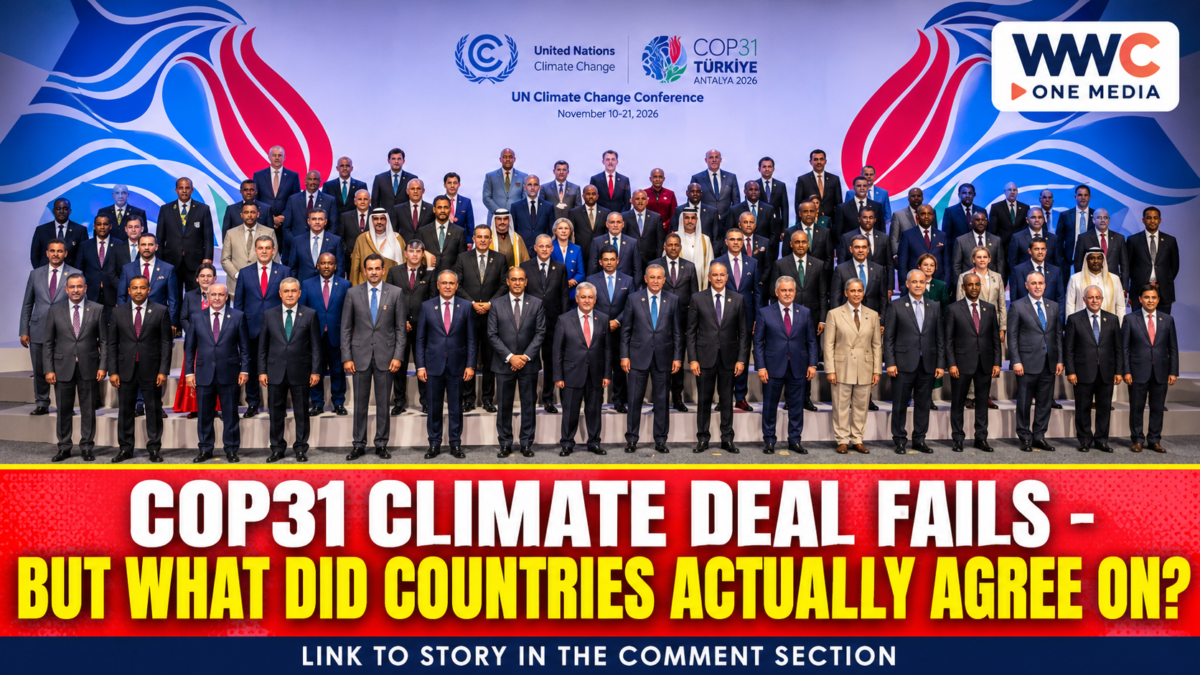
The United Nations climate conference in Antalya, Türkiye, ended on Nov. 22, 2026, without agreement on an overarching political package, leaving governments divided over the direction and ambition of global climate action. Yet the negotiations did produce several separate decisions, including measures on climate finance, just transition and the international fund for responding to climate-related loss and damage. UNFCCC+2
For the Philippines, the outcome is more than a diplomatic setback. One of the decisions adopted at the conference documented a substantial funding gap affecting developing countries seeking assistance for climate-related losses, while acknowledging the country’s role in hosting the governing board of the global Loss and Damage Fund.
The distinction is important: the summit did not deliver the comprehensive political agreement many governments wanted, but its separate decisions still shape the work that countries and climate-finance institutions must carry forward.
Why the COP31 climate deal failed
COP31’s closing session exposed the difficulty of reaching a common position among countries with different economic priorities, energy systems and expectations of international support.
UN Climate Change Executive Secretary Simon Stiell said the conference had been unable to agree on issues covered by the two presidency-led decisions. He also expressed disappointment that the negotiations had not produced the intended political outcome. UNFCCC
The proposed overarching package, referred to as the Antalya Pact in the United Kingdom government’s assessment, was intended to provide a broad political decision alongside agreements on individual negotiating subjects.
But consensus was not achieved. The UK government’s Nov. 22 account confirmed that the parties could not agree on the package, even though other negotiations and voluntary initiatives made progress. GOV.UK
The failure should not be confused with the cancellation of the Paris Agreement or the abandonment of existing national climate commitments. The UK government’s assessment explicitly stated that the Paris Agreement remains in place and that previously agreed obligations continue to apply. GOV.UK
That means the political setback did not erase the international climate framework. It did, however, leave important questions without the additional consensus that the proposed summit-wide package was meant to provide.
What the COP31 climate deal did not stop
Although the overarching agreement failed, the conference’s adopted decisions show that negotiations continued on specific issues.
The official UNFCCC record lists decisions adopted at COP31, including the United Arab Emirates Just Transition Work Programme, long-term climate finance, guidance for the Fund for Responding to Loss and Damage, and the work programme on climate finance under the Paris Agreement. UNFCCC
The just-transition decision is significant because it addresses how countries can change their economies and energy systems while considering workers, communities and development needs.
Its text discusses agriculture, food security, industrial transformation, decent work, labour rights, skills development and the importance of including vulnerable workers in transition planning. It also recognises that countries have different starting points and national circumstances. UNFCCC
For developing economies, that is a practical concern. Moving towards lower-emission industries can create new opportunities, but workers and communities dependent on existing industries may need training, social protection and alternative sources of livelihood.
The climate-finance work programme also continues. Its adopted decision provides for submissions from governments and other stakeholders, in-person workshops, virtual discussions where appropriate, and further consideration of climate-finance delivery at subsequent conferences. UNFCCC
These decisions do not replace the missing overarching pact. They do show that the conference retained working channels for specific areas of cooperation.
The loss-and-damage funding gap is the bigger warning
The most immediate financial issue for vulnerable countries appears in the decision concerning the Fund for Responding to Loss and Damage.
The adopted text records 176 funding requests from 119 developing countries, amounting to US$2.8 billion, under the fund’s Barbados Implementation Modalities. The total allocation available under that arrangement was US$342 million, which the decision describes as insufficient compared with demand. UNFCCC
The same document states that only US$485.77 million of US$822.71 million pledged to the fund had been received as of July 31, 2026. It urges the conversion of outstanding pledges into contributions. UNFCCC
These figures highlight a central weakness in international climate finance: the amount requested by vulnerable countries can substantially exceed the resources currently available.
A funding request is not the same as an approved grant, and an announced pledge is not the same as money already received. The distinction matters because countries facing severe climate impacts need financing that is accessible and available when recovery and rebuilding are required.
WWC ONE MEDIA previously examined the fund’s financial shortfall in its report on the Loss and Damage Fund’s widening funding gap. The latest adopted decision reinforces why the gap remains a central issue for developing countries.
Why the Philippines has a direct stake
The Philippines has a formal connection to the fund beyond its participation in international climate negotiations.
The COP31 decision welcomed the Philippine government’s ratification of the Host Country Agreement between the government and the Fund’s Board. It also recognised the country’s contribution to the board’s work, including regularly hosting its meetings. UNFCCC
That role gives the Philippines an important institutional connection to the fund. It does not mean the country owns the fund, controls its allocation decisions or automatically qualifies for a particular amount of assistance.
The funding process remains governed by the fund’s rules and approval arrangements.
For the Philippines, the wider question is whether international climate-finance systems can provide sufficient support to countries exposed to typhoons, flooding, drought and other climate-related risks.
The country’s climate commitments also depend on credible emissions information and transparent reporting. WWC’s earlier coverage of the Philippines’ climate transparency review with UN experts explored why reliable reporting matters to national climate planning.
The challenge is not limited to securing money. Governments must also prepare viable projects, identify affected communities, document losses and demonstrate how assistance will be used.
Climate action continues outside the negotiating rooms
The conference also highlighted progress through voluntary initiatives and practical projects outside the formal political negotiations.
The COP31 Electrification Delivery Package, presented on Nov. 19, brought together actions involving more than 150 countries plus the European Union, 37 cities and over 260 businesses. It covered electricity access, power grids, transport, industry and investment. UNFCCC
The package reported that members of the Utilities for Net Zero Alliance had announced combined annual investment plans of at least US$156 billion across grids, renewables and storage. It also identified a financing mechanism intended to mobilise up to US$5 billion for clean power, grids, storage and electrification in developing and emerging economies. UNFCCC
These initiatives show that climate-related investment and implementation can continue even when governments fail to reach agreement on a broader political declaration.
However, voluntary investment announcements are not substitutes for binding national commitments or adequate public climate finance. Their impact depends on whether planned investments proceed, projects are completed and benefits reach the communities and economies that need them.
For the Philippines, the domestic challenge remains substantial. The Climate Change Commission has highlighted the country’s rising carbon intensity and the need for stronger coordination between government and the private sector. WWC One Media
What happens next
The next phase will focus on implementing the decisions that were adopted and continuing negotiations on matters that did not achieve consensus.
Under the climate-finance work programme, governments and other stakeholders have until Feb. 28, 2027, to submit views on its organisation and topics. The work is scheduled to continue through workshops and further discussions in 2027 and 2028. UNFCCC
The Loss and Damage Fund’s Board must also continue assessing funding requests, strengthening access arrangements and developing its longer-term model. The COP31 decision calls for further work on the fund’s replenishment process and continued reporting on implementation. UNFCCC
The UNFCCC has identified COP32 in Ethiopia as the next major conference in the process. The unresolved political questions from Antalya will remain part of the wider climate negotiations. GOV.UK
For the Philippines, the priority is to turn its institutional role and international climate commitments into practical results: accessible financing, stronger resilience planning and support for communities facing climate-related losses.
Frequently asked questions
1. Did COP31 end without an agreement?
COP31 ended on Nov. 22, 2026, without consensus on the overarching presidency-led political decisions. However, several separate negotiating decisions were adopted.
2. What happened to the climate-finance negotiations?
Countries adopted a climate-finance work programme that includes submissions, workshops and further discussions on financing under the Paris Agreement.
3. How much funding was requested from the Loss and Damage Fund?
The adopted COP31 decision recorded US$2.8 billion in requests from 119 developing countries, against an allocation of US$342 million under the Barbados Implementation Modalities.
4. Why is the Philippines involved in the Loss and Damage Fund?
The Philippines ratified the Host Country Agreement with the fund’s Board and regularly hosts its meetings. This is an institutional role, not automatic entitlement to funding.
5. When is the next UN climate conference?
The next major conference is COP32, scheduled to take place in Ethiopia in 2027.