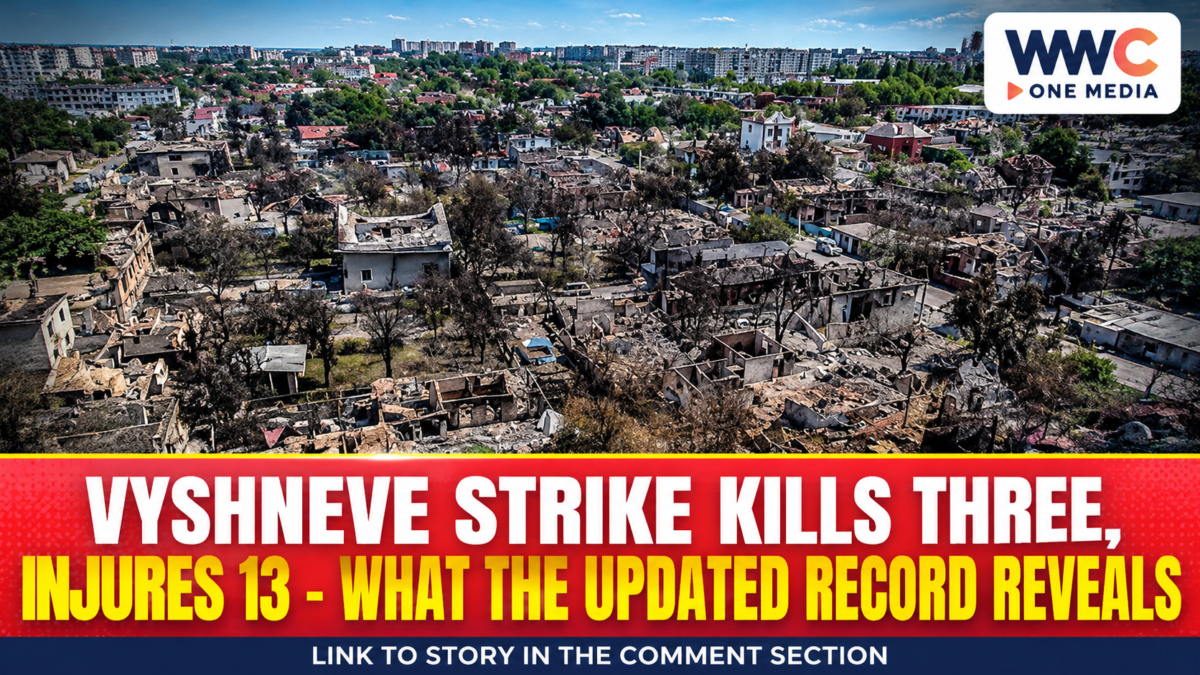
A strike hit a grocery store in Vyshneve, in Ukraine’s Kyiv region, on Nov. 22, 2026, killing three people and injuring 13, according to Ukrainian President Volodymyr Zelenskyy’s official address that evening. The casualty figures rose as authorities issued successive updates, turning an initially smaller count into a more serious confirmed toll.
The incident is part of a wider pattern of attacks affecting populated areas and civilian infrastructure in Ukraine. But the significance of the Vyshneve strike goes beyond the immediate damage: it raises questions about the protection of ordinary commercial spaces during wartime, the reliability of early casualty reports and the evidence needed to assess possible violations of international humanitarian law.
Vyshneve strike: how the casualty figures changed
The Kyiv Regional Military Administration initially reported that one person had died and three others had been injured in the attack on a store in Vyshneve. It also said a fire inside the building had been extinguished.
A later update carried by the administration’s official Telegram channel raised the number of fatalities to two and the injured to eight. The channel subsequently carried Zelenskyy’s Nov. 22 address, in which he reported three people killed and 13 injured in the grocery store strike. Telegram+1
The latest figure in that presidential statement is the one used in this report. It is important to distinguish it from the earlier count rather than combine figures from different stages of the emergency response.
Casualty totals can change while emergency services assess injuries, transport patients and establish whether people initially reported missing have been accounted for. A preliminary update should therefore be treated as a snapshot, not necessarily the final record.
The official statement identifies the location as a grocery store in Vyshneve. It does not identify the business by brand or specify the weapon used against that particular store.
Why an attack on a grocery store carries wider consequences
A grocery store is part of the everyday infrastructure that allows a community to function. It provides access to food and household necessities, supports local employment and connects suppliers with consumers.
When a commercial establishment is damaged during an attack, the consequences can extend beyond the building itself. Workers may lose their workplace, nearby businesses may face disruption and residents may need to find alternative places to buy essential goods.
That economic dimension has become increasingly important in Ukraine. WWC previously examined how attacks on warehouses and commercial infrastructure can disrupt the wider Ukrainian economy. A damaged retail site and a damaged distribution centre are different incidents, but both illustrate how attacks affecting civilian commercial activity can create consequences beyond the immediate impact location.
The available official record does not quantify the financial losses from the Vyshneve incident or establish how long the affected business will remain closed. Those details should not be assumed from images of damage or the reported casualties.
The legal distinction between civilian and military objects
International humanitarian law draws a distinction between civilian objects and military objectives. Article 52 of Additional Protocol I to the Geneva Conventions states that civilian objects must not be the object of attack and limits attacks to military objectives.
The protocol defines military objectives through two requirements: an object must effectively contribute to military action by its nature, location, purpose or use, and its destruction or neutralisation must offer a definite military advantage in the circumstances at the time. Article 52
The International Committee of the Red Cross also identifies the distinction between civilian objects and military objectives as a rule of customary international humanitarian law. ICRC IHL Databases
This framework is relevant when assessing attacks involving shops, residential buildings, transport facilities and other places ordinarily used by civilians. However, the fact that a grocery store was hit and civilians were killed does not, by itself, establish every element needed to determine whether a particular attack violated international law.
That assessment requires evidence about the circumstances of the attack, the object’s status at the time, the intended target and the precautions taken. No conclusion about the specific legal classification of the Vyshneve incident should be presented without that evidence.
The strike occurred amid a wider period of attacks
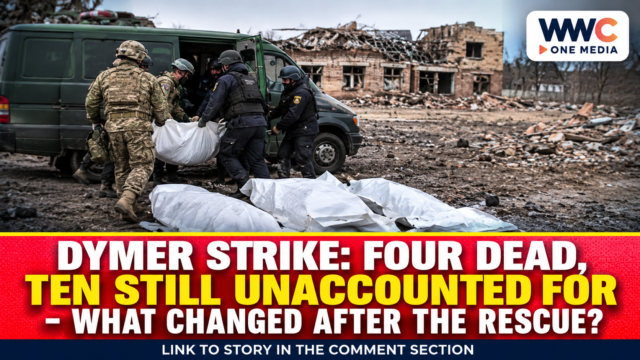
The grocery store incident was not the only serious event reported in Kyiv region on Nov. 22. Zelenskyy’s address separately described a strike on a residential building in Dymer, where rescue operations were continuing and people were still unaccounted for at the time of his statement.
These were separate incidents and should not be combined into a single casualty count for the supermarket. The distinction matters because early summaries of a large attack can mix figures from different towns, buildings and emergency operations.
The wider pressure on Kyiv has also included damage to transport and utility infrastructure. In an earlier report, WWC reviewed the official record of the Nov. 20 attack on Kyiv, which documented effects on bridges, water services and electricity distribution.
Commercial facilities are only one part of this broader civilian environment. WWC has also covered the deadly attack on a railway platform in Dnipro, another incident illustrating the risks faced by people using ordinary civilian infrastructure during the war.
These events are not evidence of a single coordinated operation against the same category of facility. They are separate incidents that demonstrate why each attack needs its own verified account.
What happens next
The next important information would come from detailed statements by investigators, emergency authorities and local officials. These could clarify the circumstances of the impact, the extent of the building damage and whether further casualty updates are necessary.
The Kyiv Regional Military Administration announced that Nov. 23 would be a day of mourning in the region for victims of the Nov. 22 attacks. Its announcement called for flags to be lowered and restrictions on entertainment activities. Telegram
For now, the confirmed public record establishes that three people were killed and 13 injured in the grocery store strike, based on the President’s Nov. 22 address. It does not provide enough information to establish the precise weapon used against the store or determine the legal findings of any subsequent investigation.
The most responsible account is therefore one that keeps the verified facts separate from the unanswered questions. The casualties are confirmed in the official statement; the full circumstances and any legal conclusions require further evidence.
Frequently asked questions
How many people died in the Vyshneve grocery store strike?
Ukrainian President Volodymyr Zelenskyy reported three people killed in his official address on Nov. 22, 2026.
How many people were injured?
The President reported 13 injured. Earlier regional updates had given lower figures as the emergency response continued.
Where did the strike happen?
The incident occurred at a grocery store in Vyshneve, in Ukraine’s Kyiv region.
What weapon was used against the grocery store?
The President’s statement confirmed a strike on the grocery store but did not specify the weapon used against that location. The weapon should not be inferred from descriptions of separate attacks elsewhere in the region.
Does the incident automatically constitute a war crime?
No legal conclusion can be drawn from the casualty count alone. Investigators would need to establish the circumstances of the attack and assess the evidence under applicable international humanitarian law.