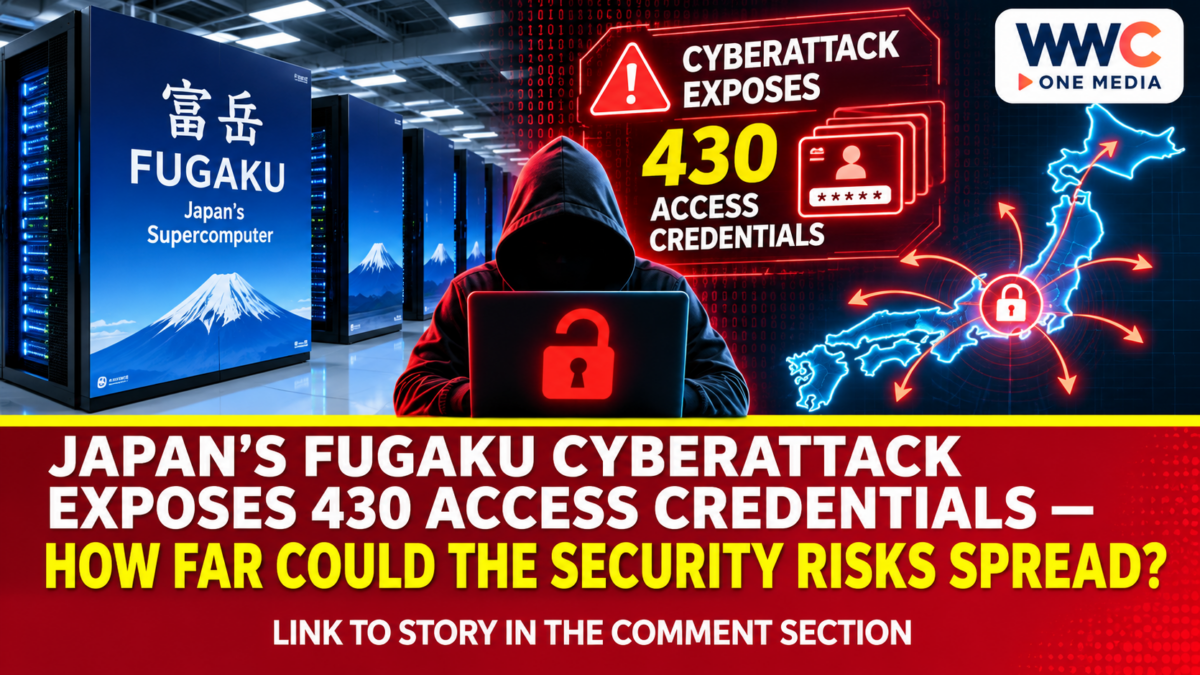
Japan’s research institution RIKEN has confirmed the theft of 430 authentication credentials following the Fugaku cyberattack, expanding concerns beyond the security of the country’s supercomputing infrastructure. Its Nov. 20, 2026, investigation update also identified additional personal information accessed during the incident.
The findings raise an important question for research institutions and technology companies: How can organisations contain a cybersecurity incident when compromised information could affect independently operated computing services?
The immediate challenge for RIKEN involves restoring a secure research environment while helping affected users protect their accounts elsewhere.
Fugaku Cyberattack: What Investigators Have Confirmed
The RIKEN Center for Computational Science suspended Fugaku’s operations on Nov. 14 after confirming unauthorised access the previous day.
The investigation identified interference with internal servers and prompted restrictions on external access.
RIKEN’s initial disclosure estimated that information associated with as many as 4,597 registered users across Fugaku and its RIKYU computing programme could have been affected.
The subsequent investigation identified 4,222 Fugaku users for individual notification.
These figures should not be interpreted as confirmation that every affected person’s complete account information was stolen or subsequently misused.
The distinction between potential exposure, confirmed unauthorised access and verified theft is important when assessing the seriousness of cybersecurity incidents.
Similar questions surrounding the interpretation of breach notifications have emerged in the Philippines, including the investigation into reported cybersecurity incidents affecting government agencies.
For affected researchers, the practical priority is determining which information requires protection and what corrective measures are necessary.
Why the 430 Stolen Credentials Matter
RIKEN’s second disclosure confirmed that authentication credentials associated with external computing services had been removed from its systems.
Authentication credentials serve as a means of establishing a user’s authority to access a computer system or digital service.
Their security significance can therefore extend beyond the institution where they are stored.
Consider a hypothetical research team that uses computing facilities operated by several universities and technology companies.
If access credentials associated with those organisations are compromised at one institution, the security response may require cooperation among several independently managed organisations.
RIKEN is contacting affected users and requesting that compromised keys be invalidated and replaced.
The institute has identified evidence involving external connections associated with some credentials, but its latest investigation notice does not establish widespread misuse across other computing facilities.
WWC analysis: The incident illustrates why cybersecurity planning should account for institutional relationships and external access permissions, rather than concentrating exclusively on the equipment owned by an individual organisation.
Personal Information Raises Separate Privacy Concerns
The Nov. 20 investigation also expanded the categories of information identified as having been accessed.
Investigators found evidence involving account registration details, including addresses, institutional affiliations and telephone numbers.
Records concerning the types of documents used for identity verification were also involved. However, RIKEN has not confirmed leakage of the identity documents themselves.
The institution has adopted precautionary measures while examining the implications of the incident.
For affected individuals, compromised contact information could create additional privacy risks even if no further computer intrusion occurs.
Organisations should therefore communicate clearly with users about the information involved and the steps they are expected to take.
The distinction between different categories of compromised information is also relevant to WWC’s coverage of the Rakuten Securities data breach in Japan.
The two incidents involve different organisations and technical circumstances, but both demonstrate the importance of precise disclosure when assessing potential harm.
Research Disruption Is an Economic Risk
Fugaku became available for shared use on March 9, 2021.
The computing facility accepts applications from researchers within Japan and overseas, with access arrangements covering academic and industrial projects.
This shared-use structure means that the consequences of a service interruption could extend beyond the institution operating the equipment.
A hypothetical manufacturing research programme, for example, might depend on computing simulations before proceeding to physical testing.
An interruption could require researchers to revise project schedules, reassess available computing resources or postpone subsequent development activities.
For commercial research programmes, delays could also affect contractual milestones and development expenditure.
These are potential economic consequences, not confirmed financial losses attributable to the Fugaku incident.
The disclosures reviewed do not quantify the monetary cost of interrupted research or identify specific industrial projects that have suffered financial damage.
RIKEN’s initial notice also did not establish that scientific research files had been transferred outside its systems.
That distinction prevents the confirmed credential theft from being misrepresented as proven theft of scientific discoveries or commercial intellectual property.
What Philippine Institutions Can Learn
The incident offers an important case study for Philippine universities, research organisations and businesses developing shared digital infrastructure.
The responsibilities associated with computing investments extend beyond hardware procurement and software deployment.
Organisations should also establish procedures for responding to cybersecurity incidents, communicating with external partners and maintaining essential research activities during interruptions.
Responsibility for outsourced technical services deserves particular attention.
RIKEN’s initial disclosure identified an external service provider involved in maintaining the affected system. However, the investigation does not establish that the provider was responsible for the intrusion.
The importance of managing external technology relationships is also reflected in the Bank of Korea’s employee-data security incident.
For Philippine institutions, the relevant lesson is to define operational and security responsibilities clearly before introducing shared computing environments.
What Happens Next?
RIKEN is continuing its investigation, working with authorities and preparing measures intended to support secure restoration of operations.
The latest verified incident update does not provide a definitive restart date.
Future disclosures will be important in determining whether additional information was compromised, whether other institutions experienced damage and what changes are required to prevent recurrence.
The Fugaku incident demonstrates that the value of advanced research infrastructure depends not only on computing performance but also on the ability to protect users, preserve scientific information and maintain reliable access.
Frequently Asked Questions
Was Japan’s Fugaku supercomputer attacked?
Yes. RIKEN confirmed unauthorised access to systems supporting Fugaku and suspended its operations on Nov. 14, 2026.
How many authentication credentials were stolen?
RIKEN confirmed 430 compromised credentials associated with external computing services in its Nov. 20 investigation update.
Were scientific research files stolen?
The initial investigation did not establish that research files had been taken outside the system. Confirmed credential theft should not be confused with proven research-data theft.
How many people may have been affected?
The initial disclosure identified up to 4,597 registered users across Fugaku and RIKYU. The subsequent notice identified 4,222 Fugaku users for individual notification.
When will Fugaku resume operations?
No definitive restart date was provided in the latest verified investigation update.