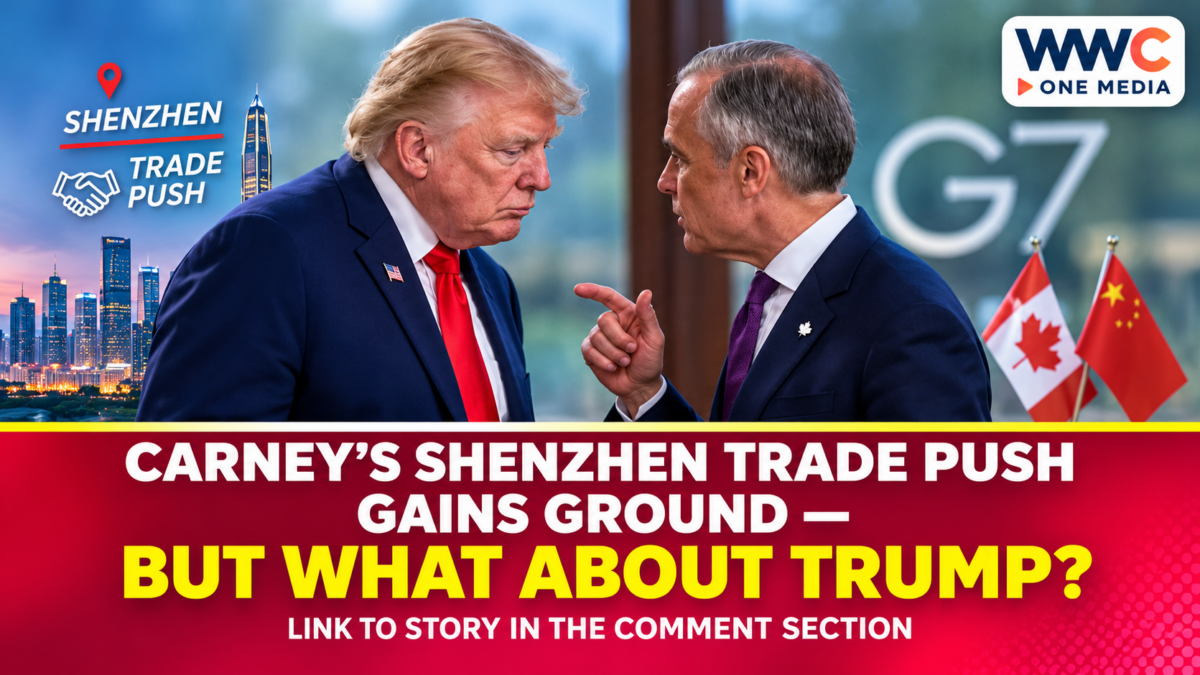
SHENZHEN, China — Nov. 18, 2026. Canadian Prime Minister Mark Carney is pursuing a broader economic relationship with China during the Asia-Pacific Economic Cooperation (APEC) meetings, following new trade commitments announced with President Xi Jinping on Nov. 17. A separate question remains whether his time in Shenzhen will also produce a confirmed meeting with US President Donald Trump.
Canada’s published schedule for Nov. 18 lists an APEC business address, media availability and an evening leaders’ dinner, but no Carney–Trump bilateral meeting. That absence is not proof the leaders will not speak. It does mean an appointment, agenda or outcome cannot be treated as established from that schedule alone.
Carney Shenzhen Talks Build on a January Reset
The China discussions are part of a longer diplomatic effort, not a sudden agreement made on the sidelines of one summit. In January, Carney and Xi announced a strategic partnership covering energy, trade, security cooperation, multilateral engagement and cultural ties.
Their Nov. 17 meeting in Shenzhen extended that framework into more specific commercial measures. The governments agreed to widen tariff relief affecting Canadian agricultural and seafood exports and maintain channels for cooperation on financial services, energy and other sectors.
The public measures matter regardless of a Trump meeting. WWC ONE MEDIA has separately examined what the Canada–China trade expansion changes for exporters; the significance here is how that expansion sits alongside Ottawa’s unresolved negotiations with Washington.
What this could mean: A government with more active trade relationships may have additional commercial options. But negotiating new access to China does not, by itself, replace the scale or importance of Canada’s economic relationship with the United States.
What Canada and China Actually Agreed
The Canadian government described expanded tariff relief covering approximately C$400 million in additional exports, including frozen pork cuts and selected seafood products. A detailed government backgrounder says the arrangement will run until December 2028, with China suspending specified anti-discrimination tariffs from Jan. 1, 2027, through Dec. 31, 2028.
Canada, in return, agreed to extend existing tariff-remission measures for certain Chinese steel and aluminium products through Dec. 31, 2028, and broaden the coverage to 32 further tariff items where domestic supply is insufficient or unavailable.
Those details matter because tariff relief is targeted. It does not mean all Canadian goods enter China duty-free, or that every Chinese product entering Canada receives a new exemption. Coverage, products and implementation dates determine which businesses actually benefit.
Canada also announced plans for a trade mission to China in 2027 and a bilateral e-commerce initiative that year. Those plans aim to create more business contacts and digital-trade opportunities, but their eventual commercial impact cannot be measured from an announcement alone.
Why the Trump Question Matters
Canada’s relationship with Washington has its own documented trade tensions. In August, Canada’s finance department announced countermeasures after the United States imposed a 50% tariff on C$27.6 billion of Canadian goods, with matching Canadian measures scheduled to take effect in September.
That record explains why any Carney–Trump conversation would attract close attention. The issues extend beyond diplomatic photographs: import costs, export access, manufacturers’ supply chains and the certainty businesses need when making investment decisions.
Earlier WWC coverage of Canada–US trade negotiations considered why the American relationship remains consequential even as Ottawa seeks commercial openings elsewhere. The distinction to preserve now is between an opportunity to discuss those issues and an actual agreement changing them.
A conversation in Shenzhen, if officially confirmed, would not automatically reduce tariffs. Traders and companies would need to see a formal announcement, a legal measure or a clearly stated implementation timetable before treating any reported progress as an operational change.
APEC Offers a Wider Trade Platform
The Shenzhen gathering puts Canada’s bilateral diplomacy inside a larger regional programme. Canada’s Nov. 4 travel announcement said APEC’s 21 member economies accounted for more than 60% of world GDP and 80.6% of Canada’s merchandise trade in 2025.
Carney’s official Nov. 18 itinerary includes remarks at the 33rd APEC CEO Summit at 1:30 p.m. and a media availability at 3:05 p.m., both local times. The dinner programme follows in the evening. Those published engagements establish a busy diplomatic schedule but do not confirm who may hold separate conversations with him.
For businesses, regional cooperation matters when it improves customs procedures, market access and predictable rules. WWC’s discussion of APEC’s free-trade and digitalisation agenda explores why policy statements must eventually translate into practical arrangements before companies benefit.
The same caution applies to high-profile political meetings. A summit can create openings for negotiation, but an event invitation and a photograph are not substitutes for a documented trade decision.
What the Public Record Says About Canada’s Strategy
Canada’s November travel programme linked visits to Ireland, the Philippines, Cambodia and China to a stated objective of diversifying partnerships, attracting investment and increasing trade. It also identified proposed progress on ASEAN and Philippine trade relationships as part of the wider itinerary.
The strategy is not necessarily a choice between Washington and Beijing. The available announcements point instead to Ottawa pursuing additional channels while maintaining the need to resolve disputes with its largest neighbouring economy.
Canada reported merchandise trade with China of C$125.6 billion in 2025, up 5.6% from 2024. These figures show China’s commercial importance, not that trade can immediately offset US tariff losses.
The wider international setting is also visible in WWC’s earlier coverage of major-power discussions around APEC. For Canada, however, any useful measure of success should be specific: goods gaining access, barriers being removed, investment commitments becoming operational or trade negotiations reaching documented conclusions.
What Happens Next
The immediate test is whether either government publishes a readout or updated itinerary confirming a Carney–Trump encounter, including its timing and subject matter. Until then, any suggestion that a meeting occurred, produced tariff concessions or changed the negotiating position would go beyond the official documents reviewed.
The China measures have their own next steps. Businesses must check product coverage and implementation dates, while the planned 2027 trade mission and e-commerce programme will require follow-through. APEC discussions could also produce further statements, but those must be evaluated against what governments actually adopt.
For Canadian companies and their trading partners, the central issue is less who is pictured together in Shenzhen than which commercial rules change after the leaders leave.
Frequently Asked Questions
Has Mark Carney met Donald Trump in Shenzhen?
The Canadian government’s published Nov. 18 itinerary does not confirm a bilateral meeting. It remains possible that schedules may change or additional official information may emerge.
Did Carney meet Xi Jinping during the APEC visit?
Yes. The Canadian prime minister’s office published a readout of their Nov. 17, 2026, meeting in Shenzhen.
What did Canada gain from the China trade announcement?
The Canadian government announced expanded tariff relief covering approximately C$400 million in additional exports, alongside plans for cooperation in investment, finance and other sectors. Specific product coverage and implementation dates apply.
Does a possible Carney–Trump meeting mean US tariffs will fall?
No. A meeting alone would not change tariff rules. A verified government decision or formal legal action would be needed to establish a change.