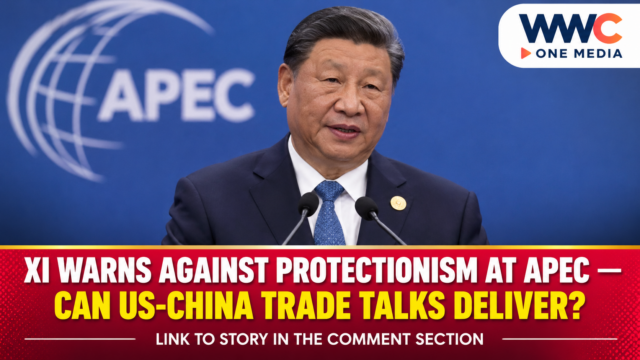
China’s President Xi Jinping used his address to the APEC CEO Summit in Shenzhen on Nov. 18, 2026, to call for stronger support for open trade, investment and regional supply chains. His message arrives as Asia-Pacific economies consider practical steps on trade digitalisation, regional integration and connectivity ahead of the APEC Economic Leaders’ Meeting.
For the Philippines, the important question is not simply whether regional leaders endorse free trade. It is whether the discussions produce changes that make it easier for local exporters, manufacturers and smaller businesses to reach customers across borders.
The official APEC programme shows that trade cooperation is already being discussed through several workstreams. These include a proposed framework for trade digitalisation, a draft statement on the Free Trade Area of the Asia-Pacific (FTAAP), and recommendations from the region’s business advisory council. None of those developments, by itself, means a new free trade agreement has taken effect.
APEC free trade: What Xi actually called for
Xi’s Nov. 18 keynote placed open trade and investment alongside the need to keep industrial and supply chains stable. He also called for progress towards the FTAAP, a long-term regional economic integration goal.
The address was delivered at the APEC CEO Summit, a business-focused event scheduled for Nov. 17–18. It was separate from the APEC Economic Leaders’ Meeting, scheduled for Nov. 18–19 in Shenzhen.
That distinction is important. A keynote address communicates the position of the speaker and the priorities he wants businesses and governments to consider. It is not the same as a negotiated declaration adopted by all participating economies.
The FTAAP is also not a single trade deal that businesses can immediately use. It is a longer-term regional objective. Moving towards it involves discussions on rules, capacity, trade procedures and the different economic conditions across APEC economies.
For companies, the practical value will depend on whether those discussions eventually reduce the cost, uncertainty and paperwork involved in cross-border transactions.
The trade agenda was already moving before the speech
APEC’s work programme shows that the free-trade discussion did not begin with Xi’s address.
At a meeting in Shenzhen on Nov. 16, APEC senior officials considered China’s proposed Trade Digitalization Cooperation Framework for 2027–2030 and a draft statement concerning the FTAAP. The proposed regional statement outlines future work on policy research, capacity building and technical cooperation.
The same meeting also reviewed work on paperless trade, electronic bills of lading and the use of artificial intelligence in customs processes.
These areas may sound technical, but they address problems businesses encounter when moving goods across borders. Repeated document requirements, incompatible digital systems and slow border procedures can add time and expense to a shipment.
Digitalisation could help reduce some of those obstacles if economies adopt compatible systems and make them usable across jurisdictions. However, a proposed framework is not proof that every participating economy has already implemented the same procedures.
The distinction between planning and implementation will matter as the region moves from discussions to actual business processes.
What regional businesses are asking governments to do
The APEC Business Advisory Council, which represents business perspectives in the regional process, has also called for practical action.
Its 2026 recommendations cover three broad areas: openness, connectivity and cooperation. On trade, the council urged APEC economies to advance practical steps towards the FTAAP, address non-tariff barriers affecting food trade, improve trade in services and promote more coherent digital-trade rules.
It also called for greater opportunities for micro, small and medium-sized enterprises.
This is relevant to the Philippines because smaller firms may have fewer resources to manage complicated export requirements, obtain market information or navigate different regulatory systems. Easier procedures could help them explore overseas customers, provided that the changes are actually adopted and accessible.
The council’s connectivity recommendations also point to transport infrastructure, maritime and air links, more efficient logistics and stronger supply-chain resilience.
For Philippine businesses, these are practical concerns. A company may have a competitive product, but it still needs dependable shipping, clear documentation, predictable border procedures and buyers who can receive its goods on time.
Regional cooperation cannot solve every domestic bottleneck. It can, however, create opportunities for economies to coordinate standards and improve the way goods and services move between markets.
Why the Philippines should watch the implementation details
The Philippines participates in APEC alongside other Asia-Pacific economies. Its businesses stand to benefit when regional trade becomes more predictable, but the benefits are not automatic.
For exporters, the relevant questions include whether customs processes become simpler, whether digital documents are recognised across borders, and whether regulations are applied transparently. For service providers, clearer rules on cross-border digital services and data-related requirements could also matter.
For smaller firms, the cost of compliance is especially important. A regional policy may appear beneficial at the economy-wide level but remain difficult for a small business to use if it requires expensive systems, specialist staff or complex certifications.
That is why the business community’s focus on practical deliverables deserves attention. A commitment to openness is a starting point. Companies need to see whether it results in shorter processing times, fewer unnecessary requirements and more reliable access to customers.
WWC has previously examined how lower US tariffs returned to the Philippine trade agenda, a separate issue that illustrates why market access and trade costs remain important to local firms. Regional integration is another part of that wider business environment.
The discussion also connects with the broader question of whether Philippine firms can benefit from shifting ASEAN supply chains. The opportunity depends not only on regional demand but also on infrastructure, investment conditions and the ability of local suppliers to meet business requirements.
APEC cooperation is not the same as a binding trade agreement
APEC provides a forum for economies to discuss shared economic priorities and coordinate voluntary cooperation. Its work can help build common approaches, but an APEC announcement should not automatically be treated as a binding trade treaty.
That matters when interpreting the FTAAP discussions. A draft statement, a proposed framework and a business council recommendation are different kinds of documents. They show that work is under way, but they do not establish that every economy has accepted a new legal obligation.
The next stage will be to see which proposals receive support from leaders and how participating economies choose to carry them out.
The distinction is also important for businesses making investment or export decisions. Companies should not assume that a proposed regional measure has already changed customs requirements, tariffs or market-access rules. They need to check the rules currently in force in each destination market.
What happens next
The APEC Economic Leaders’ Meeting is scheduled for Nov. 18–19 in Shenzhen. Its outcome documents will be important in determining how leaders describe the region’s trade and economic priorities.
Businesses will be looking for more than broad statements of support. They will want clarity on whether the proposed digital-trade work, FTAAP discussions and connectivity initiatives will move into practical projects with timelines and measurable progress.
For the Philippines, the test is whether regional cooperation can translate into a more workable trading environment for local companies, including smaller exporters and service providers.
Xi’s speech has put open trade at the centre of his message to the business community. The harder task for APEC economies is to turn that message into procedures and opportunities that businesses can actually use.
Frequently asked questions
What did Xi Jinping say at the APEC CEO Summit in 2026?
Xi called for support for free and open trade and investment, stable global industrial and supply chains, and continued progress towards the Free Trade Area of the Asia-Pacific.
Is the Free Trade Area of the Asia-Pacific already in effect?
No. The FTAAP is a long-term regional economic integration goal. APEC discussions and draft documents do not mean that a new region-wide free trade agreement is already in force.
How could APEC trade cooperation affect the Philippines?
It could support efforts to improve customs procedures, digital trade systems, logistics and regional market access. The actual benefits will depend on implementation by participating economies.
What is the APEC Trade Digitalization Cooperation Framework?
It is a proposed framework for 2027–2030 discussed by APEC senior officials. It forms part of wider regional work on digital trade and more efficient cross-border procedures.
When is the 2026 APEC Economic Leaders’ Meeting?
The meeting is scheduled for Nov. 18–19, 2026, in Shenzhen, China.