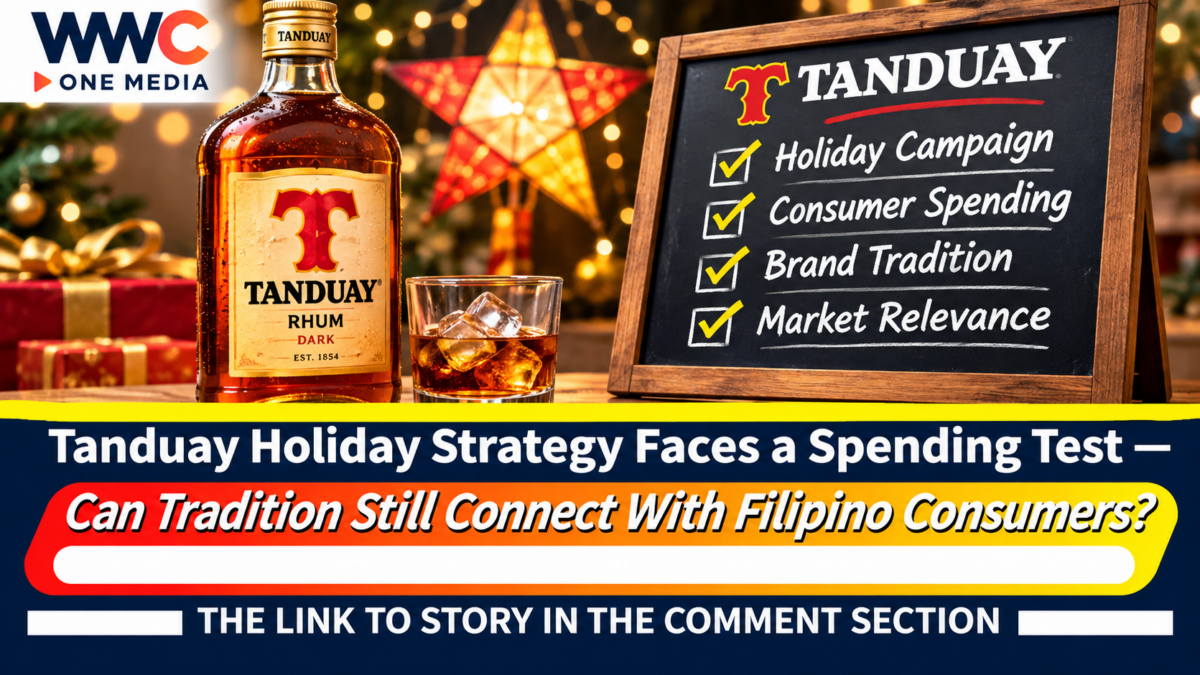
MANILA — Tanduay’s long-established Philippine rum business enters the 2026 Christmas season amid a sharper challenge for household spending. As holiday-themed marketing draws attention to the brand, the Tanduay holiday strategy faces a test that cannot be answered by promotional messages alone: whether familiarity and new consumer experiences translate into measurable commercial results.
Its corporate ownership and history are publicly documented. But a directly accessible first-party announcement confirming the exact campaign described in recent reports, including any claimed change in consumer behaviour, was not established in the records reviewed. That makes this a business analysis of the verified context, not a declaration that a new campaign has already succeeded.
Tanduay Holiday Strategy Rests on a Long-Running Brand
Tanduay Distillers Inc. sits within LT Group Inc., whose company profile describes Tanduay as a Philippine rum business dating to 1854. The group records that Lucio Tan acquired the brand and assets from Elizalde & Company in 1988.
That history gives the business a longstanding place in the local spirits market. It does not establish how consumers are responding to a particular 2026 seasonal promotion, or what percentage of this year’s household celebrations will include its products.
For an established brand, advertising around celebrations can preserve recognition while reaching new audiences. Analysis: The economic test is whether those efforts bring repeat customers and appropriate returns, rather than simply greater online engagement during a busy retail season.
LT Group’s Disclosures Give a Broader Financial Picture
LT Group’s official financial highlights show consolidated first-half 2026 revenue of ₱65.494 billion, compared with ₱63.812 billion in the same period of 2025. Consolidated net income was ₱23.539 billion, compared with ₱20.529 billion a year earlier.
Those are group-wide figures encompassing multiple businesses. They must not be presented as Tanduay sales, holiday revenue or a return generated by a particular marketing programme.
The parent’s public filings provide a way for readers to understand the wider ownership structure and financial scale. To determine a holiday campaign’s success, however, an editor would need the relevant brand-level sales comparison, campaign expenditure and distribution data.
Even stronger group earnings would not by themselves establish that the spirits division increased market share or sold more units in November and December.
Seasonal Events Show a Broader Approach to Consumer Engagement
Tanduay has already been the subject of WWC coverage describing Tanduay’s earlier Halloween venue collaboration. That report concerned a specific nightlife setting, rather than a nationwide Christmas outcome.
Another WWC article examined Tanduay’s previous premium brand showcase. These previously published activities provide context for the company’s interest in live events and brand presentation, but should not be treated as evidence of a separate holiday campaign’s effectiveness.
Analysis: Experiential promotions can create opportunities to explain a product’s history, establish distribution relationships and hear consumer feedback. Their commercial value ultimately depends on factors such as cost, verified sales and repeat business.
No directly opened corporate record in this review quantifies a 2026 Christmas campaign’s audience, conversion rate or incremental revenue. An industry narrative about changing celebrations remains a proposition to examine, not a statistical finding to repeat.
Christmas Spending Conditions Make the Commercial Test Harder
The Philippine Statistics Authority reported headline inflation of 7.8% in October 2026, up from 7.2% in September. Such price pressure affects the money households have available across food, transport, utilities and optional purchases.
That does not prove Filipino families have cancelled festivities or shifted toward one particular gathering format. It does mean brands selling discretionary products must compete for spending alongside essential household needs.
WWC has separately examined the pressure on Filipino Christmas shopping budgets, placing the season in a wider retail and inflation context.
The government’s published 2026 holiday calendar includes Christmas Day on Dec. 25, while Dec. 24 is designated an additional special non-working day. That formal calendar provides context for the festive period; it is not evidence of any specific company’s projected sales.
Analysis: For a heritage consumer brand, affordability, dependable distribution and product information may matter as much as the advertising theme. Neither a nostalgic message nor a new promotional format can guarantee higher demand.
What a Responsible Assessment of the Brand Requires
A serious performance review would compare equivalent sales periods, distinguish volume growth from price increases and account for promotional spending. It would also identify whether sales came through supermarkets, hospitality venues, online channels or other legitimate distribution partners.
Any consideration of alcoholic beverages must distinguish commercial reporting from recommendations to consume them. The brand’s success cannot be measured in terms of encouraging heavier consumption, and a business feature need not suggest cocktails or quantities to explain its strategy.
Corporate statements about customer connection may describe management’s intended positioning. Without a directly verified announcement or research methodology, however, such statements cannot substantiate nationwide changes in Filipino holiday behaviour.
What Happens Next
The next useful primary records would be an official company campaign announcement, audited or filed segment results and measurable post-season performance indicators. Those would allow the holiday strategy to be assessed as an actual business programme instead of a general marketing narrative.
Until those disclosures are available, Tanduay’s heritage, corporate structure and the wider spending environment are documented. The precise 2026 holiday campaign details and their financial effects remain unverified.
Frequently Asked Questions
Who owns Tanduay?
Tanduay Distillers Inc. is part of LT Group Inc. The group’s corporate profile says Lucio Tan acquired the Tanduay brand and assets in 1988.
How old is the Tanduay brand?
LT Group traces the Philippine rum brand’s origins to 1854.
Has Tanduay confirmed its exact 2026 Christmas campaign results?
No directly accessible first-party record reviewed for this story established campaign-specific audience numbers, sales gains or a measured change in consumer preferences.
How does inflation affect holiday retail spending?
Higher consumer prices can squeeze funds available for optional purchases, but inflation statistics alone cannot predict the outcome for any one brand.
What would prove that a seasonal brand strategy worked?
Comparable sales volumes, margins, verified distribution changes and campaign costs would help distinguish commercial performance from promotional visibility.