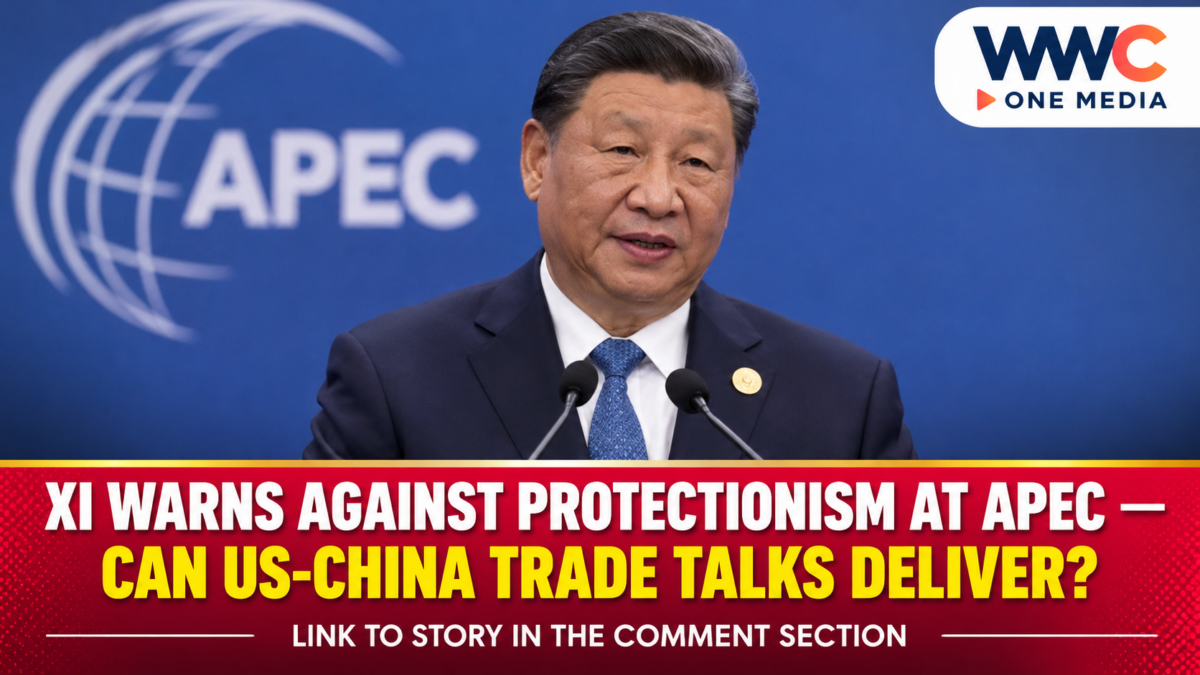
Chinese President Xi Jinping called for more open trade and investment at the APEC CEO Summit in Shenzhen on Nov. 18, 2026, warning in his published keynote that protectionist policies threaten international cooperation. His remarks came as Washington and Beijing continued working through tariff proposals, agricultural purchases and access to critical minerals, with no new comprehensive bilateral trade agreement established by the records reviewed.
The important test is whether commitments made at high-level meetings become enforceable changes for exporters and importers. A speech can set a direction; customs rules, published tariff schedules and completed agreements determine what businesses actually pay.
Xi protectionism warning focuses on trade barriers
Xi’s official keynote described a difficult global economic environment and urged Asia-Pacific economies to defend the multilateral trading system and keep supply chains functioning. He also called for progress towards a Free Trade Area of the Asia-Pacific, a long-term regional objective rather than a newly enacted treaty.
His proposals included stronger digital trade, cross-border e-commerce, customs modernisation, artificial intelligence cooperation and more opportunities for developing economies. These initiatives involve different types of policy work and are not interchangeable with tariff cuts.
The speech also set out China’s intention to reduce tariffs, widen market access and reform rules affecting manufacturing and services. It did not supply a universal effective date or a product-by-product tariff schedule for those future changes.
Why it matters: An importer cannot calculate new duties from a broad promise of openness. The practical benefit depends on which products qualify, when rules take effect and whether other restrictions remain in place.
US-China negotiations are already taking place
US Trade Representative Jamieson Greer’s Sept. 27 statement described recommendations from the bilateral Board of Trade involving approximately US$30 billion in non-sensitive goods on each side that could receive more favourable tariff treatment. The wording describes prospective benefits, not evidence that every recommendation has entered into force.
Earlier, on June 2, Washington opened a public consultation on a mechanism for more balanced reciprocal trade. The administration explained that it intended to consider tariff adjustments while retaining tools to address economic and national-security concerns.
Those official steps are more specific than a general call for open markets, but still require readers to distinguish a recommendation, an agreement and a legally effective change.
WWC previously examined the extended US-China trade truce and unfinished negotiations. The new Shenzhen speech adds China’s public economic priorities; it does not by itself replace those earlier negotiating arrangements.
Agricultural purchases and minerals remain contentious
On Nov. 6, Greer and US Treasury Secretary Scott Bessent held a video discussion with Chinese Vice Premier He Lifeng. The US government’s published account said Washington was seeking implementation of previous commitments, specifically identifying agricultural purchases, rare earths and other critical minerals.
That record confirms the subjects of discussion but does not quantify a new shortfall, announce a fresh blanket tariff increase or establish that a particular shipment had failed to arrive. A claim about compliance requires its own supporting data.
WWC’s earlier analysis of the November US-China trade discussions covers those unresolved topics in greater depth.
Analysis: The contrast is not necessarily between countries that favour trade and countries that oppose it. Both governments have described circumstances in which they favour commercial exchange while retaining particular restrictions. Businesses must judge the measures actually applicable to their transactions, not broad diplomatic labels.
APEC’s own outlook shows why openness matters
An APEC Policy Support Unit assessment published Nov. 15 projected regional growth of 3.4% in 2026, up from an earlier 3.2% forecast, before moderating to 3.1% in 2027. It identified technology investment and commerce as supports for activity while warning about energy costs, geopolitical tensions and trade-restrictive measures.
The study also reported that merchandise export values increased 22.5% year on year in the first half of 2026 and export volumes rose 10.8%. These are region-wide measures, not a statement that every APEC economy or every exporter experienced those rates.
APEC senior officials reviewed a proposed Trade Digitalization Cooperation Framework for 2027–2030 and work towards regional integration before leaders assembled. Digital documents and customs cooperation can reduce administrative friction even when politically difficult tariff questions take longer to settle.
That is a measurable alternative to assuming that a single leaders’ meeting must produce a comprehensive trade settlement.
What the China message means for regional businesses
Xi used the Shenzhen meeting to invite international companies to expand their engagement with China’s domestic market. He linked this to innovation, consumption and future regulatory reforms, but his speech did not contain individual investment approvals or guaranteed company revenues.
More open markets could benefit suppliers that qualify under any subsequent measures. However, firms would still need to verify product classifications, licences, customs requirements, contractual terms and compliance with the laws of all relevant jurisdictions.
The difference between broad openness and targeted relief is visible in WWC’s report on product-specific China–Canada tariff concessions. That separate bilateral arrangement has its own categories and dates; it cannot be treated as an across-the-board rule for US or Philippine goods.
For Philippine exporters and importers, greater regional predictability would be commercially relevant. But Xi’s speech alone establishes no new Philippine tariff preference, export order or peso-denominated economic gain.
What happens next
The next meaningful evidence will be published decisions on the US-China Board of Trade recommendations, detailed tariff schedules, verifiable implementation of existing purchase commitments and any APEC outcomes formally adopted by member economies.
The Nov. 18 address confirms China’s stated direction on trade and market access. It does not establish that Trump and Xi completed a new agreement on the day of the speech, or that all outstanding trade restrictions disappeared.
The question is therefore not whether leaders used the language of cooperation, but whether regulators and negotiators turn those commitments into rules businesses can actually use.
FAQ
What did Xi Jinping say about protectionism at APEC?
His Nov. 18 keynote criticised growing unilateral and protectionist practices and urged support for open trade, WTO-centred rules and reliable supply chains.
Did China announce that all tariffs would be removed?
No. Xi described an intention to lower tariffs and expand access, but the speech did not enact a universal tariff removal or publish a comprehensive schedule.
Is there a new US-China trade agreement from the APEC speech?
The official records reviewed do not establish a new comprehensive agreement from the speech. Earlier proposals for selected tariff treatment and implementation discussions remain separate developments.
Why does the issue matter to the Philippines?
Regional trade rules influence supply-chain planning and potential market access. Any specific Philippine benefit requires a relevant legal change or commercial agreement, neither of which follows automatically from the keynote.