PC Bangs Dominate South Korea’s Food Safety Violation Figures as Concerns Grow Over Hygiene
South Korea’s popular PC bangs and other leisure venues frequented by children and teenagers are facing renewed scrutiny after government data revealed hundreds of food sanitation violations over the past six years.
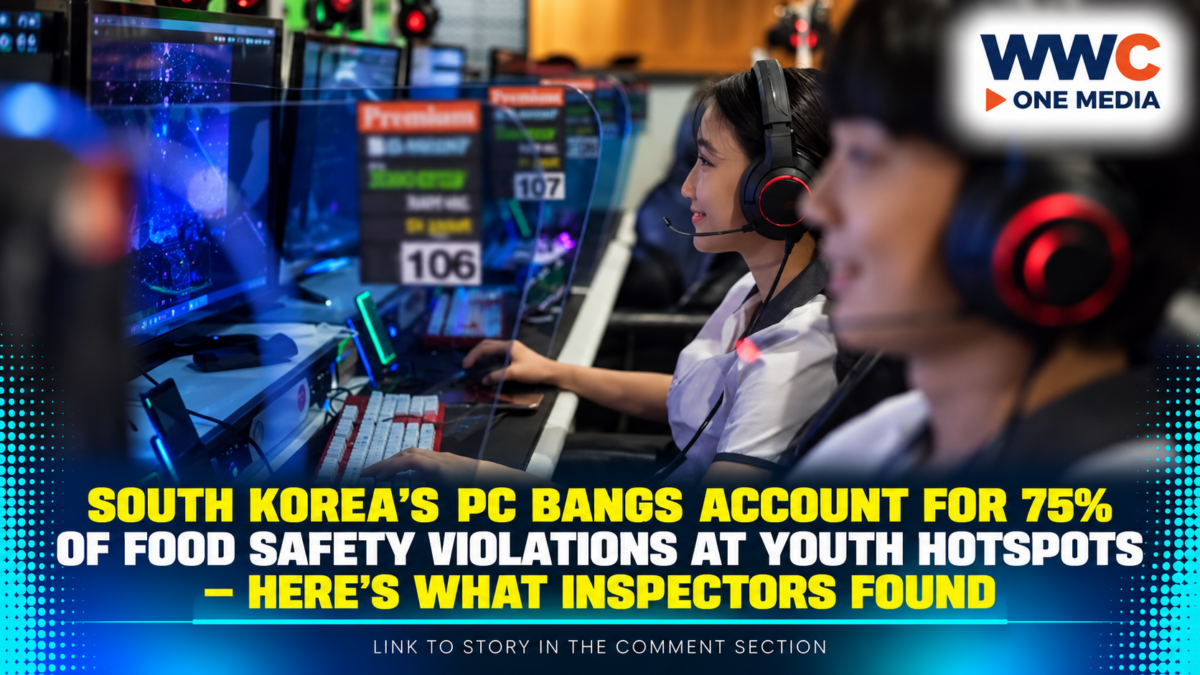
Internet cafes, commonly known as PC bangs, accounted for more than three-quarters of reported food hygiene violations across four categories of youth-oriented leisure establishments between 2020 and June 2026.
The figures have raised questions about whether existing hygiene checks and enforcement measures are sufficient to protect young customers who visit these venues to play games, socialize and eat.
According to data from South Korea’s Ministry of Food and Drug Safety submitted to lawmakers, authorities recorded 782 violations of the Food Sanitation Act at PC bangs, kids cafes, comic book cafes and board game cafes during the period.
PC bangs accounted for 588 cases, or 75.2 percent of the total, followed by kids cafes with 121 violations, comic book cafes with 38 and board game cafes with 35.
The figures were reported by The Korea Times on October 9, citing data obtained by Rep. Seo Young-seok of the ruling Democratic Party of Korea.
PC Bangs Account for Three-Quarters of Recorded Violations
PC bangs have become familiar fixtures in South Korea, offering customers computer gaming facilities alongside convenient food options.
However, the latest figures place these establishments at the center of concerns about hygiene compliance in leisure venues serving younger customers.
The 588 violations recorded at PC bangs were substantially higher than the totals for the other three categories combined individually.
The data cover recorded violations, not the proportion of all operating establishments that failed inspections. They also do not establish that every PC bang has hygiene problems.
Nevertheless, the concentration of violations has prompted calls for authorities to review how food safety rules are communicated, monitored and enforced.
The Most Common Violation Was Missing Hygiene Training
The figures point to a major compliance issue: failure to complete mandatory hygiene training.
Authorities recorded 464 cases involving missed hygiene training, accounting for 59.3 percent of all 782 violations.
Other violations included:
- 107 cases: Failure to undergo required health checkups.
- 78 cases: Violations of business operator compliance requirements.
- 67 cases: Breaches of sanitary food-handling standards.
- 40 cases: Violations of facility standards.
The breakdown suggests that many recorded violations involved regulatory and administrative requirements, while others concerned food-handling practices and facility conditions.
However, the figures do not establish that all violations involved contaminated food or that customers became ill. Each category represents a breach of the applicable rules, and the available data do not provide a complete picture of the circumstances behind individual cases.
PC Bang Violations Remain a Concern in 2026
The latest figures also highlight the continuing need for monitoring.
PC bangs recorded 65 violations during the first half of 2026, equivalent to 72.2 percent of the 90 violations recorded throughout 2025.
Because the figures cover different lengths of time, the comparison does not establish that violations increased in 2026. It does, however, show that a substantial number of cases had already been recorded by the middle of the year.
The data reinforce calls for consistent inspections and stronger compliance efforts at establishments where customers can order meals and snacks alongside other leisure activities.
Fines Were the Most Common Penalty
Administrative fines accounted for the largest share of penalties imposed across the four categories of establishments.
Authorities recorded 640 administrative fines, followed by 47 penalty surcharges, 39 facility improvement orders, 34 business suspensions and 22 corrective orders.
The range of penalties reflects the different enforcement measures available for food sanitation violations.
The figures do not establish that every business received the same punishment, as enforcement measures can vary depending on the violation and applicable regulations.
Falling Kids Cafe Inspections Raise Additional Questions
The issue extends beyond PC bangs.
According to the report, inspections of kids cafes have fallen by nearly half, prompting concerns about whether oversight is keeping pace with the need to maintain safe environments for younger visitors.
These venues often combine play areas with food and beverage services, making hygiene management an important consideration for families.
Rep. Seo Young-seok called for the Ministry of Food and Drug Safety and local governments to reassess their inspection practices and hygiene management systems.
He emphasized the importance of food safety at leisure venues used by children and teenagers, particularly given the high number of cases involving missed mandatory hygiene training.
The call places the focus on both business compliance and the effectiveness of public oversight.
What This Means for Families and Young Customers
The findings do not mean that all PC bangs, kids cafes or other youth-oriented leisure venues are unsafe. They do, however, highlight the importance of proper food handling, required health checks, hygiene training and regular inspections.
For parents and young customers, the broader concern is whether establishments serving food are meeting the same essential sanitation requirements expected of other food businesses.
For operators, the figures serve as a reminder that offering food alongside entertainment comes with responsibilities that extend beyond customer service and the quality of the gaming or play experience.
For regulators, the challenge is to ensure that inspections identify problems early and that businesses understand and follow the rules.
Stronger Enforcement Could Be the Next Step
South Korea’s latest food safety figures have renewed attention on the oversight of leisure venues popular with younger customers.
With PC bangs accounting for 75.2 percent of the recorded violations, hygiene compliance in these establishments is likely to remain a key issue for regulators.
The high number of missed hygiene training requirements also points to an area where better compliance monitoring could make a difference.
Ultimately, the issue is not whether young people should visit PC bangs or kids cafes, but whether businesses that serve them can consistently meet food safety standards.
As lawmakers call for stronger inspections, the effectiveness of future enforcement efforts will be crucial in determining whether the recorded violations can be reduced.
WWC ONE MEDIA G,A