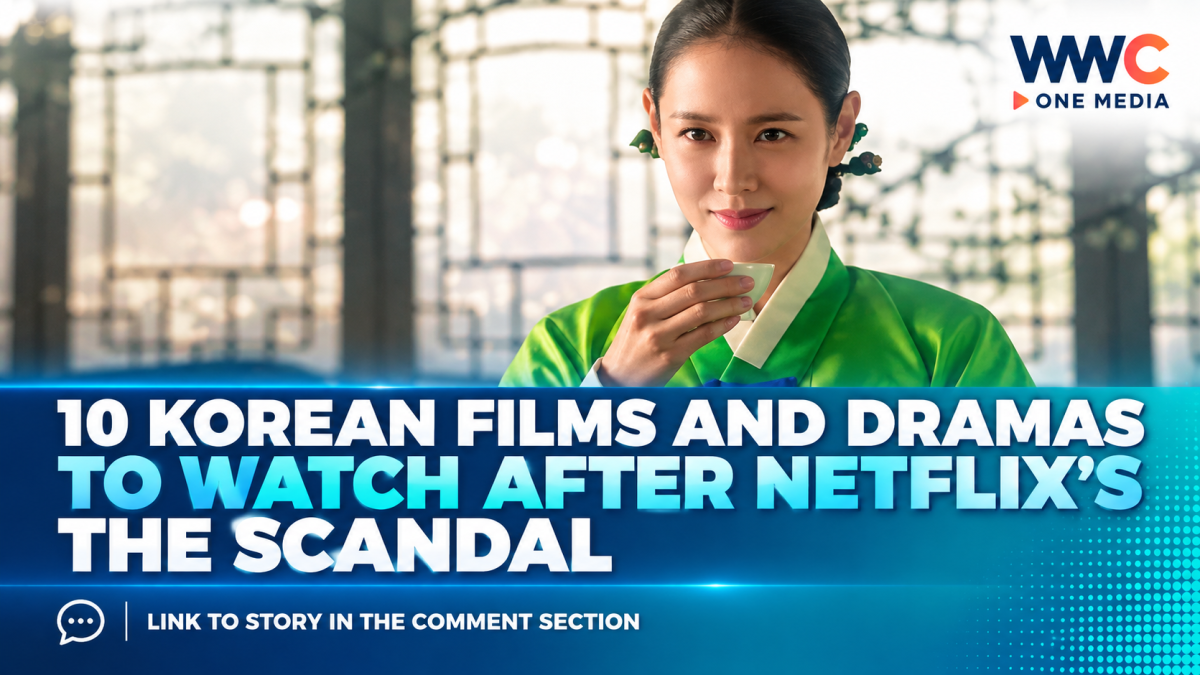
Netflix’s The Scandal has brought the seductive world of Dangerous Liaisons back into the spotlight, reimagining Pierre Choderlos de Laclos’s 1782 novel in the Joseon era with Son Ye-jin, Ji Chang-wook and Nana. The eight-part series is itself a remake of the acclaimed 2003 Korean film Untold Scandal.
The story revolves around Lady Cho, the notorious seducer Cho-won and the virtuous widow Hui-yeon, whose lives become entangled in a dangerous wager involving desire, deception and social power. The new series also expands the relationships between its female characters and gives the classic story new dimensions within the rigid social hierarchy of Joseon Korea.
For viewers drawn to The Scandal’s mix of romance, manipulation, betrayal and revenge, several Korean films and dramas explore similar themes.
- Untold Scandal (2003)
The closest Korean counterpart to Dangerous Liaisons, Untold Scandal directly transfers the story to late-18th-century Joseon. Lee Mi-sook plays Lady Cho, Bae Yong-joon portrays the celebrated seducer Cho-won, and Jeon Do-yeon plays the innocent widow caught in their game.
- The Great Seducer / Tempted (2018)
This modern adaptation moves the seduction game into contemporary Seoul. Woo Do-hwan plays a wealthy young man who accepts a wager to seduce Joy’s character, Eun Tae-hee. What begins as manipulation becomes complicated when genuine emotions enter the arrangement.
- The Scandal (2026)
The newest Korean interpretation places the familiar story back in Joseon, with Son Ye-jin, Ji Chang-wook and Nana at its center. Unlike the 2003 film, the Netflix series uses its longer format to develop new backstories and deepen the relationship between Lady Cho and Hui-yeon.
- The Handmaiden (2016)
Although it is based on Sarah Waters’s novel Fingersmith rather than Dangerous Liaisons, Park Chan-wook’s acclaimed film shares its fascination with deception, seduction and shifting power. A conman, a wealthy heiress and a young woman hired as her maid become trapped in an elaborate scheme where appearances constantly change.
- A Frozen Flower (2008)
Set during the Goryeo Dynasty, this historical drama centers on a king, his queen and his trusted military commander. A plan created to secure the royal succession develops into a forbidden relationship that threatens the balance of power.
- Scarlet Innocence (2014)
This psychological thriller follows a professor who becomes involved with a young woman before abandoning her and returning to his former life. Years later, she returns under a new identity and begins an elaborate revenge plan, turning seduction and deception into weapons.
- The Treacherous (2015)
The film explores the decadent world of the Joseon court, where sex, political influence and personal ambition become intertwined. A powerful royal adviser exploits the king’s appetite for women while another character uses access to the palace as part of a revenge plan.
- Eve (2022)
Seo Ye-ji stars as a woman who spends years preparing revenge against the powerful people she believes destroyed her family. Seduction, manipulation and carefully constructed relationships become essential parts of her strategy.
- The World of the Married (2020)
The hit drama turns romantic betrayal into psychological warfare. After discovering her husband’s affair, a successful doctor becomes involved in an escalating cycle of revenge, manipulation and competing relationships.
- The Penthouse: War in Life (2020–2021)
For viewers who enjoy the social power struggles as much as the romance, The Penthouse offers a much more modern and melodramatic take. Wealthy residents of an exclusive Seoul apartment complex become consumed by ambition, affairs, status, revenge and shifting alliances.
While not all of these titles are direct adaptations of Dangerous Liaisons, they share elements that have made the story endure for centuries: calculated seduction, hidden motives, social ambition, betrayal and relationships used as instruments of power.
The popularity of The Scandal also shows how adaptable the original story remains. By moving the characters from 18th-century France to Joseon Korea and then into modern Seoul, Korean filmmakers and drama creators have repeatedly demonstrated how the central conflict between desire and manipulation can be reshaped for different eras and audiences.