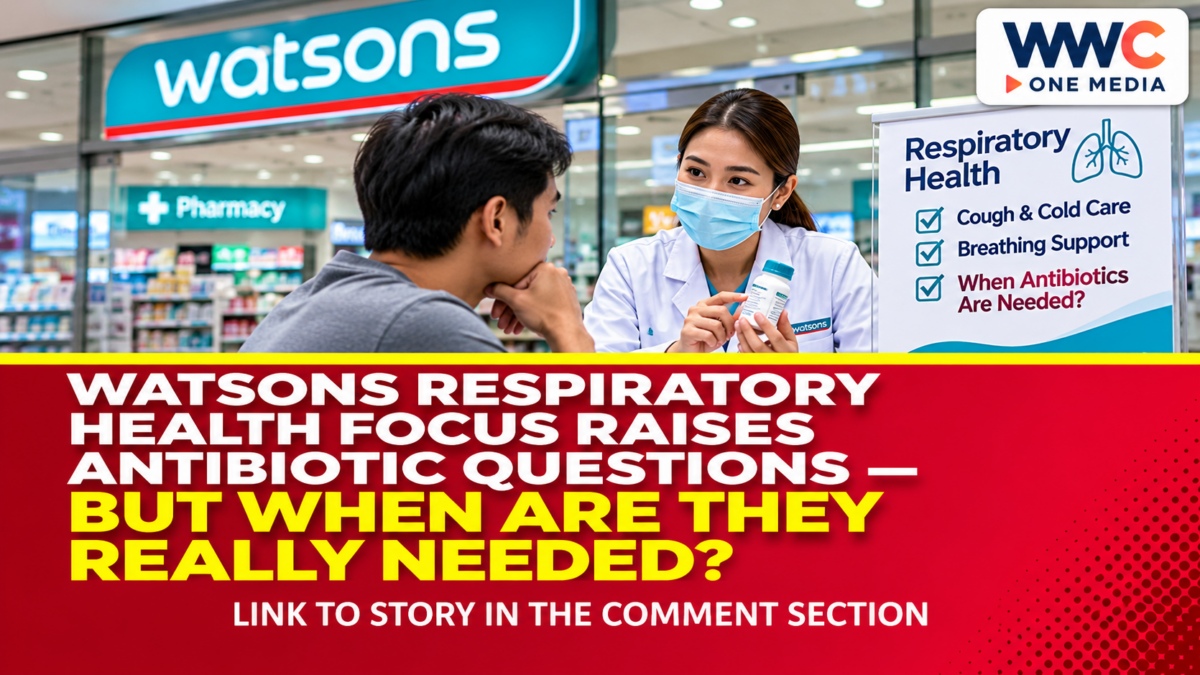
MANILA, Philippines — Nov. 14, 2026. The Watsons respiratory health category lists medicines and healthcare services on its official retail platform as public-health authorities intensify efforts against antibiotic misuse. The World Health Organization’s updated July 2026 guidance warns that inappropriate antibiotic use helps drive drug resistance, giving the conversation around respiratory symptoms a significance that extends beyond buying cough or cold medicine.
The distinction matters in a country with a national antimicrobial-resistance action plan covering 2024 to 2028. Treating a bacterial infection appropriately can be essential, but using antibiotics against viruses cannot cure a cold or influenza and may contribute to a larger resistance problem.
Watsons Respiratory Health: What the Public Record Shows
Watsons’ Philippine website has a dedicated Respiratory Essentials section offering products for respiratory-related symptoms and conditions. Some listed medicines are marked as requiring a prescription, reflecting the difference between browsing a pharmacy catalogue and being clinically assessed for treatment.
Its platform also directs customers towards services such as teleconsultation and a health hub. These channels indicate how a major pharmacy retailer can place health information alongside everyday shopping, although product listings alone do not establish the clinical effectiveness of any particular campaign.
A newly reported respiratory-awareness drive has drawn attention to antibiotic misuse. However, a dated company announcement establishing the precise campaign launch, participating stores and stated commitments could not be confirmed in the official materials reviewed. Those particulars should not be represented as verified.
WWC has also covered Watsons’ September preventive health checks, a separate initiative from respiratory education.
Why Antibiotics Cannot Treat Every Cough or Fever
Antibiotics work against susceptible bacteria, not viruses. The Philippine Department of Health has explicitly cautioned that antibiotics do not kill cold and flu viruses and that patients should consult physicians before obtaining them.
That does not mean respiratory symptoms should always be left untreated. Pneumonia, for example, has different possible causes, and treatment depends on clinical assessment. Bacterial infections may require antibiotics; some viral illnesses may require other management, including specific antiviral medicines when clinically indicated.
A cough, fever or sore throat is therefore not enough on its own to justify a particular antibiotic. A clinician considers the person’s symptoms, examination findings, risk factors and any appropriate tests before deciding whether antimicrobial treatment is needed.
The same distinction helps avoid two opposite mistakes: taking antibiotics unnecessarily and failing to seek timely assessment when a potentially serious infection is developing. Patients with breathing difficulty, significant deterioration or other concerning symptoms should seek prompt medical attention.
Drug Resistance Is a Documented Global Problem
WHO’s July 16, 2026 fact sheet estimates that bacterial antimicrobial resistance was associated with more than 4.7 million deaths worldwide in 2021. It also states that approximately one in six laboratory-confirmed bacterial infections worldwide were resistant to antibiotics in 2023.
These are global measures, not a count of Filipino patients or a prediction about any individual pharmacy customer. They demonstrate why the loss of effective treatment options is a public-health concern even when an antibiotic seems familiar and readily obtainable.
The organisation also identifies misuse and overuse of antimicrobial medicines among the major pressures behind resistance. Appropriate treatment, by contrast, means using an antibiotic when clinically warranted, with the right medicine and instructions for the specific patient.
These issues sit alongside other questions about antimicrobial products and everyday routines, including WWC’s separate examination of antiseptic mouthwash and the oral microbiome. Mouthwash studies are not evidence about antibiotic prescriptions; the common lesson is to avoid drawing medical conclusions from product labels alone.
The Philippine Plan Goes Beyond Consumer Awareness
The Philippine National Action Plan on Antimicrobial Resistance 2024–2028, published through WHO’s document library, is an official inter-agency policy framework. Its scope extends beyond human healthcare because resistant organisms can move through healthcare settings, communities, animals and the environment.
The national plan also discusses self-medication and medicine-sharing as problems requiring attention. Public messaging has to be practical: customers should understand that a medicine which appeared to help a relative is not automatically appropriate for their own symptoms.
Filipinos who receive a prescription should follow the clinician’s directions rather than changing the dose, sharing tablets or using leftover medicines later. If symptoms change or side effects occur, they should contact a qualified professional instead of adjusting treatment independently.
Why Pharmacy Counselling Could Matter
A retail pharmacy can provide an accessible first conversation about symptoms, medicine instructions and when to see a doctor. Its value is strongest when pharmacists explain limitations clearly and direct patients towards medical evaluation where necessary.
Watsons’ existing preventive-health activities show how pharmacies can become points of contact for healthcare beyond dispensing products. WWC previously covered the chain’s October health-screening programme and follow-up questions.
What this could mean: Better counselling may reduce confusion between symptom relief, treatment of the underlying cause and prevention. But it would be premature to credit any specific Watsons respiratory campaign with lowering antibiotic misuse without verified reach, counselling outcomes or independent evaluation.
A pharmacy also remains a commercial business. Clear separation between a health recommendation and a retail promotion helps customers understand whether advice rests on medical need or on the availability of a product.
Prevention Remains Part of the Response
WHO’s updated global action plan for 2026–2036 puts infection prevention, vaccination, water and sanitation alongside responsible antimicrobial use. Preventing infections can reduce the occasions when patients need medical treatment and antibiotics in the first place.
For respiratory conditions, the appropriate preventive measures depend on the illness, the person’s risk and recommendations from qualified health authorities. Vaccines are not interchangeable, and an advertised pharmacy service should never be mistaken for a universal recommendation or a guarantee of protection.
What Happens Next
The next useful measure of respiratory-health education would be evidence of what customers actually learn: whether they better understand prescription requirements, whether they seek assessment for concerning symptoms and whether unnecessary antibiotic requests decrease.
Publicly documented information about programme dates, participating branches, training and outcomes would help distinguish a short awareness promotion from sustained antibiotic-stewardship work. Until such records are available, the verified public-health guidance remains straightforward: antibiotics can be essential for certain bacterial infections, but they are not remedies for viral colds or flu.
Frequently Asked Questions
Do antibiotics cure the common cold or influenza?
No. These illnesses are caused by viruses, while antibiotics act against bacteria. A healthcare professional can advise on suitable care and whether further assessment is necessary.
Can pneumonia require antibiotics?
Yes, some bacterial forms of pneumonia may require antibiotics. Other causes need different management, so diagnosis and treatment should be guided by a clinician.
What is antimicrobial resistance?
It occurs when microorganisms no longer respond to medicines designed to treat them. Resistant infections can become more difficult to manage.
Should I use leftover antibiotics for a new cough?
No. A new illness may have a different cause, and the medicine or dosage may be inappropriate. Seek advice from a licensed healthcare professional.
Does every Watsons branch provide respiratory consultations?
Availability has not been verified branch by branch. Check the retailer’s official channels directly for current services, eligibility and schedules.