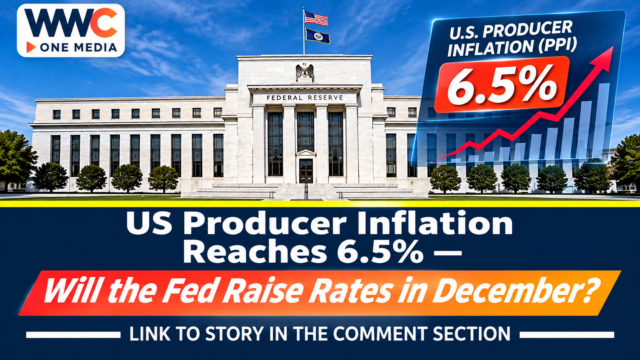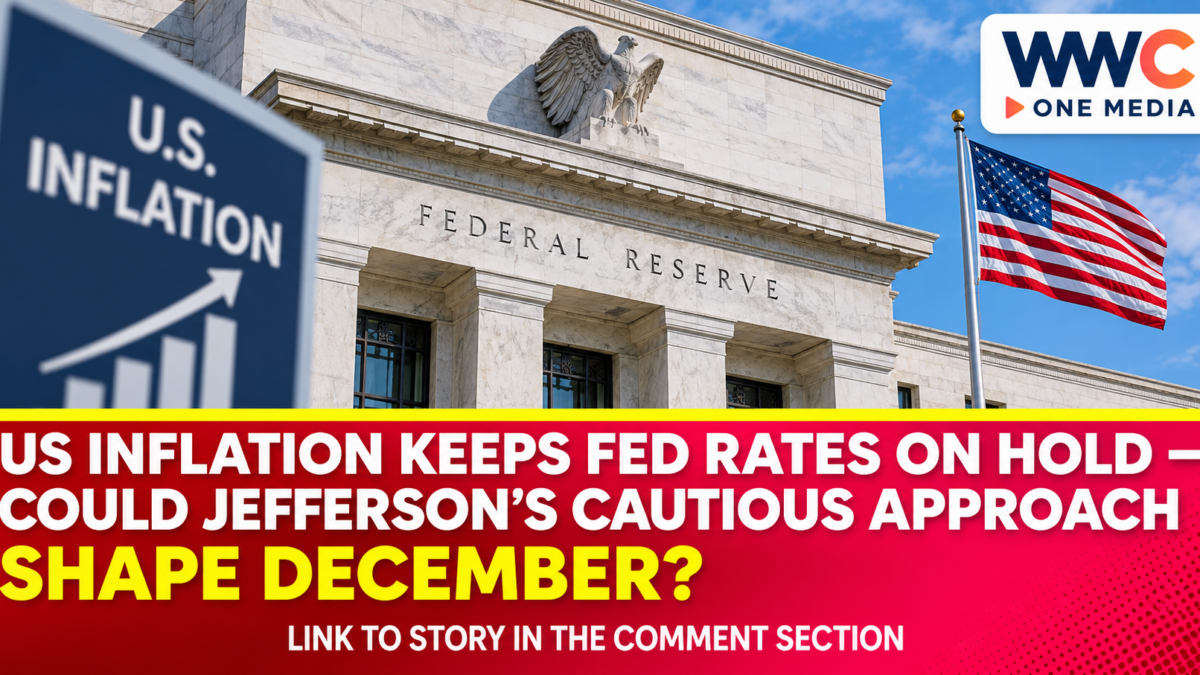
MANILA, Philippines — Nov. 14, 2026. The US Federal Reserve kept its benchmark interest-rate target at 3.75%–4.00% in October as inflation remained above its long-run goal, leaving its December policy choice unresolved. Vice Chair Philip N. Jefferson’s published assessment has stressed evaluating incoming evidence and the wider balance of risks rather than committing prematurely to another move.
The stakes reach beyond US borrowers. Global interest-rate expectations can affect dollar financing, currencies and investment decisions, including those facing Philippine businesses. Yet a policymaker’s individual comments, a market forecast and an official Federal Open Market Committee (FOMC) decision are three different things.
Fed Rate Decision: What the October Vote Established
On Oct. 28, the FOMC held the federal funds target range at 3.75%–4.00%. Its official statement recorded a 10–2 vote. Governors Lisa D. Cook and Beth M. Hammack dissented because they preferred to raise the range by a quarter of a percentage point.
The vote followed the committee’s Sept. 16 decision to increase the target range by 0.25 percentage point. The sequence matters: the October hold did not reverse September’s tightening. It gave policymakers more time to determine whether additional action was necessary.
The October statement characterised US economic activity as expanding strongly, with resilient domestic spending and little change in unemployment. At the same time, the committee said inflation remained elevated and that additional information would inform the appropriate policy stance.
A majority voting to hold does not necessarily signal a commitment to keeping rates unchanged throughout December. Conversely, two dissenting votes do not mean an increase has already been approved for the next meeting.
Inflation Data Explain Why the Choice Is Difficult
The official personal consumption expenditures (PCE) price index rose 3.6% over the year through September 2026. The index excluding food and energy rose 3.1% over the same period. Both readings exceeded the Fed’s longer-run 2% inflation goal.
The monthly numbers also deserve attention: headline PCE prices increased 0.5% in September, while core prices increased 0.3%. These changes measure different periods from the annual figures and should not be added together or interpreted as new annual inflation rates.
Household purchasing power and monetary policy are connected, but not through a simple formula. Elevated inflation can reduce the value of wages and savings, while tighter interest rates can make mortgages, business loans and other financing more expensive.
WWC ONE MEDIA has examined US inflation and household price pressures. The latest official PCE figures offer a complementary measure of consumer prices; they are not interchangeable with the consumer price index, which uses a different statistical methodology.
What Jefferson’s Published Assessment Actually Says
In an Oct. 1 speech, Vice Chair Jefferson described an economy facing overlapping energy, trade and artificial-intelligence investment shocks. He argued that officials must consider their combined effects rather than treat each change independently.
Jefferson supported September’s interest-rate increase and said he was watching whether underlying inflation would return to target quickly enough. His published remarks emphasised economic trends, the outlook and risks surrounding the Fed’s dual mandate of maximum employment and stable prices.
He also pointed to strong business investment associated with artificial intelligence. That activity may support economic output, but rapid demand for equipment, energy and skilled labour can create near-term cost pressures. These potential effects complicate attempts to infer future inflation from any single development.
The Federal Reserve calendar lists a Jefferson speech on Nov. 13. An original transcript or recording of that address was not accessible for direct verification in this review. Consequently, this report does not reproduce quotations or specific policy predictions attributed to his November appearance.
Why December Is Not a Predetermined Rate Hike
Policy disagreements have become a central part of the public discussion. WWC’s coverage of Mary Daly’s interest-rate outlook describes one aspect of that debate, while its account of the debate over the Fed’s next move examines other policymakers’ positions.
But the deciding institution is the FOMC, not one governor or regional bank president. The committee must assess new inflation and labour-market information before voting. Individual speeches can clarify priorities; they cannot enact a new target range on their own.
The next scheduled PCE release is Nov. 25, covering October income, spending and prices. The numbers could provide additional evidence about whether price pressures are easing or remaining persistent. Even then, one report will not capture every risk to employment or growth.
The question for investors is therefore less about guessing a particular vote than understanding which evidence would change policymakers’ assessments. Stronger-than-expected inflation could reinforce arguments for additional restraint. A meaningful weakening of activity or employment could complicate that case.
What This Could Mean for Philippine Businesses
Analysis: Federal Reserve decisions can influence global bond yields, the attractiveness of dollar assets and international borrowing conditions. Those channels may affect Philippine importers, investors and companies servicing obligations denominated in US dollars.
The impact is neither automatic nor uniform. A change in US policy can coincide with other movements in energy markets, domestic interest rates and currency expectations. It would be inaccurate to claim that a quarter-point Fed increase mechanically produces an equivalent rise in Philippine bank lending rates.
For exporters, currency movements can have mixed effects depending on costs, contracts and revenue currencies. For import-dependent businesses, a stronger dollar may increase peso-denominated input costs. These are possible transmission channels, not guaranteed results from a single FOMC meeting.
The more useful approach is scenario planning: assess financing under several exchange-rate and interest-rate outcomes, rather than assuming either a December rate increase or an unchanged policy stance is certain.
What Happens Next
Official inflation releases, updated employment information and the next FOMC decision will provide a clearer picture of whether US monetary policy needs further tightening. The October hold and Jefferson’s documented remarks establish caution, not an announced December result.
For Philippine readers, the message is to separate confirmed policy from expectations. The Fed’s mandate is domestic, but the economic consequences of its decisions can travel across financial markets well beyond the United States.
Frequently Asked Questions
What is the current Federal Reserve interest-rate range?
The FOMC maintained its federal funds target at 3.75%–4.00% on Oct. 28, 2026. That is the most recent policy decision verified for this article.
Why does the Fed watch PCE inflation?
The Fed uses the personal consumption expenditures price index to assess inflation relative to its 2% longer-run goal. September headline PCE inflation was 3.6% from a year earlier.
Did Philip Jefferson announce a December rate hike?
No such announcement was established from the primary records inspected. His accessible Oct. 1 remarks called for assessing economic data and risks rather than committing to a specific next step.
Can a US rate increase affect the Philippine peso?
It can affect dollar demand, international yields and capital flows, but the exchange-rate outcome depends on multiple factors. The BSP independently sets Philippine monetary policy.