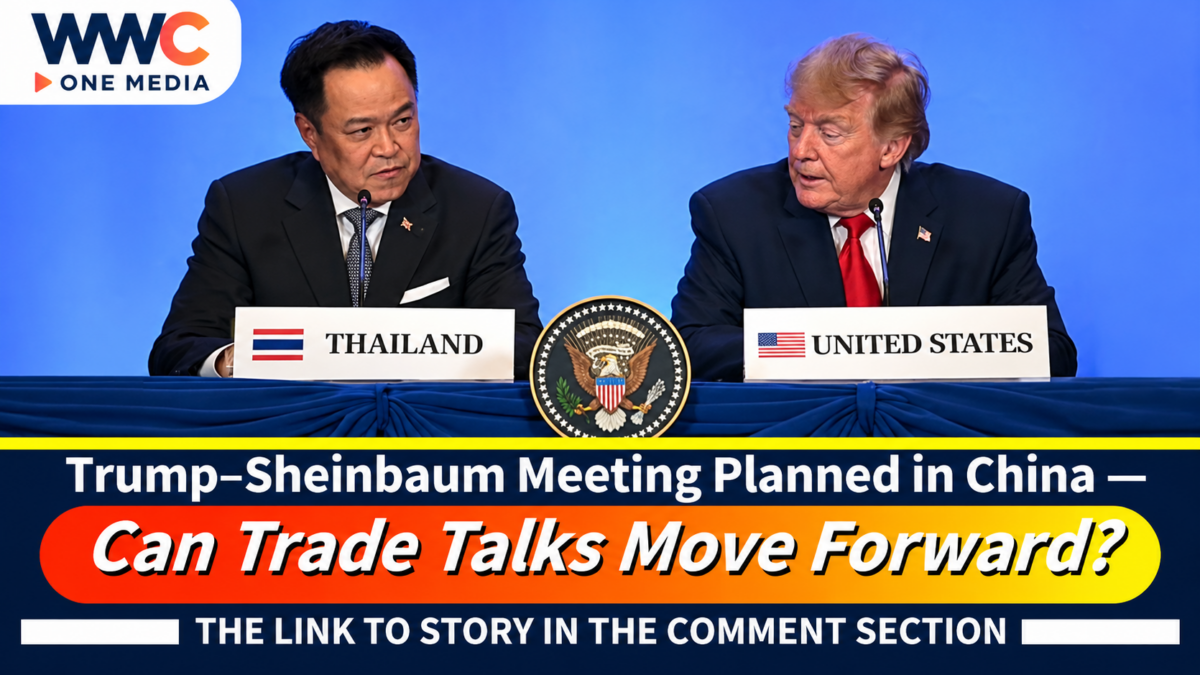
Mexican President Claudia Sheinbaum identified a meeting with US President Donald Trump among her planned activities in Shenzhen on Nov. 18, 2026, while attending the Asia-Pacific Economic Cooperation (APEC) gathering. A Mexican government public-media account of her Nov. 17 remarks placed the proposed encounter alongside meetings with other leaders and a visit to a Chinese hospital, but did not establish that a bilateral agreement had been reached.
The most consequential question is whether a brief presidential conversation can advance unfinished North American trade negotiations. The United States–Mexico–Canada Agreement (USMCA) remains in force, even though Washington declined to renew it in its existing form during the July review.
Trump–Sheinbaum meeting: what is actually confirmed?
Mexico’s official arrangements place Sheinbaum in Shenzhen for APEC activities from Nov. 17 to 19. The presidency’s published advance programme identified meetings with Chinese President Xi Jinping and leaders from Canada, Australia and Vietnam, along with discussions of scientific cooperation, technology and investment.
The Nov. 17 account subsequently added Trump to the president’s expected activities for Nov. 18. That is a change from the Nov. 12 planning announcement, which did not list a confirmed Trump meeting. It is a reported official schedule, not a signed joint statement or evidence that negotiations have concluded.
Why the distinction matters: A brief encounter during a crowded summit can enable direct communication without becoming a full negotiating session. The governments would need to release substantive outcomes before a headline could legitimately claim a tariff reduction, an agreed timetable or a trade breakthrough.
North American trade rules remain in effect
A US Trade Representative (USTR) statement dated July 2026 says the three countries conducted the required joint review of USMCA. Washington did not agree to renew the treaty in its current form, but explicitly confirmed that the agreement remains in force pending resolution or termination under its provisions.
That difference is essential for companies operating regional supply chains. Failure to renew the existing terms at the review is not the same legal event as immediate termination of preferential trade arrangements.
During the third bilateral negotiating round on July 23, US Trade Representative Jamieson Greer met Sheinbaum in Mexico City. A joint government statement identified economic security, labour, agriculture, electronic payments, steel and aluminium, and automobiles among the issues discussed.
For context, WWC previously examined the continuing US–Mexico trade negotiations and USMCA’s unresolved review. The question for the Shenzhen encounter is whether the presidents give their negotiators new, identifiable instructions, not whether simply meeting changes the treaty.
Why automobile and industrial rules are central
The July US–Mexico statement emphasised stronger North American manufacturing and more resilient regional supply chains. It also recorded a shared intention to address concerns about countries outside the agreement benefiting from trade arrangements.
Automotive production illustrates why those discussions matter. Rules establishing a product’s qualifying origin can affect how manufacturers source parts, document compliance and plan factories. An announced meeting cannot by itself establish that these rules have changed.
Steel, aluminium and agricultural trade are distinct subjects requiring their own negotiated terms. Describing the entire relationship as a single tariff dispute would obscure these important differences.
Mexico’s interactions with Canada are also relevant because USMCA involves all three governments. WWC’s coverage of Canada–US trade negotiations provides regional context, but Canadian negotiating proposals should not be mistaken for an agreement between Mexico and the United States.
Sheinbaum’s China agenda has a separate purpose
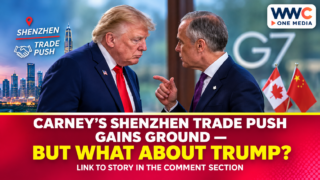
Mexico’s pre-summit programme focused on presenting Plan México and exploring cooperation on technology, scientific research, renewable energy and public services. The Nov. 17 official account said Sheinbaum had met Xi and Canadian Prime Minister Mark Carney during the China visit.
These diplomatic tracks involve different counterparts and different objectives. Mexico’s meeting with China does not constitute a modification of USMCA, nor does a conversation with Trump establish any restriction on Mexico’s engagement with other APEC economies.
Analysis: Holding conversations with several major trading partners can allow Mexico to pursue investment and industrial priorities while negotiating with its North American neighbours. Whether those objectives are compatible in a particular sector depends on the detailed trade rules and commitments, not simply on which leaders appear together in Shenzhen.
What could this mean for the Philippines?
The Shenzhen meeting follows Trump’s participation in the ASEAN programme in Manila. WWC’s report on the US president’s Manila visit and the limits of summit commitments examines the difference between high-level engagements and enforceable commercial outcomes.
For Philippine exporters and manufacturers, changes in North American sourcing requirements could eventually influence international supply-chain decisions. However, no direct change to Philippine tariffs, factory investment or trade preferences follows from the proposed Trump–Sheinbaum encounter alone.
The relevant evidence would be published regulatory changes, final negotiated texts and company investment disclosures. A summit photograph or broad declaration of cooperation does not provide those details.
What happens next
The first question is whether the US and Mexican presidencies publish a joint account confirming that the Nov. 18 meeting took place, what subjects were discussed and whether officials were given follow-up tasks. Until then, any reported encounter should remain described as planned rather than completed.
The formal trade process will also continue independently. On Oct. 2, USTR launched public consultations for a 2027 joint review and set Jan. 12, 2027 as the deadline for comments. That published process is a concrete future step, but not evidence that a revised agreement has been settled.
The takeaway: The two presidents have an opportunity to discuss unresolved trade issues in China. The public record reviewed here supports the planned contact and the existing negotiation framework; it does not yet support claims of a new trade deal or immediate tariff relief.
FAQ
Will Trump meet Claudia Sheinbaum in China?
A Nov. 17 Mexican government public-media account lists a meeting with Trump among Sheinbaum’s planned Nov. 18 activities in Shenzhen. The material reviewed does not confirm completion or its outcome.
Has the United States–Mexico–Canada Agreement expired?
No. USTR says USMCA remains in force even though the United States declined to renew its existing terms during the July 2026 joint review.
What issues are the US and Mexico negotiating?
Their published July statement identifies subjects including automobiles, economic security, agriculture, labour, electronic payments, steel and aluminium.
Could a meeting in China immediately reduce tariffs?
A meeting alone does not change applicable trade measures. Any adjustment would require an identifiable official decision, agreement or legal instrument.
What is the next USMCA review milestone?
USTR has invited public comments for the 2027 joint review, with a submission deadline of Jan. 12, 2027.