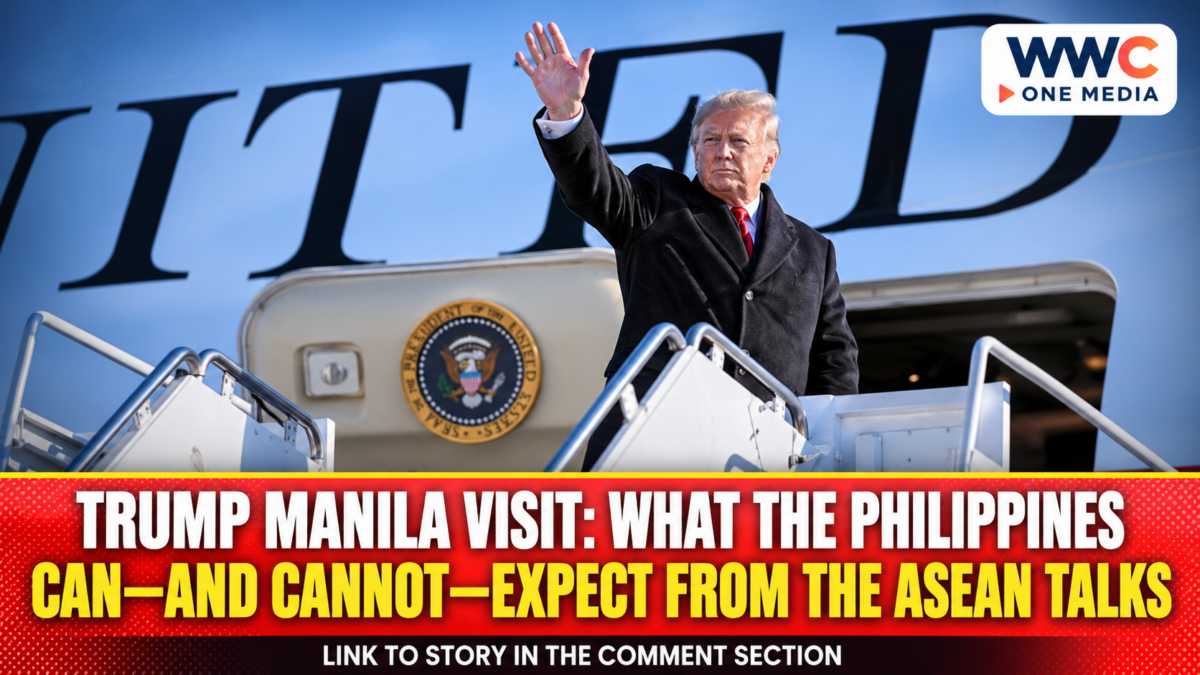
United States President Donald Trump is scheduled to visit Manila on Nov. 17 for the 49th Association of Southeast Asian Nations (ASEAN) Summit and Related Summits, with the Philippines confirming his participation in the ASEAN-U.S. Special Summit. His visit places the country’s relationship with Washington under renewed attention as regional leaders discuss economic cooperation, security and the future of Southeast Asian partnerships. Presidential Communications
For the Philippines, the significance goes beyond the presence of a US president. The visit comes as Manila concludes its 2026 ASEAN chairmanship, while Philippine exporters, investors and security officials continue to navigate a changing regional and international environment.
The central question is what the meetings can deliver. Trump’s attendance is confirmed, but the public records reviewed do not establish a new Philippine-U.S. trade agreement, a specific tariff concession or a completed package of bilateral commitments.
Trump Manila visit comes during the Philippines’ ASEAN closing programme
The Presidential Communications Office confirmed in October that Trump would attend the Manila summit. The announcement also recalled his previous visit from Nov. 12 to 14, 2017, when he attended the 31st ASEAN Summit during his first presidential term. Presidential Communications Office
The Philippine summit programme identifies Nov. 17 as a major day for leaders’ engagements. President Ferdinand Marcos Jr. is scheduled to convene the 29th ASEAN Plus Three Summit and the 21st East Asia Summit before the programme culminates in the ASEAN-U.S. Special Summit.
The Philippines is also set to hand over the ASEAN chairship to Singapore at the conclusion of its term. Presidential Communications Office
The timing gives Manila an opportunity to present its priorities to regional partners while maintaining direct engagement with Washington.
It also makes the distinction between ASEAN-wide discussions and bilateral diplomacy important. The ASEAN-U.S. Special Summit involves the United States and the Southeast Asian bloc, while separate bilateral discussions address matters between individual governments.
Trade is important, but no new Philippine deal is confirmed
Trade is among the most important areas to watch during Trump’s visit. The United States is a major market for Philippine products, and changes in tariffs, market access or supply-chain requirements can affect local exporters.
The two presidents have already discussed economic matters. The Palace’s October announcement recalled their July 22, 2025, face-to-face meeting at the White House, where bilateral relations, defence cooperation and trade were discussed. It also said they spoke by telephone on July 23, 2026, about economic developments and regional security, including the South China Sea. Presidential Communications Office
That history provides context for the current visit, but it does not prove that a particular trade agreement will be signed in Manila.
WWC previously examined the tariff issue in its report on how lower US tariffs returned to the Philippine trade agenda. The issue remains relevant to businesses that depend on access to the American market, but any change in tariff treatment would need to be confirmed through an official US measure.
For exporters, the practical test is not simply whether leaders discuss trade. It is whether any announcement eventually changes the rules, costs or conditions governing shipments.
Regional security remains part of the relationship
Economic cooperation is only one part of the agenda. The Palace said the presidents’ July 2026 telephone conversation also covered regional security concerns, including the South China Sea. Presidential Communications Office
That issue remains significant for the Philippines, which has consistently raised maritime security and the protection of its rights under international law in regional discussions.
The broader ASEAN agenda also includes peace and security, stronger economic links and people-centred cooperation. President Marcos described the Philippines’ 2026 chairship theme as “Navigating Our Future, Together” in his opening remarks at the summit on Nov. 15. Presidential Communications Office
For background, WWC’s explainer on ASEAN’s role as an 11-member regional bloc outlines why cooperation among Southeast Asian governments matters beyond formal summit ceremonies.
The United States’ engagement with ASEAN is also important because regional governments maintain different economic and security relationships with Washington, China and other major powers. A summit can provide a venue for dialogue, but it does not automatically resolve competing interests.
Supply chains and investment are another test for Manila
The Philippines is also seeking to strengthen its position in regional supply chains. Manufacturing, digital services, logistics and technology-related investment all depend on predictable trade rules and access to international markets.
That makes the economic side of the summit relevant to Philippine businesses even when no immediate agreement is announced.
WWC has previously examined how ASEAN supply chains are shifting and whether Philippine firms can benefit. The broader challenge is whether local companies can meet the standards, delivery requirements and production capacity expected by international buyers.
Analysis: A high-level visit can strengthen political relationships and create opportunities for further negotiations. But businesses need more than diplomatic signals. They need clear rules, measurable commitments and implementation schedules before they can make investment or export decisions based on a new arrangement.
The same standard applies to technology and strategic-industry initiatives. WWC’s previous coverage of the proposed Pax Silica framework and its status highlights why proposed cooperation should not be confused with a completed agreement.
What happens next
Trump’s scheduled participation in the ASEAN-U.S. Special Summit is the immediate diplomatic milestone on Nov. 17. The Philippines’ wider summit programme also includes ASEAN Plus Three and East Asia Summit engagements, followed by the handover of the ASEAN chairship to Singapore. Presidential Communications Office
The next major test will be whether the governments issue official statements or documents setting out concrete results from their discussions.
For Philippine businesses, any tariff announcement should be checked against the relevant US government measure. For security and maritime issues, the substance of official statements will matter more than general expressions of support.
Until such documents are released, the visit should be treated as an important diplomatic engagement—not proof that a new trade deal or security commitment has already been secured.
Frequently Asked Questions
Why is Donald Trump visiting the Philippines?
Trump is scheduled to attend the 49th ASEAN Summit and Related Summits in Manila, including the ASEAN-U.S. Special Summit. Presidential Communications Office+1
When is the ASEAN-U.S. Special Summit?
The Philippine summit programme identifies Nov. 17, 2026, as the day the ASEAN-U.S. Special Summit will take place. Presidential Communications Office
Will Marcos and Trump discuss trade?
Trade was among the topics discussed during their July 2025 White House meeting. The Palace also said their July 2026 telephone conversation covered economic developments. The public records reviewed do not establish the precise agenda or confirm a new trade agreement for the November visit. Presidential Communications Office
Will the Philippines receive lower US tariffs?
No tariff reduction has been established by the official records reviewed for this article. Any change would need to be confirmed through an official US government measure.
What happens to the ASEAN chairship after the summit?
The Philippines is scheduled to hand over the ASEAN chairship to Singapore at the conclusion of its 2026 term.