Malaysia’s Ministry of Finance has warned the public against a fake viral advertisement claiming that QR code payments will incur new service charges starting November 1, 2026, urging Malaysians not to believe or share the misleading information.
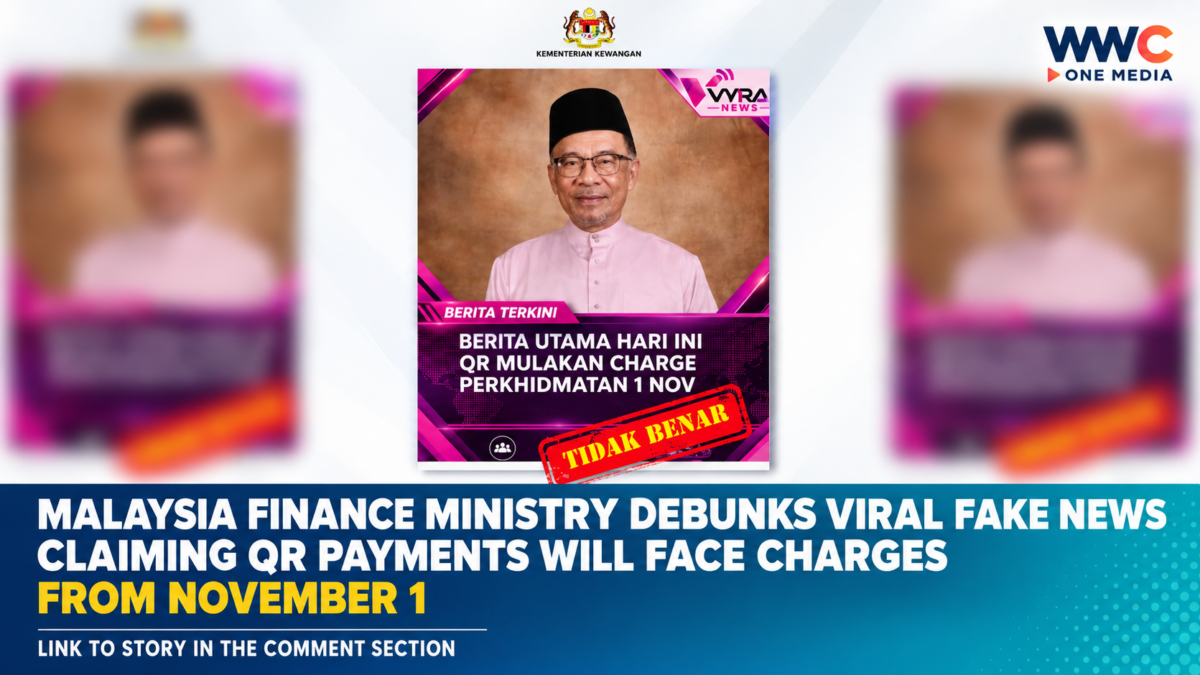
The fabricated poster, which circulated on social media, carried the headline “Top News Today: QR to Start Service Charge on Nov 1” and featured an image of Prime Minister Anwar Ibrahim, making the false announcement appear credible.
In a statement on October 18, the ministry firmly denied the claim, confirming that no official announcement has been made to introduce the service charges described in the poster.
The warning comes as QR payments become increasingly common across Malaysia, from restaurants and shopping centres to neighbourhood shops and roadside stalls. The false information risked creating unnecessary confusion among consumers and businesses that rely on cashless transactions.
The ministry urged the public to obtain accurate information through its official channels before accepting or sharing claims about changes to government policies and payment arrangements.
Viral Poster About QR Payment Charges Is Fake
The misleading poster was designed to resemble a legitimate news announcement, using a prominent political figure and a headline suggesting an imminent change to everyday payment rules.
It claimed that QR payment transactions would begin attracting service charges on November 1, 2026. However, Malaysia’s Finance Ministry clarified that the alleged policy change had not been officially announced.
The Star and Malay Mail also reported the ministry’s clarification on October 18, confirming that the circulating claim was false.
Authorities have not publicly identified who created the poster or established how widely it had circulated.
The incident highlights how fabricated announcements can exploit the appearance of established news outlets and familiar public figures to spread misinformation rapidly through social media.
Consumers should therefore avoid treating a screenshot, poster or forwarded message as proof of a new government policy, even when it appears professionally designed.
Will Malaysians Have to Pay Extra for QR Transactions?
For individual consumers, the important distinction is that the alleged November 1 service charge has not been announced by the government.
Bank Negara Malaysia previously clarified that individual customers would not incur additional charges when using DuitNow QR to make payments.
In its September 2023 statement, the central bank also explained that transaction fees can apply on the merchant side, depending on the payment provider and applicable arrangements. Major banks and selected non-bank financial service providers agreed to continue waiving transaction fees for micro and small businesses accepting DuitNow QR payments.
These merchant-related fees are different from a service charge imposed directly on customers for making QR payments.
Consequently, the fake poster should not be confused with the existing arrangements governing payment processing fees for businesses.
Consumers who encounter unexpected charges should check their receipts and ask the merchant for an explanation. If necessary, they can contact their payment provider through its official customer service channels.
Malaysia’s QR Payment System Faces Growing Scam Risks
The misinformation warning comes amid wider concerns about the misuse of QR codes in financial scams.
In September 2026, the Royal Malaysia Police reported that more than 5,000 QR-code scam cases had been recorded between January and June, resulting in losses approaching RM30 million.
The scam technique, commonly known as “quishing”, involves using QR codes to direct victims to fraudulent websites, fake payment gateways or malicious applications. Criminals may attempt to steal banking credentials, redirect payments or trick victims into approving transactions.
Although the fake service-charge poster is a misinformation incident rather than necessarily a QR-code scam, both cases demonstrate the importance of verifying financial information before taking action.
Consumers should never scan an unfamiliar QR code or enter banking information on a website simply because a social media post claims that doing so is necessary to avoid a new fee.
They should also verify the recipient’s name and payment amount before confirming a transaction.
Government Urges Public to Stop Spreading Unverified Claims
The Finance Ministry has urged Malaysians to consult its official communication channels before sharing information about financial policies.
The advice is particularly relevant when a post claims that a new charge, tax or payment requirement will take effect on a specific date. Such announcements can cause widespread confusion when they are circulated without verification.
A few simple precautions can help prevent the spread of false information:
- Check whether the announcement appears on the Finance Ministry’s official channels.
- Look for independent confirmation from established news organisations.
- Verify the original source instead of relying on screenshots or forwarded messages.
- Avoid sharing alarming claims before their authenticity has been established.
- Never provide banking details or transfer money in response to an unverified announcement.
If a claim appears suspicious, members of the public should report it through the appropriate platform or authorities rather than amplifying it.
What Malaysians Need to Know Before November 1
There is currently no official announcement supporting the viral claim that QR payments will begin attracting the advertised service charges on November 1, 2026.
The Finance Ministry has explicitly described the poster as false, while Bank Negara Malaysia’s existing guidance distinguishes consumer payment costs from merchant-side transaction fees.
The public should continue using legitimate payment services while remaining alert to suspicious payment requests and misleading online information.
As cashless transactions become increasingly integrated into everyday life, reliable public information is essential to maintaining confidence in digital payments.
For now, Malaysians should not change their payment habits or pay an alleged new fee solely because of the viral poster. Any genuine policy change should be verified through official government announcements and trusted financial service providers.