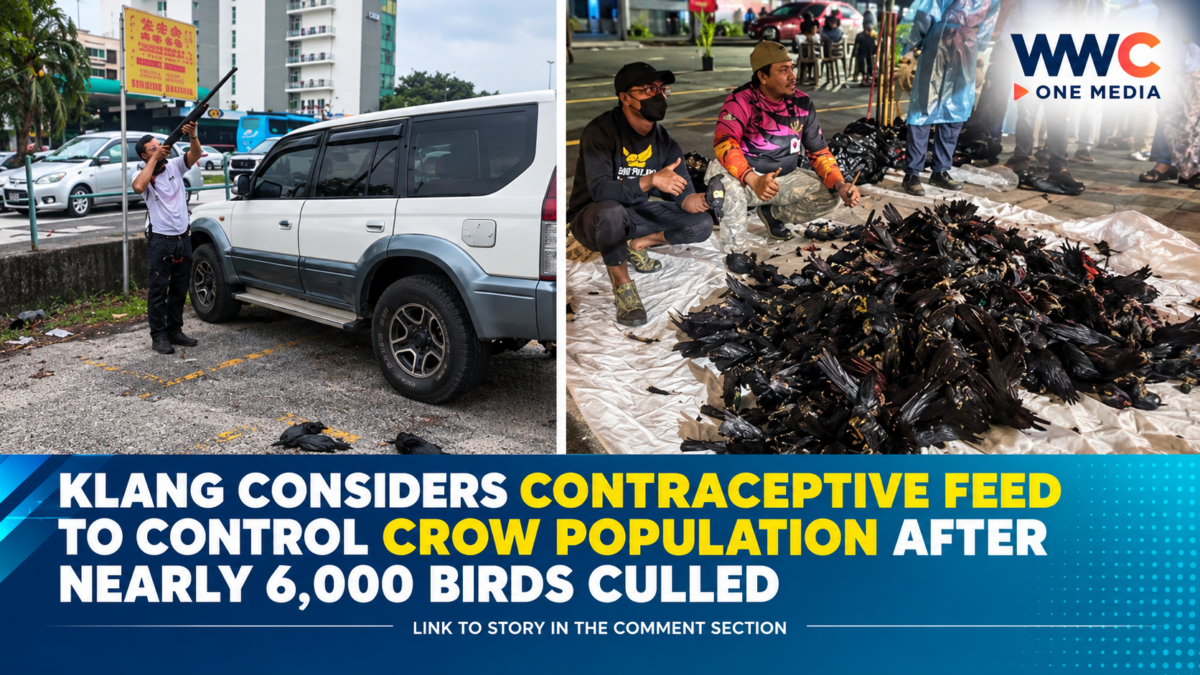
KLANG, Malaysia — Authorities in Klang, Selangor, are considering a non-lethal method of controlling the growing crow population by using contraceptive-laced bird feed, following complaints about bird droppings, noise and hygiene in busy commercial areas.
The proposed trial, put forward by city councillor Chris Lee, would mark a potential shift away from shooting crows towards controlling their reproduction. The Klang Royal City Council is considering introducing the method in Bandar Bukit Tinggi, a township known for its night markets and open-air eateries.
Lee said the oral contraceptive works by weakening egg yolk membranes to prevent eggs from hatching. He described the method as non-lethal and said it could offer a longer-term alternative to culling.
The proposal comes after nearly 6,000 crows were killed in population-control operations across Klang this year. During an operation last month, licensed shooters killed 3,083 birds in a single day in Bandar Bukit Tinggi and surrounding areas.
Lee said shooting provides only temporary relief because new flocks continue to arrive when food and suitable shelter remain readily available.
Food Waste Contributes to the Crow Problem
The abundance of food and trees has helped attract crows to Klang’s commercial districts. The problem is compounded by some eateries disposing of food scraps in drains or failing to manage waste properly.
With easy access to discarded food, the birds can continue gathering and multiplying even after population-control operations.
The council’s proposed contraceptive approach is therefore being considered alongside the wider challenge of managing the conditions that attract the birds.
Droppings Create Problems for Businesses and Residents
The growing crow population has caused frustration among shopkeepers, shoppers and residents, particularly in areas with outdoor dining and heavy pedestrian traffic.
Shop owner Ngu Leh Ping, who operates along Lorong Batu Nilam 4A, said parked vehicles frequently end up covered in bird droppings.
Lee said the droppings also dirty shopfronts, vehicles and outdoor furniture. Their acidic properties can accelerate corrosion of metal fixtures, signage and building facades, potentially increasing maintenance costs.
He also warned that dried bird droppings may contain fungal spores and bacteria, raising concerns about hygiene in public spaces and around food establishments.
Council to Review the Proposed Trial
The Klang Royal City Council has discussed the proposal with its Health Department’s sub-committee. Its Corporate Communications Department director, Norfiza Mahfiz, said a local distributor based in Shah Alam is expected to brief the council within a month.
The proposed trial has not yet been confirmed, and further discussions will be needed before the council decides how to proceed.
If adopted, the contraceptive feed could provide an alternative to repeated culling. However, reducing food waste and improving rubbish disposal are also likely to remain important parts of managing the problem.
For now, Klang’s plan remains under consideration as authorities weigh a potentially more humane approach to controlling the crow population while addressing residents’ concerns about cleanliness and public health.