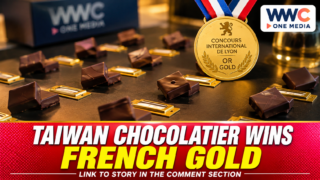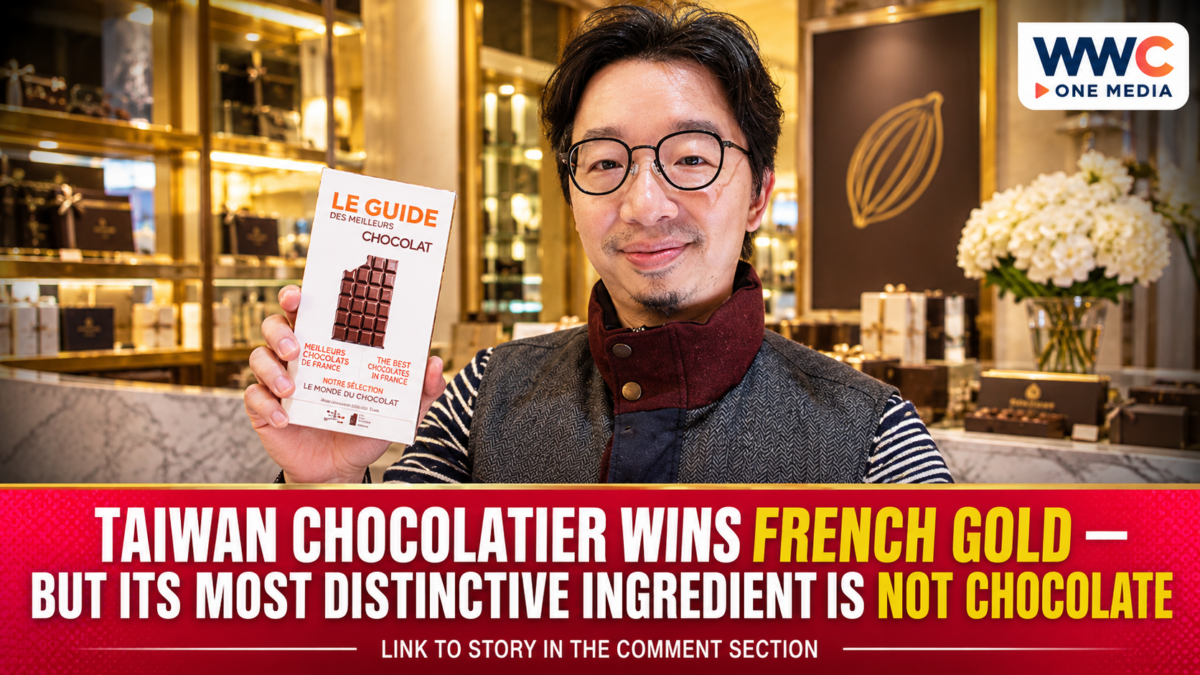
A Taiwanese artisan chocolate brand has received a major distinction in the 2027 edition of a French chocolate guide, bringing international attention to a product range that combines traditional confectionery techniques with flavours associated with Taiwan. Yu Chocolatier, founded by Cheng Yu-Hsuan, is presenting four recognised bonbons that include oolong tea, cognac and a caramel creation made with Taiwanese black soy sauce.
The recognition places a Taiwan-based independent chocolatier among the international makers featured in the latest edition of Le Guide des Croqueurs de Chocolat. It also highlights a growing opportunity for specialty food businesses: using regional ingredients and cultural identity to distinguish products in an international market.
For Yu Chocolatier, the achievement is not simply about introducing unusual flavours. It demonstrates how a small food brand can build a recognisable product identity by connecting craftsmanship with a sense of place.
Taiwan chocolatier earns recognition through four bonbons
The brand’s official product listing identifies its four featured creations as Yu, Classic Oolong, Cognac and Caramel Soy Sauce. The company describes the distinction as the highest Tablette d’Or honour associated with the French guide’s 2027 edition.
The four-piece selection brings together different influences. Classic Oolong combines roasted tea character with milk chocolate, while Cognac pairs the spirit with dark chocolate. The signature Yu bonbon focuses on a balanced chocolate ganache, and Caramel Soy Sauce uses Taiwanese black soy sauce with caramel and dark chocolate.
The soy sauce flavour is particularly notable because it draws on an ingredient more commonly associated with savoury cooking than confectionery. Rather than treating local flavour as a decorative addition, the recipe makes it part of the chocolate’s central taste profile.
The award recognition gives the brand an international platform, but the product range also offers a practical example of how culinary identity can be translated into a premium food product.
How the French chocolate guide evaluates makers
The Club des Croqueurs de Chocolat, the organisation behind the guide, says its 2027 edition features nearly 180 chocolatiers from France and other countries.
Its published description says more than 700 chocolates were tasted by club members. The selection is based on independent blind tastings, with distinctions awarded to makers recognised for their skill, creativity and approach to chocolate.
The guide evaluates both filled chocolates, known as bonbons, and chocolate bars. Its recognition system includes gold, silver and bronze distinctions, alongside other awards and selections.
Blind tasting is important because it places emphasis on the product rather than the brand’s marketing or presentation. For an independent chocolatier competing with established international names, that kind of evaluation can provide meaningful recognition of the work itself.
The distinction does not automatically establish commercial success or guarantee that a product will become popular in every market. It does, however, give buyers and chocolate enthusiasts another reference point when discovering specialist producers.
A brand built around Taiwanese and international influences
Yu Chocolatier was established in 2015. Its official brand history identifies Cheng Yu-Hsuan as its founder and master chocolatier.
The company describes its approach as combining fine cacao with ingredients and influences from different regions. Its published brand story identifies Taiwanese teas, fruits and spices alongside French dairy products, chocolates from different origins and spirits from around the world.
That approach is relevant to the brand’s latest recognition. The products do not rely on a single national ingredient to communicate their identity. Instead, they combine techniques and materials from different culinary traditions.
The company’s own history also records earlier international milestones. It identifies its participation in the International Chocolate Awards in 2016 and its first appearance at Salon du Chocolat Paris in 2017 as important steps in its development.
Those milestones suggest a business strategy built around gradual international exposure rather than a single award announcement.
Why the soy sauce bonbon matters to food businesses
The Caramel Soy Sauce bonbon illustrates a broader opportunity for specialty food producers: transforming familiar regional ingredients into products that can appeal to consumers outside their original culinary context.
For a food business, differentiation is increasingly important. A product that can be described only as another chocolate or confectionery item may struggle to stand out in a crowded premium market. A product with a distinctive ingredient story, carefully developed flavour and consistent quality has a clearer identity.
This does not mean that adding an unusual ingredient automatically creates a successful product. Taste balance, production consistency, sourcing, shelf life, packaging and pricing remain essential commercial considerations.
The strategy can also be seen in other Asian food businesses. WWC previously examined how Auro Chocolate turns Filipino street-food favourites into chocolate creations, using familiar food references to develop a distinct confectionery identity.
A similar value-adding approach appears in the Philippine agricultural sector, where entrepreneurs are developing commercial products from native batuan fruit. In both cases, local ingredients and cultural associations become part of a product’s commercial proposition.
International recognition is an opportunity, not a guarantee
Awards can help independent food brands attract attention from retailers, distributors, customers and potential business partners. They can also strengthen a brand’s credibility when approaching markets where consumers are unfamiliar with its name.
However, the next stage involves converting recognition into sustainable business activity. That may require dependable production capacity, consistent ingredient sourcing, appropriate logistics and the ability to maintain product quality beyond a limited award-related release.
Yu Chocolatier’s official website also records previous participation in international chocolate events and recognition in other food and design programmes. These milestones provide context for its latest distinction, although they do not establish the financial performance of the business.
For Taiwan’s wider food industry, the development is another example of how specialist producers can use cultural influences without limiting themselves to traditional recipes. It also adds to the broader international visibility of Asian food craftsmanship, a theme explored in WWC’s coverage of regional restaurants and culinary businesses receiving international recognition.
What happens next
The 2027 guide gives Yu Chocolatier another opportunity to introduce its work to international chocolate enthusiasts and the specialty food trade.
The company’s award-themed gift selection features the four named bonbons, offering a way for customers to experience the creations recognised in the French guide. Its longer-term commercial impact will depend on customer demand, distribution and the brand’s ability to maintain its standards as interest grows.
For other independent food producers, the lesson is not that every local ingredient should be turned into an unusual dessert. It is that distinctive products can emerge when a business understands its ingredients, develops a clear identity and delivers consistent craftsmanship.
Taiwanese soy sauce in a chocolate bonbon may sound unexpected, but that contrast is precisely what gives the product a story beyond its category.
Frequently asked questions
What is Yu Chocolatier?
Yu Chocolatier is a Taiwan-based artisan chocolate brand founded by Cheng Yu-Hsuan in 2015.
What award did Yu Chocolatier receive?
The brand identifies its 2027 distinction in Le Guide des Croqueurs de Chocolat as Tablette d’Or.
Which four chocolates are featured in the award selection?
The four creations are Yu, Classic Oolong, Cognac and Caramel Soy Sauce.
What makes Yu Chocolatier’s soy sauce chocolate distinctive?
The Caramel Soy Sauce bonbon combines Taiwanese black soy sauce with caramel and dark chocolate, bringing a savoury ingredient into a confectionery format.
How does the French chocolate guide evaluate products?
The Club des Croqueurs de Chocolat says its guide uses independent blind tastings conducted by club members to assess chocolates from French and international makers.