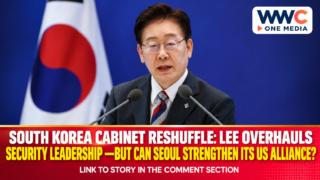
SEOUL, South Korea — President Lee Jae Myung announced a major South Korea security reshuffle on Nov. 23, 2026, nominating new leaders for the country’s intelligence agency, foreign ministry and unification ministry as his administration pursues stronger international cooperation and stability on the Korean Peninsula.
Five senior government positions are covered by the leadership changes, placing diplomatic coordination, intelligence oversight and regional security among the administration’s immediate priorities.
The announcement presents Seoul with an opportunity to strengthen its partnership with Washington without abandoning diplomatic engagement with Beijing or its pursuit of reduced tensions with Pyongyang.
However, changing the leadership is only the beginning. The more consequential test will be whether the new officials can translate those ambitions into measurable diplomatic results.
South Korea Security Reshuffle Places Washington Relationship in Focus
Lee nominated Lim Woong-soon, the second deputy director of the National Security Office, to become foreign minister.
Lim previously served in a senior diplomatic position at South Korea’s embassy in the United States, giving him professional experience in managing relations with Washington.
The administration intends to expand bilateral cooperation across security, commerce, industrial development and advanced technologies.
That combination makes the foreign minister’s responsibilities particularly significant for businesses and governments throughout the Asia-Pacific.
The relationship involves more than military cooperation. It also provides an important framework for economic partnerships and technological collaboration.
Seoul’s wider security agenda includes South Korea’s efforts to regain wartime operational control, another area where effective coordination with Washington remains important.
The latest nominations do not independently change existing defence arrangements or establish a new bilateral agreement.
Instead, they create an opportunity for the administration to reassess how its diplomatic objectives are implemented.
Former Justice Minister Selected to Lead Intelligence Agency
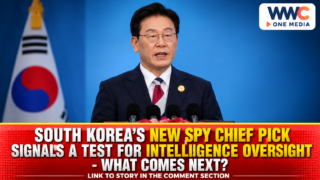
Lee has nominated Kang Kum-sil to become director of the National Intelligence Service (NIS).
A former judge, Kang previously became South Korea’s first female justice minister. Her professional background also includes international work involving women’s human rights.
The administration has identified democratic oversight, institutional neutrality and cooperation against emerging cybersecurity threats as priorities for intelligence leadership.
Her nomination places the relationship between national security and institutional accountability under renewed scrutiny.
Intelligence organisations must protect sensitive information while maintaining the confidence of the governments and institutions with which they cooperate.
Effective oversight and international intelligence cooperation are therefore complementary responsibilities rather than competing objectives.
The nomination also brings renewed attention to South Korea’s intelligence leadership and the future of democratic oversight.
Whether the leadership change produces stronger cooperation with foreign intelligence partners will depend on subsequent policy decisions.
No restoration or expansion of intelligence-sharing arrangements was announced as part of the nomination briefing.
North Korea Diplomacy Remains Central to Lee’s Strategy
The president selected former lawmaker Hong Ihk-pyo as his nominee for unification minister.
Hong has a background in economic research, legislative affairs and presidential administration, including experience involving foreign policy and inter-Korean affairs.
His proposed responsibilities come as Seoul continues to emphasise peaceful coexistence and the reduction of tensions on the Korean Peninsula.
On Nov. 20, Lee stressed the importance of South Korea taking an active role in addressing issues directly affecting the peninsula.
The position reflects a diplomatic objective that extends beyond maintaining strong relationships with international partners: Seoul also wants to influence the direction of discussions concerning its own security.
That goal could become particularly important if diplomatic engagement between Washington and Pyongyang resumes.
Nevertheless, South Korea cannot independently determine whether North Korea will participate in negotiations.
The nomination of a new unification minister should therefore be understood as a leadership decision, not confirmation of an imminent diplomatic breakthrough.
Seoul Continues Diplomatic Engagement With China
The security reshuffle follows Lee’s Nov. 18 meeting with Chinese President Xi Jinping in Shenzhen during the Asia-Pacific Economic Cooperation (APEC) gathering.
The two leaders discussed bilateral economic relations and efforts to reduce tensions on the Korean Peninsula.
Lee sought China’s constructive participation in addressing regional security concerns, while Xi expressed support for diplomatic efforts involving North Korea, including dialogue with the United States.
These discussions have renewed attention to the possibility of renewed US–North Korea dialogue and China’s diplomatic role.
For Seoul, maintaining productive engagement with Beijing while reinforcing cooperation with Washington presents a significant diplomatic balancing act.
The two objectives are not necessarily incompatible.
However, managing them requires clear communication and an understanding of where the interests of major regional powers converge or differ.
The reshuffle provides an opportunity to improve that coordination, although it does not guarantee that competing strategic interests will become easier to manage.
Japan Cooperation Adds Another Regional Dimension
Lee also met Japanese Prime Minister Sanae Takaichi on Nov. 17 during regional meetings in the Philippines.
The two leaders discussed stronger cooperation on energy security, supply chains and strategic communication in Northeast Asia.
These priorities illustrate the expanding relationship between economic security and traditional diplomacy.
For Asia-Pacific businesses, stable international relationships can support investment confidence, industrial partnerships and long-term supply-chain planning.
Diplomatic uncertainty, by contrast, can complicate decisions involving cross-border trade and technology cooperation.
The incoming diplomatic leadership will therefore face responsibilities extending beyond military alliances and inter-Korean relations.
Its performance could also influence how South Korea manages economic cooperation with neighbouring countries.
Two Additional Nominations Extend the Leadership Changes
Beyond the diplomatic and intelligence portfolios, Lee nominated lawmaker Han Jun-ho for minister of the interior and safety.
Presidential senior spokesperson Kang Yu-jung was nominated to become minister of culture, sports and tourism.
The broader reshuffle reflects the administration’s objective of accelerating government implementation and improving public services.
These domestic appointments demonstrate that the leadership changes are not exclusively concerned with international relations.
They also form part of an effort to improve administrative performance across multiple government departments.
What Happens Next?
The immediate challenge is turning the proposed leadership changes into effective governance and diplomatic coordination.
For Washington, Seoul’s subsequent policy decisions will provide a clearer indication of how the administration intends to strengthen bilateral cooperation.
For Beijing and Tokyo, the direction of South Korea’s regional diplomacy will remain equally important.
For the Korean Peninsula, meaningful progress will depend on whether diplomatic initiatives can produce practical measures to reduce tensions and build confidence.
The nominations establish the direction Lee wants his administration to pursue. They do not establish that existing disagreements have been resolved or that new international agreements are imminent.
The real measure of the South Korea security reshuffle will be what the new leadership can deliver after the announcement.
Frequently Asked Questions
Why did South Korea announce a security reshuffle?
President Lee Jae Myung announced five leadership nominations on Nov. 23, 2026, with the stated objectives of improving government performance, international cooperation and peaceful coexistence on the Korean Peninsula.
Who is South Korea’s new foreign minister nominee?
Lim Woong-soon, the second deputy director of the National Security Office and a career diplomat with experience in Washington, has been nominated for the position.
Who has been nominated to lead South Korea’s intelligence agency?
Former Justice Minister Kang Kum-sil has been nominated as director of the National Intelligence Service.
Does the reshuffle mean South Korea-US relations have improved?
Not necessarily. Strengthening the alliance is a stated objective, but the nominations alone do not demonstrate that diplomatic disagreements have been resolved.
Will South Korea resume negotiations with North Korea?
South Korea continues to pursue reduced tensions and peaceful coexistence. However, renewed negotiations would require participation from North Korea and potentially other diplomatic partners.