
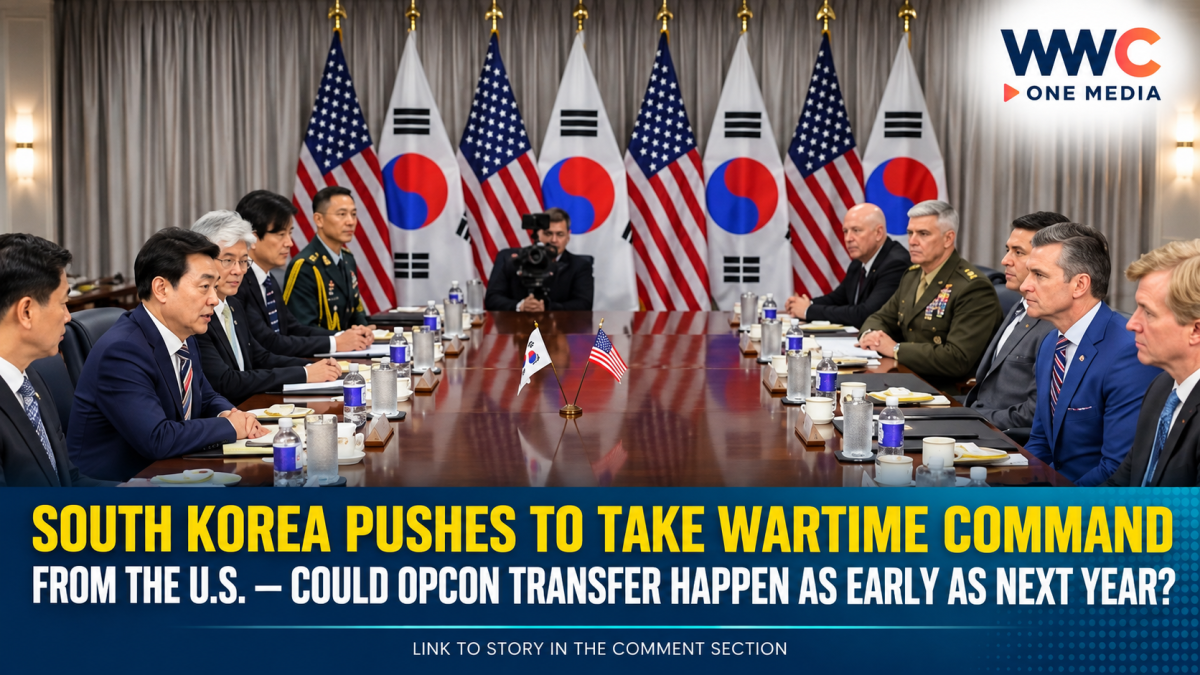
SEOUL — South Korea is stepping up efforts to regain wartime operational control (OPCON) of its forces from the United States, with Defense Minister nominee Kang Shin-chul saying Seoul is pursuing the transition under a principle of having “no additional conditions.”
Kang, a retired four-star Army general and former deputy commander of the South Korea-U.S. Combined Forces Command (CFC), made the remarks in written responses submitted ahead of his parliamentary confirmation hearing scheduled for Wednesday.
The issue is potentially one of the most consequential changes in the South Korea-U.S. military relationship in years, because wartime OPCON currently remains with the U.S. commander of the Combined Forces Command.
Seoul wants a decision before 2030
The Lee Jae Myung administration has been pushing to regain wartime operational control before the president’s five-year term ends in 2030, with Seoul also considering a transition as early as next year.
Kang said the Defense Ministry has been holding bilateral consultations with Washington based on the “no additional conditions” principle. He also said he does not view the difference between Seoul and Washington over the timing of the transition as significant.
South Korea regained peacetime operational control in 1994, but wartime OPCON remains under the U.S.-led Combined Forces Command.
The allies originally agreed in 2007 to transfer wartime command by April 2012, but that timetable was repeatedly postponed as North Korea’s nuclear and missile capabilities developed.
The key issue: military readiness
Despite Seoul’s push, the transfer is not simply a political decision.
Under the conditions-based transition framework agreed in 2014, South Korea must demonstrate that it can lead the future combined command and possess key military capabilities needed to respond to North Korean threats. The regional security environment is also part of the framework.
The allies are currently working through the second stage of a three-phase process: verifying the future combined force’s Full Operational Capability (FOC).
Seoul wants to complete the FOC certification this year and establish a target year for the actual transfer at the annual Security Consultative Meeting (SCM) between the two countries’ defense chiefs later this year.
Washington has expressed caution
The push comes amid signs that some U.S. military officials remain cautious about accelerating the transfer.
The Korea Herald and Yonhap reported that Gen. Xavier Brunson, commander of U.S. Forces Korea, has emphasized that political considerations should not take precedence over military readiness in the OPCON process.
In June, the U.S. Senate also proposed a provision in the National Defense Authorization Act that would require the U.S. defense secretary to provide Congress with regular reports on the OPCON transfer roadmap.
That does not amount to a rejection of the transfer, but it illustrates why the timeline remains a sensitive issue between Seoul and Washington.
Kang, for his part, said the perceived gap between the two governments is not substantial and that the allies have maintained high-level consultations.
Kang says South Korea is capable — but trust matters
Kang also backed outgoing Defense Minister Ahn Gyu-back’s assessment that South Korea has sufficient defense capabilities to handle an immediate transfer of wartime operational control.
But he added an important qualification: mutual trust within the South Korea-U.S. alliance must be maintained.
That distinction is central to the debate.
Seoul’s objective is greater control over its own military operations, while the existing framework is designed to ensure that a South Korean-led command has the capabilities needed to operate effectively alongside U.S. forces during a crisis.
Kang has previously said that the transition should strengthen, rather than weaken, the alliance. On Sept. 3, he said he would pursue the handover in a way that strengthens the South Korea-U.S. alliance and the combined defense posture.
Why OPCON matters
Operational control determines who directs military forces during wartime.
South Korea has had control of its forces during peacetime since 1994, but wartime operational control remains with the commander of the South Korea-U.S. Combined Forces Command, who is a U.S. general.
A successful transition would therefore place the future combined command under South Korean leadership, while maintaining the bilateral alliance and combined defense structure.
The distinction is important: an OPCON transfer would not mean the end of the South Korea-U.S. military alliance or the automatic departure of U.S. forces from the Korean Peninsula.
The goal is instead to create a South Korean-led combined command capable of operating with U.S. forces under the alliance framework.
North Korea remains the central security factor
The debate is unfolding against the backdrop of North Korea’s nuclear and missile programs.
Kang identified the North Korean regime and its military as the principal adversary facing South Korea, citing Pyongyang’s continued military threats, including its nuclear capabilities.
That security environment is one reason the conditions-based approach remains significant.
South Korea wants greater command authority, but the transition also requires confidence that the future command structure can effectively deter and respond to a North Korean attack.
Kang’s U.S. experience could become important
Kang’s background gives him direct experience with the military relationship he would be responsible for managing.
Before becoming South Korea’s ambassador to Saudi Arabia, he served as deputy commander of the South Korea-U.S. Combined Forces Command. The Korea Times reported that Kang worked closely with Gen. Xavier Brunson during his time at the CFC, an experience that could become relevant as Seoul and Washington negotiate the OPCON timeline and broader alliance issues.
His nomination as defense minister therefore comes at a critical moment.
South Korea is simultaneously pushing the OPCON transition, strengthening independent defense capabilities and discussing changes to its military education system.
Military academy merger adds another layer
Kang has also backed the government’s plan to integrate South Korea’s separate military academies for the Army, Navy and Air Force.
He argued that the transition to a South Korean-led combined command would require independent capabilities in both military hardware and operational command, and said a unified academy could help train officers with those capabilities.
The academy integration proposal, however, has faced opposition from some military veterans and graduates of the existing academies.
The next major test is approaching
The immediate focus is now on the Full Operational Capability certification and the allies’ annual Security Consultative Meeting.
Seoul wants the FOC process completed and a target year for OPCON transfer established during the upcoming defense chiefs’ meeting.
But the ultimate timetable will depend not only on Seoul’s political objective, but also on the military assessments and consultations between the two allies.
For now, Kang’s message is clear: South Korea wants wartime operational control back, and it wants the process to move forward without adding new conditions beyond the framework already being pursued.
The unanswered question is whether Seoul and Washington can agree that the existing military requirements have been sufficiently met — and how soon that could translate into a South Korean-led wartime command.
What has been confirmed
- South Korea is seeking to regain wartime OPCON from the United States.
- Defense Minister nominee Kang Shin-chul supports pursuing the transition under a “no additional conditions” principle.
- Seoul is aiming to complete the FOC certification process this year.
- The government wants to establish a target transition year at the annual Security Consultative Meeting later this year.
- South Korea regained peacetime OPCON in 1994, while the U.S. retains wartime OPCON.
- The current transition framework is conditions-based and includes military capability and security-environment requirements.
- U.S. military officials have emphasized that readiness should remain central to the process.




Leave a Reply