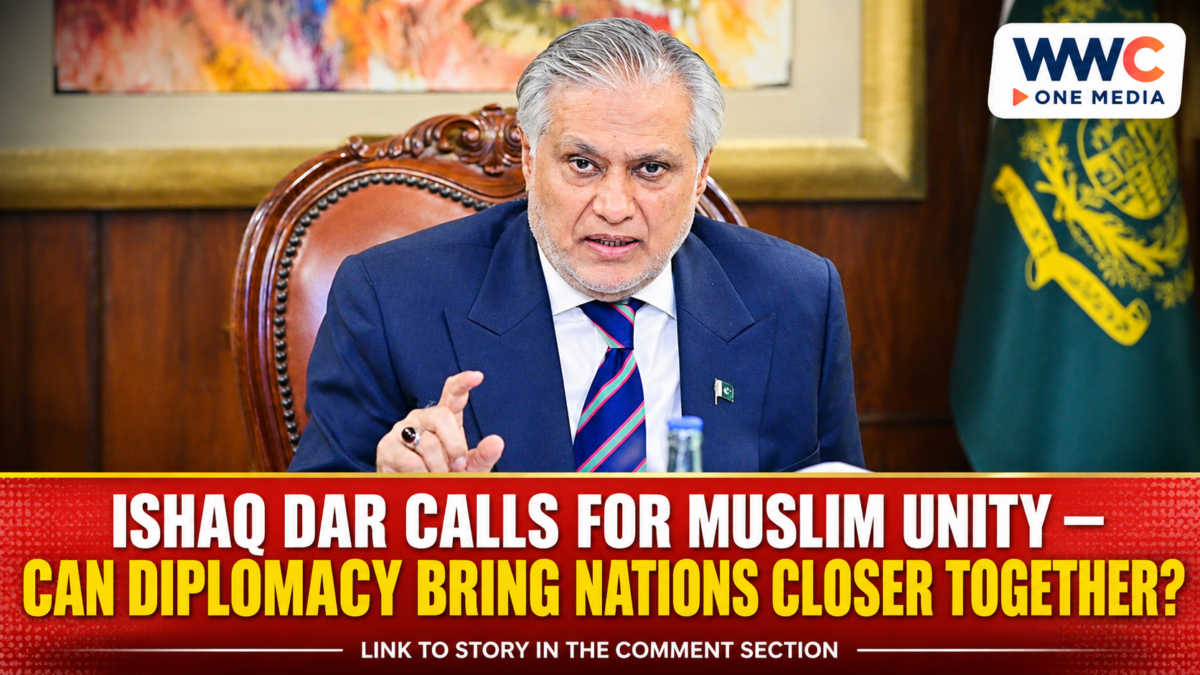
ISLAMABAD, PAKISTAN — Pakistan’s Deputy Prime Minister and Foreign Minister Senator Mohammad Ishaq Dar renewed his call for Muslim unity on November 26, 2026, emphasising peaceful dialogue, mutual respect and stronger cooperation among Islamic countries.
Speaking at the closing ceremony of the Second International Qirat Competition in Islamabad, Dar highlighted the importance of applying Quranic teachings to everyday life while encouraging peaceful approaches to resolving differences.
His remarks reinforce Pakistan’s commitment to international cooperation at a time when diplomatic engagement and regional stability remain significant foreign policy priorities.
Ishaq Dar Muslim unity appeal puts dialogue at the forefront
Dar reaffirmed Pakistan’s commitment to strengthening solidarity among Muslim communities and nations.
He emphasised that disagreements should be addressed through constructive dialogue, wisdom and mutual understanding rather than confrontation.
The deputy prime minister also highlighted the Quran’s teachings on justice, compassion, peace and respect, encouraging individuals and communities to incorporate these principles into their daily lives.
His message placed particular importance on the relationship between religious values and peaceful coexistence.
The approach reflects the broader importance of diplomatic engagement in international affairs, including ongoing efforts involving ASEAN and its international economic partners.
International Quran competition concludes in Islamabad
The Second International Qirat Competition provided the setting for Dar’s appeal for greater cooperation.
Qirat refers to the recitation of the Quran, a religious practice that emphasises pronunciation, accuracy and recitation traditions.
Dar congratulated the successful participants and recognised the efforts of Pakistan’s Ministry of Religious Affairs and Interfaith Harmony and the event’s organisers.
He highlighted the competition’s role in encouraging a deeper understanding of Quranic teachings and strengthening relationships among Muslim countries.
The gathering provided an opportunity to connect religious education with messages of peace, mutual understanding and international solidarity.
Pakistan’s wider diplomatic priorities
Pakistan has consistently expressed support for dialogue and negotiated solutions in its international diplomatic engagements.
Dar’s message in Islamabad focused on the importance of resolving differences peacefully while maintaining cooperation among Muslim nations.
The distinction between diplomatic commitments and concrete agreements remains important. An appeal for solidarity does not automatically establish a new international alliance, create binding obligations or resolve existing disagreements.
International cooperation requires continued engagement between governments, particularly when countries have different national interests and foreign policy priorities.
Similar questions surrounding diplomatic engagement and international cooperation have emerged in other parts of Asia, including Sri Lanka’s bilateral cooperation agreement with Russia.
Regional peace remains an international concern
Dar’s emphasis on peaceful dispute resolution carries wider relevance beyond the religious gathering in Islamabad.
International tensions can create uncertainty for governments, businesses and communities, particularly when disagreements affect regional security or cross-border economic activity.
Diplomatic communication can provide opportunities for countries to address disagreements before they develop into more serious confrontations.
However, the effectiveness of such efforts ultimately depends on the willingness of participating governments to engage constructively.
The importance of preventing conflicts from spreading has also featured in wider international diplomatic discussions, including Italy’s efforts to prevent the Russia-Ukraine war from expanding.
Why cooperation matters across the Asia-Pacific
For Asia-Pacific audiences, Pakistan’s appeal highlights the continuing importance of international dialogue and peaceful coexistence.
Religious and cultural exchanges can complement formal diplomatic relationships by encouraging communication and mutual understanding between communities.
Such engagement does not replace government negotiations, but it can provide additional opportunities to build relationships across national borders.
Dar’s address reinforced these principles by connecting religious education with the responsibilities of individuals, communities and nations in promoting peaceful relations.
What happens next?
The Islamabad gathering concluded with a renewed emphasis on solidarity, understanding and cooperation among Muslim countries.
Dar’s remarks represent a reaffirmation of Pakistan’s diplomatic position rather than the announcement of a new multilateral agreement.
Future diplomatic engagements will provide opportunities to translate these principles into more concrete forms of international cooperation.
For now, the central message from Islamabad remains clear: Pakistan supports resolving differences peacefully while strengthening relationships among Muslim countries.