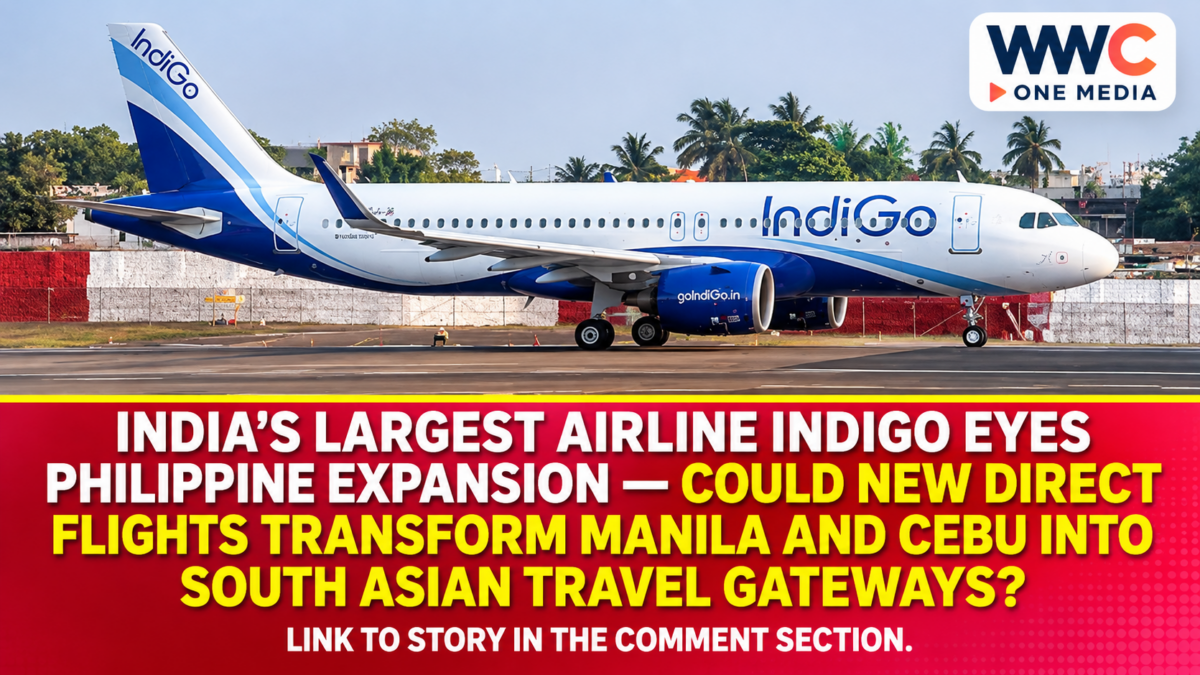
MANILA, PHILIPPINES | November 26, 2026 — Plans for IndiGo Philippines flights are gaining attention as the Philippine government seeks stronger air connectivity with India, where growing travel demand could create new opportunities for airlines, tourism businesses and international commerce.
The proposed expansion comes as Indian visitor arrivals in the Philippines increased by 23.55% year-on-year as of November 21, 2026, highlighting the potential of a market that could become increasingly important to Southeast Asian aviation.
With a fleet of 442 aircraft at the end of September, IndiGo has substantial operational capacity that could support further international expansion.
However, the commercial success of any Philippine service would depend on passenger demand, operating costs, regulatory requirements and competition from established airlines.
The opportunity extends beyond introducing another international flight. It could strengthen commercial connections between South Asia and Southeast Asia.
IndiGo Philippines Flights: A New Opportunity for International Aviation
IndiGo, operated by InterGlobe Aviation Limited, has developed an extensive network connecting Indian cities with international destinations.
During the quarter ended September 30, 2026, the airline served 97 domestic and 36 international destinations.
Its extensive Indian network could provide Philippine-bound travellers with additional opportunities to reach international departure gateways from other Indian cities.
The Philippine Department of Tourism has identified proposed IndiGo services between Mumbai and Manila as part of its efforts to expand aviation connectivity.
Mumbai represents an important potential gateway for business travellers, tourists and companies seeking stronger commercial relationships between India and Southeast Asia.
Additional Philippine destinations could also offer opportunities for regional tourism development, although IndiGo’s final Cebu schedule has not been independently confirmed.
For travellers, the potential benefit is greater flexibility when planning journeys between the two countries.
However, an announced expansion proposal must still be distinguished from an operational route with confirmed schedules, aircraft assignments and ticket availability.
Philippine Airlines and Air India Could Face Additional Competition
IndiGo’s potential entry would come as other airlines strengthen connections between India and the Philippines.
Air India initially introduced nonstop Delhi–Manila services on October 1, 2025, using Airbus A321neo aircraft and operating five weekly flights.
The service subsequently expanded to daily operations on October 1, 2026.
Philippine Airlines has also announced plans to introduce nonstop services from Manila to Delhi and Mumbai in December 2026, subject to Indian government approval.
WWC ONE MEDIA previously examined Philippine Airlines’ proposed direct flights to Delhi and Mumbai and their potential significance for bilateral tourism, business travel and cargo transportation.
IndiGo’s participation could introduce another competitive option into this developing aviation corridor.
Greater competition may encourage airlines to differentiate their services through pricing, flight schedules, baggage arrangements and passenger connectivity.
Nevertheless, additional competition does not automatically guarantee lower airfares.
Fuel costs, airport charges, aircraft availability and passenger demand will remain important factors influencing ticket prices.
Indian Tourist Arrivals Increase by 23.55%
The Philippines’ growing popularity among Indian visitors provides an important commercial backdrop to the proposed airline expansion.
Indian visitor arrivals increased by 23.55% year-on-year as of November 21, 2026.
The government has pursued improved air connectivity alongside relaxed visa requirements for qualifying Indian travellers.
These developments could support opportunities for hotels, travel agencies, restaurants, transport providers and destination management companies.
However, the growth in visitor arrivals should not be interpreted as proof that every proposed airline route will achieve commercial success.
Tourism demand varies across seasons, destinations and customer segments.
Airlines must determine whether passenger volumes are sufficient to support sustainable operations throughout the year.
For tourism businesses, the potential arrival of another Indian carrier could provide an opportunity to develop products designed for different travel preferences, including family holidays, business conferences and organised group travel.
Could Cebu Become Another Gateway to South Asia?
The potential expansion of Indian aviation services also raises questions about Cebu’s international connectivity.
A future nonstop Indian service to Cebu could reduce the need for some travellers to connect through Manila or other regional airports.
This could create additional opportunities for tourism operators serving Central Visayas and nearby destinations.
The broader development of Cebu’s international aviation network was examined in WWC ONE MEDIA’s coverage of Cebu’s new direct connections with Vietnam.
Connecting Cebu with additional international markets could support regional economic activity beyond the country’s capital.
Nevertheless, a successful aviation gateway requires more than the introduction of new routes.
Airport infrastructure, passenger processing, ground transportation, accommodation capacity and onward connections can all influence the overall attractiveness of a destination.
IndiGo’s specific Cebu launch arrangements remain subject to confirmation through official regulatory documents and airline announcements.
IndiGo’s ₹18.8-Billion Quarterly Loss Highlights the Financial Challenge
Despite the airline’s extensive network, its latest financial results demonstrate the pressures facing international aviation.
For the quarter ended September 30, 2026, IndiGo reported total income of ₹243.119 billion, representing a 24% year-on-year increase.
Its expenses reached ₹261.884 billion, while fuel expenditure increased by 67.2% compared with the corresponding quarter a year earlier.
The difference between reported total income and expenses was approximately ₹18.8 billion, consistent with management’s description of a quarterly net loss of around ₹19 billion.
These financial results illustrate why international route expansion must be assessed carefully.
An airline can increase revenue while continuing to experience significant pressure on profitability.
New routes require aircraft capacity, personnel, airport arrangements, maintenance support and marketing expenditure before their long-term commercial performance can be determined.
Similar financial considerations surround Philippine Airlines’ international expansion through its nonstop Manila–Chicago service.
For IndiGo, a Philippine expansion would need to complement its broader network while maintaining financial discipline.
What Happens Next?
The next significant development will be the publication of IndiGo’s confirmed Philippine operating arrangements.
Travellers and businesses will need to watch for official announcements covering launch dates, flight frequencies, departure airports, aircraft deployment and ticket availability.
Additional regulatory documentation will also help clarify which proposed routes have received the necessary permissions.
For Asia-Pacific economies, stronger aviation connections between India and Southeast Asia could support tourism, international investment and the movement of people.
IndiGo’s proposed Philippine expansion represents a potentially important opportunity.
Whether it becomes a sustainable commercial success will depend on the airline’s ability to convert growing travel demand into consistently viable operations.
Frequently Asked Questions
Is IndiGo launching flights to the Philippines?
IndiGo is pursuing Philippine connectivity, and the Philippine government has confirmed its support for proposed Mumbai–Manila services. A definitive commercial launch schedule has not been independently verified.
Will IndiGo fly directly to Cebu?
Cebu has emerged as a potential destination, but the airline’s final launch date, frequency and operating arrangements remain unconfirmed in the primary records reviewed.
Does Air India already fly directly to Manila?
Yes. Air India launched nonstop Delhi–Manila services in October 2025 and expanded to daily operations in October 2026.
How large is IndiGo’s aircraft fleet?
IndiGo reported a fleet of 442 aircraft as of September 30, 2026.
Will IndiGo’s entry reduce airfares between India and the Philippines?
Additional competition could influence airfares, but lower prices are not guaranteed. Operating expenses, seasonal demand and available aircraft capacity will also affect ticket prices.