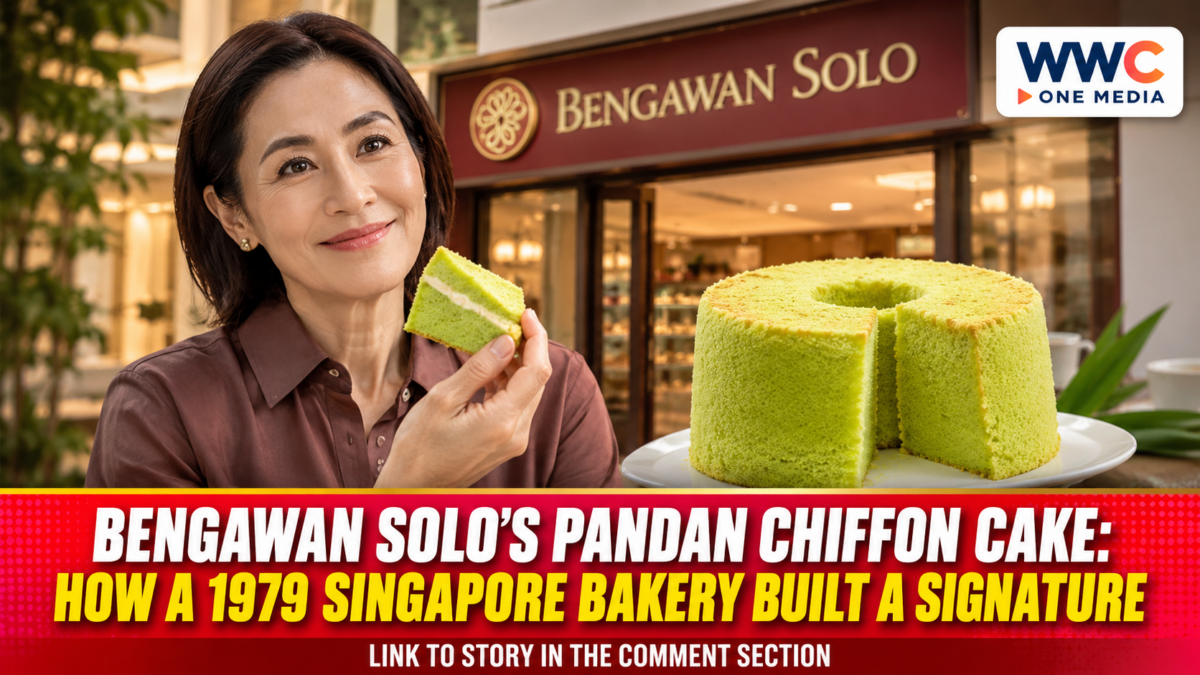
A Singapore bakery that began as a neighbourhood cake shop in 1979 has built a lasting identity around traditional confectionery, with pandan chiffon cake among its recognised signature products. Bengawan Solo’s own company history traces that journey from a small Marine Terrace shop to a business with a central kitchen, airport outlets and a broad range of cakes and local sweets.
The story offers a useful look at how a familiar food product can become part of a city’s identity. It also shows how a family-founded food business can grow while continuing to present traditional flavours to residents and visitors.
Bengawan Solo’s story began in Marine Terrace
Bengawan Solo says its first cake shop opened in 1979 as a small neighbourhood corner store in Marine Terrace, Singapore. The company’s history identifies Mrs Anastasia Liew as the person who prepared cakes, kueh and other confectionery in the shop’s modest back kitchen.
The business takes its name from a song associated with the Solo River. The company explains that “Bengawan” is an old Javanese word for river, reflecting the inspiration behind the name.
The first shop was modest in scale, but the company’s published milestones show a gradual expansion. In 1983, it opened its first branch at Centrepoint on Orchard Road. Four years later, it established a central kitchen at Harvey Road in Macpherson.
That move marked an important operational step. Instead of relying only on preparation at individual shops, a central kitchen gave the growing business a dedicated production base.
Why the pandan chiffon cake stands out
Bengawan Solo lists pandan chiffon cake among its signature products. Its official product page describes the cake as being made fresh daily with freshly squeezed coconut milk and pandan juice.
The company currently lists its Pandan Chiffon (R) at S$22 on its online product page. That is the displayed price on the page at the time of checking; customers should confirm current prices, availability and delivery conditions before ordering.
The product’s appeal is closely tied to its ingredients and preparation. Pandan is widely used in Southeast Asian cooking, while coconut milk is familiar in many regional desserts. Together, these ingredients give the cake a flavour profile that connects it with the wider food traditions of the region.
For a bakery, a signature product can do more than generate sales. It can give customers a recognisable reason to return and provide visitors with a food item they associate with a particular place.
Bengawan Solo’s own description places the pandan chiffon alongside other established products, including lapis sagu, ondeh ondeh, kueh salat and kueh lapis.
Growth brought changes to production
The company’s milestones show that growth eventually placed pressure on its original production arrangements.
By 1997, Bengawan Solo said it had approximately 18 stores. Its central kitchen at Harvey Road and a smaller production kitchen at Tai Thong Crescent could no longer cope with demand, prompting the company to consolidate production and move operations to Woodlands.
The company also records the opening of its first Changi International Airport outlet in 1998. It said the airport branches became strong-performing stores, serving local travellers and overseas visitors looking for Singapore food gifts.
In 2010, Bengawan Solo said it doubled its production space by acquiring and renovating the neighbouring unit at Woodlands Link. It also said its production facilities were redesigned around processes for Hazard Analysis and Critical Control Points, commonly known as HACCP.
These details show how a food business must manage more than product popularity as it expands. Production capacity, consistency, food safety processes and retail access all become part of the operation.
A food brand built around more than one cake
Although pandan chiffon is a prominent signature, Bengawan Solo’s product range is broader. Its official company history lists traditional kueh, Asian specialty cakes, cookies and other sweet and savoury products.
That range matters because Singapore’s food identity is not built around one dish or one culinary tradition. The city’s everyday food culture includes recipes and ingredients shaped by different communities and generations.
WWC has previously explored this wider subject through its feature on Singapore’s changing food heritage and community-led food storytelling.
Bengawan Solo’s own milestones also show efforts to adapt its retail identity. In 2005, the company said it returned to Southeast Asian visual influences by incorporating batik as a stylistic feature and introducing a logo inspired by a traditional Asian crest.
In 2008, it introduced a shop-cafe concept in Serangoon Gardens, combining cakes and kueh with local coffee, tea and other food items.
These developments suggest that the business has treated its identity as something that can evolve while retaining familiar products.
What this means for Singapore’s food businesses
A recognisable cake can help a bakery become part of a visitor’s experience of a city. But maintaining that position requires more than a popular recipe.
Businesses need reliable production, consistent quality, suitable retail locations and the ability to serve customers with different expectations. A product that becomes closely associated with a place may also attract demand from visitors who want to bring it home as a gift.
That commercial opportunity comes with operational responsibilities. Scaling production without losing consistency is a challenge for food businesses, particularly when products depend on freshness and careful preparation.
WWC has also examined the pressures facing Singapore’s specialist cake market in its report on LUNA Patisserie’s planned closure amid rising operating and ingredient costs. The businesses have different histories and operating models, but both illustrate how food brands must balance product identity with the realities of running a business.
Food can also create a personal connection between entertainers and their audiences. WWC’s coverage of Singapore actress Ya Hui’s visit to a restaurant tied to memories of her mother shows how familiar dishes and places can carry meaning beyond the meal itself.
What happens next?
Bengawan Solo’s published history provides a record of its development from a neighbourhood shop into an established Singapore bakery brand. Its pandan chiffon cake remains part of the company’s official signature range, while its website continues to list the product for sale.
The next chapter for the business will depend on how it maintains its product standards, responds to customer demand and keeps its range relevant to both local buyers and visitors.
For readers, the clearest takeaway is that the cake is not simply a trending food item. It is part of a longer business story that began with a small shop and developed through changes in production, retail and branding.
Frequently Asked Questions
When did Bengawan Solo open its first shop?
The company says its first cake shop opened in Marine Terrace in 1979.
What is Bengawan Solo known for?
The company identifies pandan chiffon cake among its signature products, alongside kueh, specialty cakes and confectionery.
What ingredients does Bengawan Solo list for its pandan chiffon cake?
Its product page says the cake is made using freshly squeezed coconut milk and pandan juice.
How much does Bengawan Solo’s pandan chiffon cake cost?
The company’s online product page displayed S$22 for Pandan Chiffon (R) when checked. Prices and availability can change.
Where did Bengawan Solo move its production operations?
The company says it consolidated production and moved operations to Woodlands in 1997 as its earlier kitchens could no longer meet demand.
Bengawan Solo’s history illustrates how a familiar local flavour can become a lasting business signature. Its pandan chiffon cake remains one of the clearest links between the bakery’s early neighbourhood beginnings and its present-day identity.