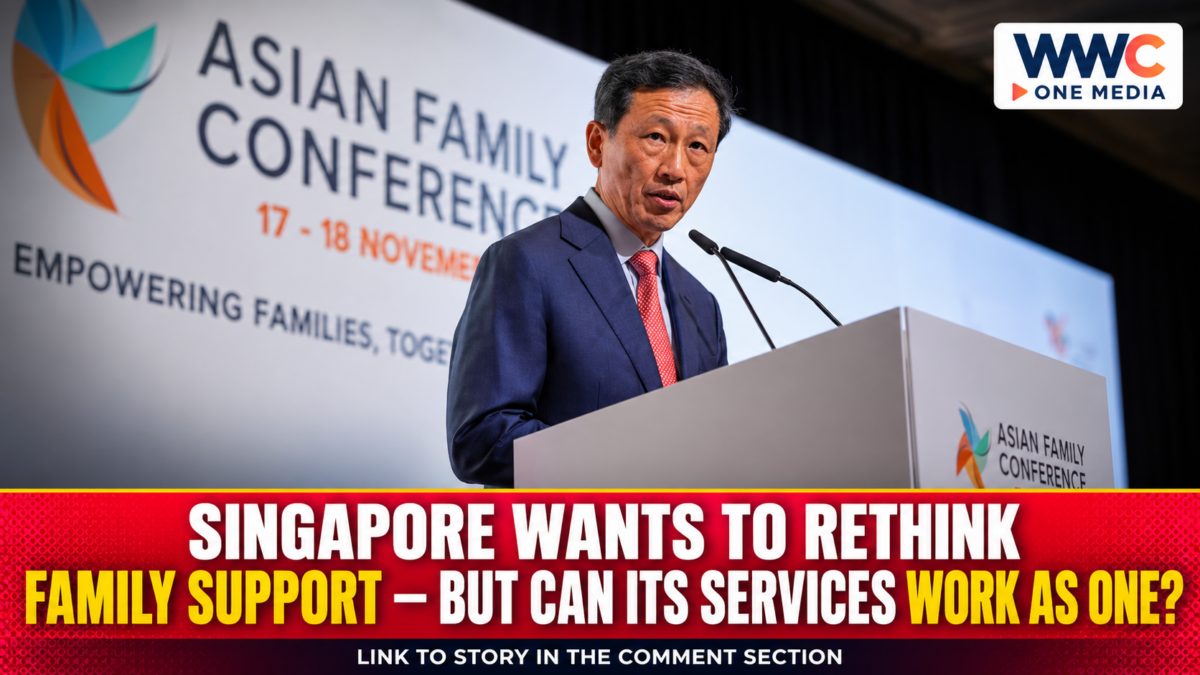
SINGAPORE — Singapore is moving towards a more coordinated approach to supporting families, with government policies increasingly linking social assistance, healthcare, education and community services. The shift is reflected in initiatives led by the Ministry of Social and Family Development and the Ministry of Health, including ComLink+ and a planned unified network for community mental-health services.
The policy direction addresses a practical problem: families dealing with several difficulties may have to navigate different agencies, programmes and eligibility requirements at the same time.
A household facing employment instability, childcare pressures, health concerns or housing difficulties may need more than one form of assistance. If those services operate separately, families can be left coordinating their own support while already managing difficult circumstances.
Singapore’s published government records show efforts to make that process more connected. The challenge now is whether the different parts of the system can work together consistently, particularly for households whose needs change over time.
Why Singapore is reconsidering how support is delivered
In a speech at the second Singapore Systemic Family Therapy Conference on Oct. 22, 2026, Health Minister and Coordinating Minister for Social Policies Ong Ye Kung discussed the importance of family relationships, early intervention and community-based assistance.
He also identified the limitations of having multiple community mental-health programmes operating with different target groups and service arrangements.
The existing network included Community Outreach Teams, Community Intervention Teams, youth-focused services and programmes provided by public healthcare institutions.
Ong said the Government intended to reorganise these services into one network under a common framework covering funding and performance indicators.
The proposed arrangement is intended to make it easier for people to find suitable help and for service providers to coordinate their work.
The Ministry of Health identified the new network as HealthierMind SG. It also said the Agency for Integrated Care and community organisations would work together on the transition.
This is an important distinction: integration does not simply mean creating another assistance programme. It means reorganising existing services so that people can move between different levels of support without having to navigate an unnecessarily fragmented system. Ministry of Health+1
ComLink+ puts the family at the centre
The Ministry of Social and Family Development’s ComLink+ programme provides another example of the Government’s family-centred approach.
ComLink+ supports lower-income households with children as they work towards stability, self-reliance and social mobility.
Rather than treating each difficulty as a separate case, the programme pairs families with dedicated family coaches or Family Service Centre case workers who help develop action plans around their circumstances.
The programme covers several areas, including income security, children’s development and education, housing, family functioning, financial resilience and health.
The ministry’s 2026 Committee of Supply plans also set out enhancements to the programme’s financial support.
These included a Partnership Payout of S$500 each quarter for participating families working with their coaches or case workers towards agreed goals. The payout consists of S$200 in cash and S$300 in Central Provident Fund contributions.
The ministry said the enhanced Progress Packages could allow a family with two children to receive up to S$10,000 annually, subject to the programme’s conditions and the family’s progress.
These measures are designed to combine immediate assistance with support for longer-term goals. Article+2
The wider community role is also important. WWC previously examined Singapore’s plans to expand its volunteer network for vulnerable children and families in its report on the push to recruit 3,000 additional regular volunteers by 2030.
Volunteers can strengthen the support network, but professional case management remains essential when families need coordinated assistance across several areas.
Health and social services need to work together
Financial support alone may not address every obstacle a household faces.
MSF’s 2026 policy plans describe a closer working relationship between family coaches and healthcare professionals. The ministry said it had trialled a social-health integration model with the Ministry of Health in 2025.
Under that approach, family coaches and healthcare staff worked together to identify health goals that reflected each family’s circumstances.
The trial included preventive measures such as healthier eating, regular exercise and recommended health screenings. It also sought to streamline service delivery so families could access assistance more easily.
The ministries planned to refine the model and bring more families into the programme during 2026.
Another planned development concerns Healthier SG. From 2027, eligible ComLink+ residents aged 25 to 39 are expected to be included in Healthier SG enrolment, extending access to family doctors and relevant preventive-health support.
The change recognises that health difficulties can affect a family’s ability to maintain employment, manage finances and support children’s development.
For example, a health issue that affects a parent’s ability to work may also affect the household’s income stability. Similarly, a child’s health needs may influence school attendance and the family’s daily arrangements.
Connecting health and social services could help address these overlapping pressures earlier. Article+1
A more connected system still needs consistent service quality
Integration is only useful if the services remain accessible and responsive.
A March 3, 2026 parliamentary response from MSF addressed questions about how it monitors ComLink+ family coaches and service quality.
The ministry said it does not formally collect feedback from ComLink+ families about their experience with individual family coaches. Families with specific feedback can provide it to their Social Service Offices.
MSF also described structured foundational training for new family coaches. This covers family assessment frameworks, engagement techniques, motivational interviewing, cultural competency and collaboration with other stakeholders.
The ministry has also developed a Practice Guide to set out good practices for working with ComLink+ households.
These details point to an important operational issue: a common framework may improve coordination, but families still need reliable contact with the people delivering the support.
Training, accountability and the ability to respond to feedback will therefore remain important as the programme develops. Article
Community support must adapt as family needs change
Singapore’s broader social support policies also recognise that assistance cannot be limited to households raising young children.
Older residents, caregivers and people living alone may need different combinations of healthcare, social contact and practical assistance.
In a separate report, WWC examined the challenges facing Singapore’s support system for seniors living alone. That coverage highlighted the importance of connecting community outreach with accessible services and continuing contact.
The same principle applies to family support more broadly. A household’s needs can change after a job loss, a health problem, a change in caregiving responsibilities or a child’s transition into school.
A system that can adjust support as circumstances change may be more useful than one that relies on separate programmes with narrow eligibility conditions.
Singapore’s policy direction also sits alongside its wider family measures. WWC has previously covered the Government’s broader family-support package and its long-term assistance for children. Those measures address a different part of the policy landscape, but together they show how family assistance spans financial support, childcare, healthcare and social services.
What happens next
The next stage is implementation.
The Ministry of Health said it would work with the Agency for Integrated Care and community organisations to move towards the HealthierMind SG framework. The ministry’s October speech described plans for a common network, more stable funding arrangements and clearer service coordination.
Meanwhile, MSF’s ComLink+ enhancements and social-health integration work are intended to help participating families address several needs through coordinated support.
The important test will be whether families experience a simpler route to assistance, whether service providers can coordinate effectively and whether support remains consistent as circumstances change.
A more integrated system could reduce the burden on families who currently have to navigate different services. But its success will depend on practical delivery, adequate staffing, clear responsibilities and sustained cooperation between agencies.
For now, the public record shows a clear policy direction. The results will depend on how well that direction is translated into everyday support for the people who need it.
Frequently asked questions
1. What is Singapore’s integrated family support approach?
It is a policy direction aimed at coordinating social, healthcare, education and community services so families can receive support that reflects their combined needs.
2. What is ComLink+?
ComLink+ is a Singapore programme supporting lower-income households with children through family coaches, coordinated assistance and progress packages.
3. How much can a ComLink+ family receive?
Under the 2026 enhancements, a family with two children could receive up to S$10,000 annually through the enhanced Progress Packages, subject to programme conditions and the family’s progress.
4. What is HealthierMind SG?
HealthierMind SG is the planned unified network for Singapore’s community mental-health services, intended to bring existing teams under a common framework.
5. Why is Singapore linking healthcare with family support?
Health issues can affect employment, finances, children’s development and family stability. Coordinating healthcare and social assistance may help address these connected needs more effectively.