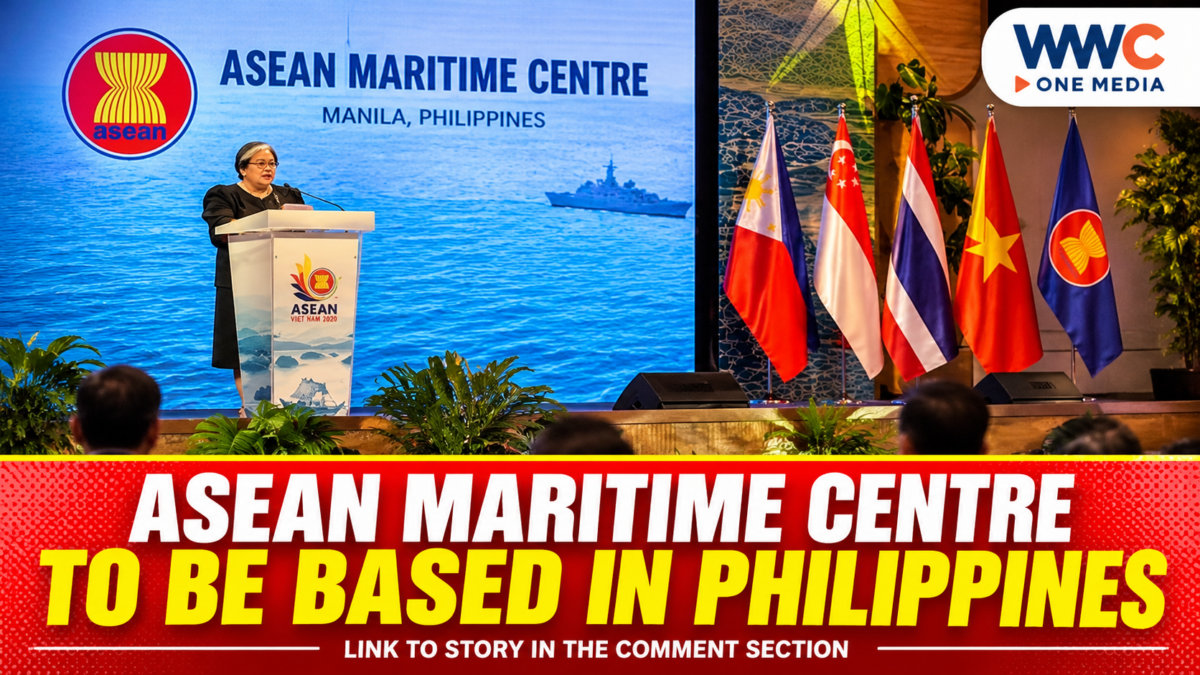
ASEAN has advanced plans for a regional maritime centre in the Philippines after the bloc’s foreign ministers adopted its concept note and terms of reference during meetings in Pasay City on Nov. 14, 2026. ASEAN leaders subsequently took note of the documents during the 49th ASEAN Summit, moving the proposal closer to an institutional framework but not yet making the centre operational. Presidential Communications Office+1
The planned ASEAN Maritime Centre could give Southeast Asian governments a shared platform for research, information exchange, training and coordination on maritime issues. For the Philippines, the opportunity goes beyond hosting a regional institution: it could strengthen cooperation on matters affecting navigation, coastal livelihoods, maritime security and the blue economy.
But an important question remains: how will the centre work, who will operate it, and what resources will support its activities?
The ASEAN Maritime Centre moves from proposal to framework
The idea gained regional backing during the 48th ASEAN Summit in Cebu on May 8, 2026, when leaders adopted the ASEAN Leaders’ Declaration on Maritime Cooperation.
The declaration included the planned establishment of an ASEAN Maritime Centre in the Philippines. It described the proposed institution as a way to support ASEAN and ASEAN-led mechanisms dealing with maritime issues, encourage cooperation across different sectors and pillars, and avoid duplicating existing efforts. ASEAN Main Portal+1
The next major step came during the November ASEAN meetings.
The Presidential Communications Office said ASEAN foreign ministers adopted the centre’s concept note and terms of reference during their Nov. 14 meeting in Pasay City. The documents were then noted by ASEAN leaders during the summit. Presidential Communications Office+1
That development is significant because a concept note and terms of reference help define an institution’s purpose, responsibilities and intended structure.
However, adoption of those documents should not be confused with the centre already having a permanent headquarters, a fully staffed secretariat or an operational budget.
Those practical arrangements remain important parts of the work ahead.
What the proposed centre is expected to do
The November announcement describes the ASEAN Maritime Centre as a regional hub for maritime-related initiatives.
Its intended role includes serving as a knowledge hub and support platform for maritime issues, research, information-sharing and training in line with priorities identified by ASEAN member states.
The proposed scope is also broad. The centre is envisioned to cover the blue economy, bringing together interests that extend from academic institutions to port authorities and other maritime stakeholders. Presidential Communications Office
The blue economy refers to economic activities connected with oceans, seas and coastal resources. These include shipping, ports, fisheries, aquaculture, marine tourism and other activities that depend on healthy and productive maritime environments.
For an archipelagic country such as the Philippines, these sectors are closely connected to employment, trade, food supply and community livelihoods.
A regional institution could help make information and expertise more accessible across ASEAN. It could also provide a place where governments and technical organisations can discuss shared challenges without relying entirely on separate national initiatives.
The value, however, will depend on whether the centre develops practical programmes rather than remaining primarily a venue for meetings and policy discussions.
Why maritime cooperation matters to the Philippines
The Philippines has strong reasons to support a regional platform focused on maritime affairs.
Its economy depends heavily on shipping routes, coastal communities, fisheries and access to international markets. Safe navigation and predictable maritime rules also matter to businesses moving goods through Southeast Asian waters.
The ASEAN declaration adopted in May identifies cooperation on maritime issues as a regional priority. It calls for stronger collaboration among member states and external partners, including support for sustainable marine economic development and the protection of marine and coastal environments. ASEAN Main Portal+1
The centre could help connect these priorities by supporting research, training and coordination among agencies and other stakeholders.
For Filipino fishing communities, the potential benefits could include better access to regional knowledge and more coordinated work on maritime safety and sustainable resource management. For ports and shipping businesses, a stronger regional exchange of expertise could support discussions on navigation, connectivity and operational standards.
These are potential benefits, not guaranteed outcomes. The public announcement does not yet establish specific programmes, funding commitments or services that Filipino communities and businesses can immediately access.
The centre is part of a wider ASEAN maritime agenda
The proposed institution will not operate in isolation.
ASEAN already has established platforms for maritime dialogue, including the ASEAN Maritime Forum and the Expanded ASEAN Maritime Forum. The ASEAN leaders’ statement from May reaffirmed the importance of both forums as platforms for dialogue and consultation. ASEAN Main Portal
The official 2026 calendar scheduled the 16th ASEAN Maritime Forum for Nov. 17 and the 14th Expanded ASEAN Maritime Forum for Nov. 18, both in Metro Manila. ASEAN Main Portal
The planned centre is therefore best understood as a supporting institution within a broader regional system, not a replacement for existing ASEAN mechanisms.
This distinction matters. ASEAN already has several bodies and forums addressing maritime cooperation. A new centre will need a clear mandate to prevent overlapping responsibilities and unnecessary bureaucracy.
The Philippines has also pursued maritime cooperation through bilateral and other regional arrangements. Its defence cooperation framework with Australia includes maritime awareness, information-sharing, training and interoperability.
Separately, the country has participated in multinational maritime activities with partner forces. These initiatives demonstrate why regional coordination matters, but they should not be treated as programmes automatically controlled by the proposed ASEAN centre.
The wider diplomatic challenge is to make these different efforts complementary while preserving ASEAN’s role as the region’s principal multilateral platform.
What the AFP’s maritime role means
The Armed Forces of the Philippines has an established responsibility to protect the country’s sovereignty and territorial integrity. Its public statements and activities have also highlighted maritime awareness and cooperation with government agencies and international partners.
In September, the AFP joined the national observance of Maritime and Archipelagic Nation Awareness Month, emphasising the importance of protecting and responsibly managing the country’s maritime domain. Armed Forces of the Philippines
The military’s operational responsibilities, however, should be distinguished from the proposed centre’s regional knowledge and coordination functions.
The centre is not publicly described as a new ASEAN military command or a joint naval force. Its announced purpose is to support maritime-related initiatives and cooperation among member states.
That distinction is important for public understanding. Regional maritime cooperation can involve security, navigation, environmental protection, research and economic development without creating a new military alliance.
WWC’s previous coverage of ASEAN’s continuing South China Sea Code negotiations examines another part of this broader regional challenge: maintaining dialogue while seeking practical rules for conduct at sea.
What happens next?
The adoption of the concept note and terms of reference is a meaningful step, but the centre still needs practical arrangements before it can deliver its intended functions.
The next questions include its permanent location, institutional structure, staffing, financing, governance and initial work programme. The public announcements reviewed do not yet provide a confirmed operational launch date or a detailed funding plan.
ASEAN member states will also need to determine how the centre will work with existing regional mechanisms, national maritime agencies, academic institutions and port authorities.
For the Philippines, hosting the centre could create an opportunity to contribute more directly to regional maritime research and cooperation. But the long-term value will depend on whether the institution can produce useful information, support meaningful training and help governments address shared maritime concerns.
The Philippines has secured an important regional commitment. The next test is whether ASEAN can turn that commitment into an institution with clear responsibilities, sustainable resources and measurable results for the people who depend on the sea.
Frequently asked questions
1. What is the ASEAN Maritime Centre?
It is a planned regional hub in the Philippines intended to support ASEAN maritime initiatives through knowledge-sharing, research, information exchange and training.
2. Has ASEAN approved the centre?
ASEAN foreign ministers adopted its concept note and terms of reference on Nov. 14, 2026. ASEAN leaders took note of the documents during the 49th ASEAN Summit.
3. Will the centre be a military command?
The publicly announced mandate describes a knowledge and support platform for maritime-related initiatives. It does not establish the centre as a joint military command.
4. How could Filipino communities benefit?
Potential benefits include stronger regional cooperation on maritime safety, research, training, coastal livelihoods and the sustainable use of marine resources. Specific programmes and services have yet to be detailed.
5. When will the centre begin operating?
A confirmed operational launch date, permanent location, staffing structure and funding arrangements have not been publicly established in the official announcements reviewed.