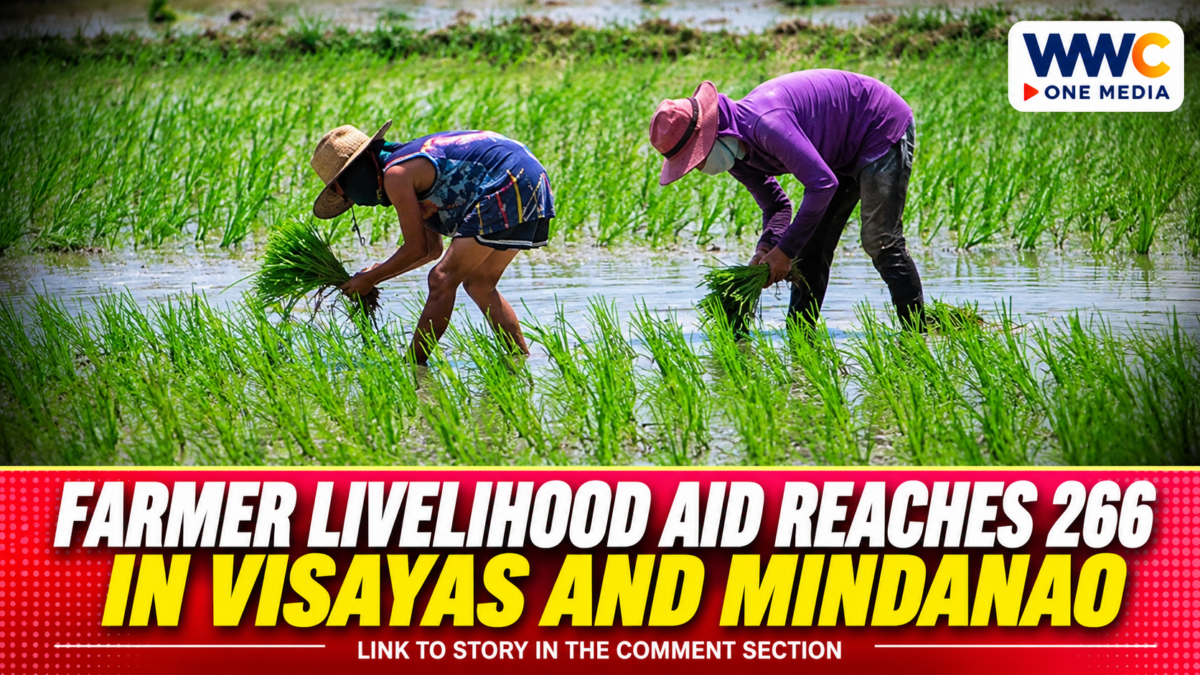
The Department of Labor and Employment (DOLE) has extended agricultural livelihood assistance covering 266 farmers in the Visayas and Mindanao through community-based enterprises, a livelihood grant and farming equipment, according to a government release dated Nov. 17, 2026. The interventions include a ₱500,000 agricultural supply project in Negros Occidental, a ₱350,000 grant for vegetable farmers in Davao City and equipment valued at ₱1 million for rice farmers in Davao de Oro. Department of Labor and Employment
The assistance highlights how livelihood programmes can support farmers beyond the distribution of seeds and fertilisers. But it also raises a larger question: can relatively targeted projects help farming communities maintain production and income when they face rising costs, weather disruptions and uncertain harvests?
The 266 beneficiaries are covered by three separate interventions. They should not be understood as recipients of one uniform cash payment.
Three projects, three different forms of assistance
The largest group covered by the announcement is in Davao de Oro, where 200 rice farmers in Barangay Basak, Nabunturan, received access to three Zappify units valued at ₱1 million.
The equipment is intended to support agricultural activities. Its value is not a cash grant distributed equally among the 200 farmers, and the announcement does not provide a per-farmer allocation.
In Davao City, another 35 vegetable farmers in Barangay Baracatan, Toril, received a ₱350,000 livelihood grant. The project is intended to support their farming activities and strengthen their capacity to generate income.
In Negros Occidental, 31 farmers from Barangay Masaling, Cauayan, are beneficiaries of a ₱500,000 community-based agricultural supply enterprise called ASFA Feeds and Fertilizers Supply. The project was turned over on Oct. 12, 2026.
Its purpose is to improve access to agricultural inputs, particularly feeds and fertilisers, while creating an additional income-generating activity for the participating community.
Together, the three interventions account for 266 farmers. Their combined stated project values amount to ₱1.85 million, although that figure covers different forms of assistance and should not be interpreted as cash received directly by individual farmers. Department of Labor and Employment
Why agricultural supply enterprises matter
The Negros Occidental project offers a different approach from simply handing out farming inputs.
A community-based agricultural supply enterprise can potentially serve farmers who need regular access to production materials. Instead of relying entirely on occasional assistance distributions, local producers may have a more accessible source of feeds and fertilisers.
The project is also intended to create income opportunities through the operation of the enterprise itself.
That distinction matters because farming expenses do not end after planting. Producers must manage continuing costs, including fertilisers, feeds, labour, transport and other supplies needed to bring products to market.
However, the long-term value of the project will depend on how it is managed. The public announcement does not provide projected sales, operating expenses, ownership arrangements or an estimate of the income the enterprise could generate.
Those details will be important in determining whether the project can remain financially viable after the initial government assistance is used.
Davao farmers face a wider production challenge
The assistance in Davao City and Davao de Oro comes as agricultural communities in the region face pressure from production losses and increasingly difficult weather conditions.
WWC previously examined how Davao’s agricultural losses approached ₱585 million amid moisture stress affecting rice, high-value crops, livestock and corn.
That wider situation shows why livelihood support needs to address more than immediate household income. Farmers also need practical ways to sustain production when water availability, input costs and weather conditions threaten their operations.
The three Zappify units distributed to rice farmers in Nabunturan could provide shared equipment support, but the DOLE announcement does not specify their technical capabilities, operating arrangements or how access will be scheduled among the 200 farmers.
Without those details, it would be premature to estimate how much the equipment could increase yields or reduce production costs.
The same principle applies to the vegetable farmers in Toril. A ₱350,000 grant can help establish or strengthen a livelihood project, but its long-term effect will depend on how the funds are used and whether farmers can maintain access to water, inputs and markets.
The Visayas also needs stronger farm resilience
In Negros Occidental, the agricultural supply enterprise arrives amid broader concerns about the livelihoods of farming communities in the Visayas.
The region has faced significant pressure from agricultural pests, including the red-striped soft scale insect affecting sugarcane-producing areas. WWC’s report on the sugarcane pest crisis affecting more than 301,000 people examined the wider economic consequences for farming households and communities.
The new feeds and fertilisers enterprise is a separate initiative and should not be presented as a direct response to that pest outbreak. Its relevance lies in the broader need to strengthen rural access to agricultural supplies and income-generating activities.
Weather-related risks also remain important. In Central Visayas, potential agricultural losses of ₱490 million have highlighted the vulnerability of farms that depend on limited water sources and seasonal rainfall.
These developments show why livelihood assistance must be considered alongside irrigation, crop protection, insurance and market access. A project may help farmers obtain equipment or supplies, but it cannot by itself eliminate the risks associated with drought, pests or weak infrastructure.
DOLE’s livelihood programme has a broader purpose
The three interventions fall under the DOLE Integrated Livelihood Program (DILP), which supports disadvantaged workers and communities through livelihood projects.
The programme is intended to help qualified beneficiaries establish or strengthen income-generating activities. Depending on the approved project, assistance can take the form of equipment, materials, tools or other support needed to operate an enterprise.
This makes DILP different from temporary employment programmes. Short-term employment assistance provides wages for a limited work period, while livelihood support is intended to help beneficiaries develop activities that can continue generating income.
For farmers, that distinction is important. A temporary source of income can help a household meet immediate needs, but a functioning enterprise or productive farming operation may offer a longer-term source of earnings.
Still, the success of any livelihood project depends on implementation. Equipment must be maintained, supplies must be available, and beneficiaries need the skills and organisation to manage their activities.
The DOLE announcement establishes the assistance delivered and the intended beneficiaries. It does not yet provide evidence of the projects’ long-term income results or their effect on agricultural productivity.
What happens next?
The next test is whether the three projects can remain operational and deliver measurable benefits to the participating farmers.
For the Negros Occidental enterprise, useful indicators will include whether it maintains sufficient stocks, attracts regular customers and generates enough revenue to cover operating costs.
For the Davao City beneficiaries, the important questions include how the ₱350,000 grant is managed, what livelihood activities it supports and whether the farmers can sustain production.
For the rice farmers in Nabunturan, the availability and proper maintenance of the three Zappify units will help determine whether the equipment can provide practical support to the intended beneficiaries.
Public reporting on project performance would also help establish whether the assistance is producing results beyond the initial turnover.
The 266 farmers have received support through three different interventions. The bigger measure of success, however, will not simply be the number of beneficiaries or the value of the equipment and grants.
It will be whether these projects help farmers keep producing, protect their household income and build livelihoods that can survive the next difficult planting season.