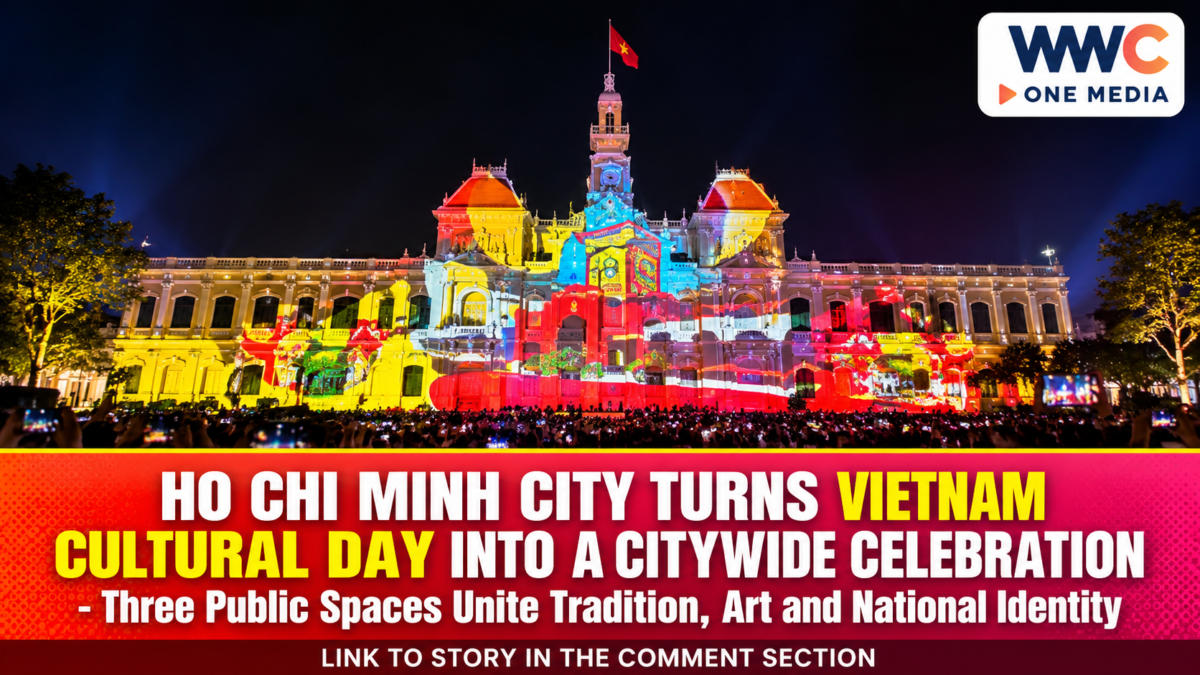
HO CHI MINH CITY, Vietnam — November 25, 2026 — Vietnam’s cultural identity took centre stage in Ho Chi Minh City as the municipality marked Vietnam Cultural Day on November 24 with a major public celebration connecting three locations across the expanded city.
The special programme, titled “Proud of Vietnamese Identity”, was staged at Nguyen Hue Walking Street in Sai Gon Ward, with simultaneous connections to Bach Dang Walking Park in Thu Dau Mot Ward and Tam Thang Tower Square in Vung Tau Ward.
The three-location format brought together performances celebrating Vietnam’s history, regional traditions and contemporary creative culture. It also highlighted a broader national ambition: making cultural heritage an active part of social development rather than limiting it to ceremonies, museums or historical commemorations.
The event placed Ho Chi Minh City at the centre of the nationwide observance, using public spaces to bring traditional arts closer to residents, younger generations and visitors.
Vietnam Cultural Day puts traditional arts in the public spotlight
The programme opened with “Singing from the Roots,” a performance connecting the three venues and celebrating the country’s shared historical and cultural heritage.
The show then moved through a range of traditional art forms representing different regions and communities.
Performances featured Thai Xoe dance, hat van ritual singing, Vi and Giam folk songs, Hue royal court music, the Central Highlands gong cultural space and Southern Vietnam’s Don ca tai tu musical tradition.
Together, these forms illustrated the diversity of Vietnam’s cultural landscape, from northern and central traditions to the musical heritage of the south.
The programme also incorporated artistic presentations inspired by the ideology, ethics and style of Ho Chi Minh, alongside works celebrating the people and landscapes of southern Vietnam.
The organisers presented the event as a bridge between generations, combining traditional performances with contemporary artistic expression. The stated aim was to encourage communities, particularly young people, to take a more active role in preserving and passing on cultural values.
Fireworks followed the main artistic programme, drawing residents and visitors into the public celebration.
Why November 24 matters in Vietnam’s cultural calendar
Vietnam Cultural Day is observed on November 24. The national government’s 2026–2030 implementation plan identifies the date as an annual occasion to honour the country’s cultural heritage and strengthen the role of culture in national development.
The policy framework was established through Prime Ministerial Decision No. 1111/QD-TTg, dated June 19, 2026. The plan links the annual observance to the wider national direction of treating culture and people as foundations of development and sources of internal strength.
The national programme calls for more than commemorative performances. It outlines cultural exhibitions, large-scale arts and sports events, digital cultural platforms, community activities, heritage-based tourism and initiatives designed to widen public access to cultural experiences.
It also places people and communities at the centre of cultural creation, preservation and transmission.
That distinction matters. A cultural day can attract crowds for one evening, but its longer-term value depends on whether heritage remains accessible and meaningful throughout the year.
Culture, tourism and the creative economy
Ho Chi Minh City’s three-site celebration also demonstrated how cultural programming can connect different urban areas and regional identities within a single metropolitan setting.
The government’s national plan explicitly links the preservation of traditional crafts, cultural products and village industries with sustainable livelihoods and tourism development. It also calls for experiential tourism routes built around heritage sites, traditional craft villages and local communities.
That creates a wider development opportunity for cities and regions with distinctive cultural assets. Heritage can support tourism, creative industries and local businesses, but only when preservation remains central and communities retain a meaningful role in how their traditions are presented and used.
The regional tourism context is also significant. Vietnam has been drawing greater attention from travellers across Asia, including visitors from the Philippines. WWC ONE MEDIA has examined Vietnam’s growing appeal among Filipino travellers and the wider shift in Asian holiday preferences toward Vietnam and other regional destinations.
Cultural experiences are one part of that appeal. Historic streets, local food, performing arts, craft traditions and community-based activities can give visitors reasons to explore beyond major commercial districts.
For more on the changing regional travel market, see WWC ONE MEDIA’s coverage of Vietnam’s growing position in Filipino travel plans and new direct air links connecting Cebu with Vietnam.
The challenge is turning a celebration into lasting cultural participation
The November 24 event offered a public showcase of Vietnam’s cultural diversity, but the broader national programme sets a more demanding test: whether cultural participation can be sustained beyond a single annual celebration.
The national plan calls for digital platforms that make cultural resources easier to access, stronger community cultural spaces, support for traditional crafts and the development of heritage-linked tourism. It also encourages the use of modern technology in museums, libraries, theatres and cultural centres.
These priorities reflect a practical challenge facing many countries: preserving traditions while adapting them to changing lifestyles, technology and international exchange.
For Ho Chi Minh City, the three connected venues provided a visible example of how a major urban celebration can bring different local identities into one programme. The longer-term measure of success, however, will be the opportunities residents and cultural communities have to keep those traditions alive, pass them to younger generations and benefit from their sustainable development.
Vietnam Cultural Day is therefore more than a date on the calendar. Its significance will depend on whether the country can turn public appreciation of its heritage into everyday participation, creative opportunity and lasting support for the communities that preserve it.