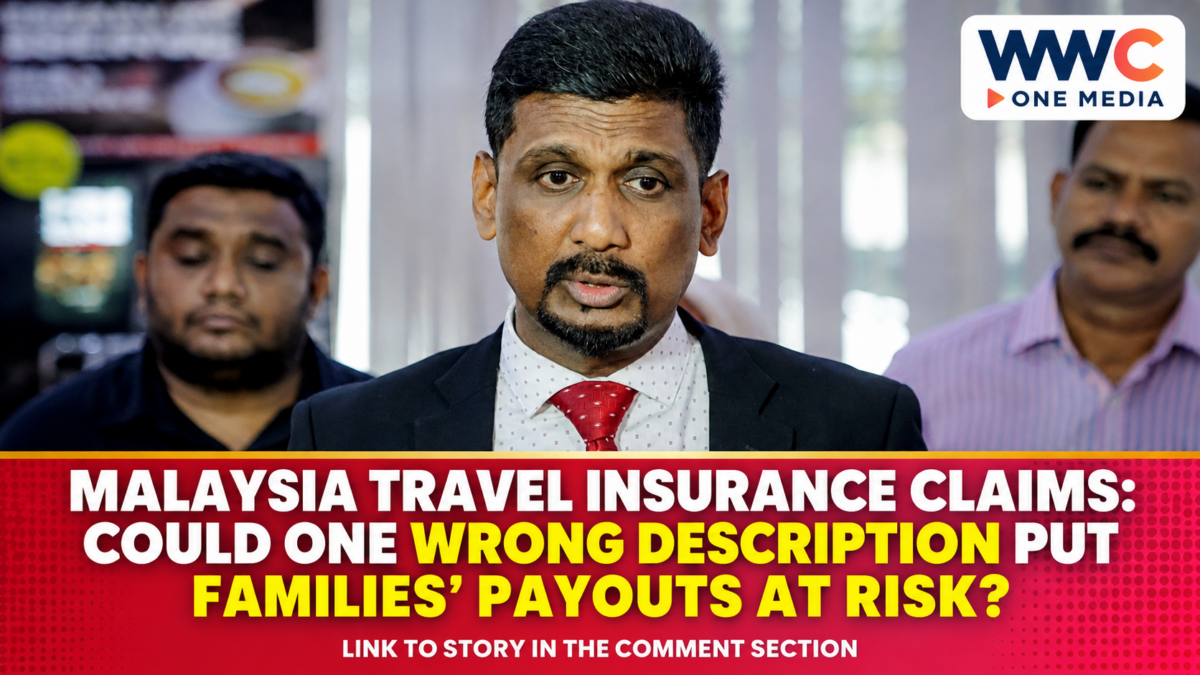
KUALA LUMPUR, Malaysia — When travellers disappear during an overseas disaster, the financial protection their families expect from insurance may depend on more than the circumstances of the emergency. Malaysia travel insurance contracts can distinguish between ordinary tourism and hazardous recreational activities, making accurate descriptions of a person’s journey particularly important during claims assessments.
The distinction raises an important question for families dealing with an overseas disappearance: could an inaccurate description of a traveller’s activities complicate access to insurance benefits?
The answer depends on the actual circumstances, the evidence available and the specific insurance contract purchased before the journey.
Malaysia Travel Insurance: Why the Description of a Journey Matters
Visiting a mountainous destination does not necessarily mean that a traveller participated in a mountain-climbing expedition.
Sightseeing, travelling through mountainous areas, recreational trekking and technical mountaineering describe different activities. Using these terms interchangeably could create confusion when insurers examine whether a particular contractual exclusion applies.
For families dealing with a missing relative, the challenge is to establish what the person was actually doing rather than relying on broad descriptions of the destination.
The distinction is particularly relevant to international travel involving mountainous destinations such as Nepal, where visitors may have different purposes for undertaking their journeys.
The broader question of consumer protection has also featured in ASEAN’s insurance cooperation priorities, reflecting the importance of insurance arrangements that respond effectively to policyholders’ needs.
The 3,000-Metre Distinction in Insurance Coverage
One published Malaysian travel insurance contract demonstrates how specific adventure activity provisions can become.
MSIG Malaysia’s Travel SafeGuard single-trip policy contains provisions distinguishing hazardous adventures from activities that may qualify for specified insurance benefits.
Its adventure activity section includes certain mountaineering and trekking activities below 3,000 metres above sea level, subject to contractual requirements.
These requirements include participation for recreational purposes through licensed operators and supervision by appropriately qualified guides or instructors.
The provision relates to specified personal accident and medical benefits rather than an unconditional extension of every benefit under the insurance contract.
This example illustrates why simply describing someone as a climber or adventurer may not provide enough information to determine whether an exclusion applies.
The exact activity, surrounding circumstances and applicable policy wording remain essential.
However, this particular insurance contract should not be interpreted as establishing a universal altitude limit for all Malaysian travel insurance products.
Does an Inaccurate Public Description Automatically Invalidate Insurance?
No. An inaccurate description published by a third party does not, by itself, establish that a traveller participated in an excluded activity.
A distinction must also be made between incorrect information supplied by an insurance applicant and inaccurate descriptions circulating after an emergency.
These are separate matters that should not automatically be treated as equivalent.
From a consumer-protection perspective, insurers should assess whether available evidence supports the application of a particular policy exclusion rather than relying exclusively on generalised descriptions.
Families should likewise avoid making unsupported claims about their relatives’ activities simply to obtain more favourable insurance outcomes.
The importance of examining contractual and legal obligations is also highlighted in WWC ONE MEDIA’s coverage of a Malaysian insurance ruling involving disputed coverage, although that case involved a separate category of insurance.
What Families Should Document After an Overseas Disappearance
Families seeking insurance benefits may benefit from establishing a clear timeline of their relative’s journey.
Potentially useful records include airline reservations, accommodation confirmations, tour itineraries, transportation receipts, communications with travel operators and official incident reports.
These documents may help distinguish the purpose of the journey from activities that the traveller actually undertook.
Families should also obtain copies of the applicable insurance policy and preserve communications with the insurer.
Where information remains uncertain, it is better to identify it as unconfirmed than to fill gaps with assumptions.
For prospective travellers, reviewing exclusions before departure remains equally important, particularly when visiting destinations associated with adventure tourism or challenging environmental conditions.
WWC ONE MEDIA’s coverage of international travel safety advisories involving Malaysia and Thailand highlights the wider importance of preparation before overseas journeys.
What Happens When an Insurance Claim Is Rejected?
Malaysia provides a dispute resolution mechanism through the Financial Markets Ombudsman Service, or FMOS.
Consumers who disagree with an insurer’s decision must first submit a formal complaint to the insurance provider before escalating an eligible dispute.
The applicable referral period is generally six months after receiving the provider’s final decision. A dispute may also be submitted when the provider has failed to respond within 60 days of the initial complaint.
For affected families, requesting a clear written explanation of the insurer’s decision can help identify which contractual provisions are being disputed.
The availability of dispute resolution does not guarantee a successful claim, but it provides an avenue for eligible consumers seeking an independent review.
As international travel continues to attract different age groups and consumer segments, including older Singaporeans undertaking overseas journeys, understanding the limitations of insurance coverage remains an important consideration.
What Happens Next?
The central issue for families affected by overseas disasters is establishing an accurate account of their relatives’ circumstances.
Travel operators, government authorities, insurers and families should distinguish verified information from assumptions when describing missing travellers.
For the insurance industry, the challenge is to balance contractual requirements with fair consideration of the evidence available during exceptional circumstances.
For travellers, the practical message is straightforward: understand what the policy covers, document planned activities and clarify any exclusions before departure.
When a family is already confronting the uncertainty of a missing loved one, an unsupported description should not substitute for a careful examination of the facts.