PUTRAJAYA, Malaysia — Malaysia’s Court of Appeal dismissed Liberty Insurance Berhad’s challenge to a compulsory third-party motor insurance policy in a judgment dated Oct. 29, 2026, after a motorcyclist was severely injured in a collision involving a lorry insured under a deceased owner’s name. The Malaysia insurance ruling confirms that the death of the named policyholder did not, on these facts, remove the injured road user’s statutory protection.
The ruling matters beyond one disputed renewal. It draws a clear line between contractual objections that an insurer may raise about a policy and the protection Parliament intended for innocent people injured on the road.
Malaysia Insurance Ruling: What Happened to the Policy?
The court’s written grounds identify the appellant as Liberty Insurance Berhad and the respondents as Koay Ghee Seong, in his capacity as estate administrator and individually, and Mohamad Munir bin A. Hasan. The underlying policy covered a lorry from Sept. 1, 2022, until Aug. 31, 2023.
The policy was issued in the name of Koay Kuan Liong, who had died on July 22, 2018. His son, Koay Ghee Seong, had been appointed administrator of the estate in June 2019 and was driving the lorry involved in the Feb. 22, 2023, collision.
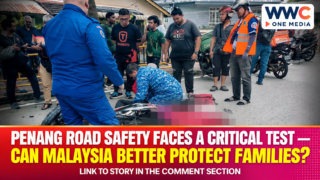
The judgment records that the lorry emerged from a side road into the motorcyclist’s path. Munir sustained serious injuries and was paralysed from the waist down. He later initiated proceedings against the driver and the deceased owner’s estate.
These details are drawn from the judicial decision, not an independent reconstruction of the collision. The appeal before the court concerned whether the insurance policy could be declared void and unenforceable against the third-party claimant.
Why Liberty Challenged the Insurance Cover
Liberty sought declarations that the compulsory motor policy was invalid. Its arguments included the failure to disclose the registered owner’s death, an alleged breach of utmost good faith, inability of the deceased to contract and the absence of an insurable interest.
The Penang High Court rejected that application on June 19, 2025. Liberty appealed, asking the higher court to revisit the refusal to void the policy.
An insurer’s ability to raise policy disputes is a different issue from whether those disputes extinguish a stranger’s right to claim for injuries. For readers familiar with other insurance disputes, WWC’s earlier report on a Singapore critical-illness insurance claim illustrates how particular policy terms can matter.
Why the Road Transport Act Protected the Motorcyclist
The appellate judges applied Sections 96(1) and 101(2) of Malaysia’s Road Transport Act 1987. Section 96 provides a statutory framework for an insurer to satisfy certain judgments involving insured motor vehicles. Section 101(2) expressly addresses the effect of an insured person’s death on the policy’s availability to third parties.
The court concluded that the compulsory policy remained enforceable for Munir, who was treated as an innocent third-party road user. It also found no evidence of fraud or collusion in obtaining the policy.
The judicial reasoning builds on earlier Malaysian decisions treating compulsory third-party motor insurance as legislation designed to protect people injured in road accidents, rather than simply a private bargain between insurer and policyholder.
The distinction is also useful when discussing insurance access in the Philippines. WWC previously covered LBC’s distribution of compulsory third-party liability insurance. Philippine insurance requirements are legally separate; the Malaysian ruling does not interpret Philippine law.
Why the Unsigned Proposal Form Mattered
The Court of Appeal also reviewed how the renewal was processed. Its judgment says the insurer’s agent did not establish whether the applicant was the deceased owner or ask about his father. The proposal form was unsigned and incomplete, yet the insurer accepted the premium and issued the policy.
Under the relevant provision in Schedule 9 of the Financial Services Act 2013, an insurer that fails to pursue an incomplete answer may be deemed to have waived compliance with the disclosure duty for that matter. The appellate judges accepted that analysis in the circumstances before them.
This is not a general instruction to omit facts on an insurance application. Rather, the judgment shows why the insurer’s own review process can become central when it later seeks to reject coverage on grounds that should have been clarified at issuance.
WWC’s coverage of a US congressional inquiry into unpaid insurance claims examines separate questions about claims handling. It is not evidence of improper conduct by Liberty, but it provides context for why insurers’ procedures attract scrutiny.
What the Costs Order Does—and Does Not—Mean
The appellate court affirmed the High Court’s decision and dismissed the appeal, ordering RM40,000 in appeal costs to the injured third-party respondent, subject to the applicable allocatur fee. The High Court judgment had separately awarded RM8,000 in costs at that stage.
WWC analysis: These costs should not be confused with a final award for the motorcyclist’s injury or proof that compensation has been paid. The judgment addresses the attempt to void the insurance policy; it does not set out a final personal-injury damages amount in the related proceedings.
For motorists and insurers, the business lesson is about underwriting discipline and the statutory role of compulsory cover. Checking identity and pursuing incomplete answers before collecting premiums may reduce disputes later. For claimants, the decision demonstrates that policyholder death does not automatically end third-party protection under the provisions the court applied.
What Happens Next
As of Nov. 22, 2026, the published appellate judgment establishes that Liberty’s appeal was dismissed. The reviewed records do not establish whether a further appeal has been filed or the outcome of the separate damages proceedings.
Any subsequent development should be checked against a dated judicial filing or order.
Frequently Asked Questions
What did the Malaysian Court of Appeal decide?
It dismissed Liberty Insurance Berhad’s attempt to void compulsory third-party motor coverage in a case involving a lorry insured under a deceased owner’s name.
Does car insurance automatically end when the insured person dies in Malaysia?
Not necessarily. Section 101(2) of the Road Transport Act protects a policy’s availability to third parties despite an insured person’s death, as applied in this case. Other circumstances can require separate legal assessment.
Why did the insurer’s application form matter?
The court found that the insurer accepted a premium and issued cover despite an unsigned, incomplete form without pursuing relevant questions, supporting a finding of deemed waiver.
Was RM40,000 the injured motorcyclist’s compensation?
No. The RM40,000 ordered by the Court of Appeal was an appeal-costs award, not a stated final personal-injury damages award.
Can the ruling be applied directly to Philippine motor insurance?
No. It interprets Malaysian statutes and the evidence of this case. Philippine compulsory third-party liability insurance is governed by separate laws and regulations.