KUALA LUMPUR — Nov. 22, 2026. Malaysia’s Fire and Rescue Department has publicly described a Northeast Monsoon readiness plan involving 25,592 personnel and 1,248 assets, while the country’s disaster-management agency has separately confirmed preparations across several agencies. The figures come as Malaysia faces the 2026–2027 monsoon season, when prolonged rainfall can put riverside communities, transport routes and evacuation facilities under pressure.
The monsoon rescue plan raises a practical question: do national staffing totals show how rapidly assistance can reach a flooded neighbourhood? Official preparations identify significant capacity, but they do not establish the number of responders already deployed in each district or the response time residents can expect.
Monsoon Rescue Plan: What the Staffing Figures Mean
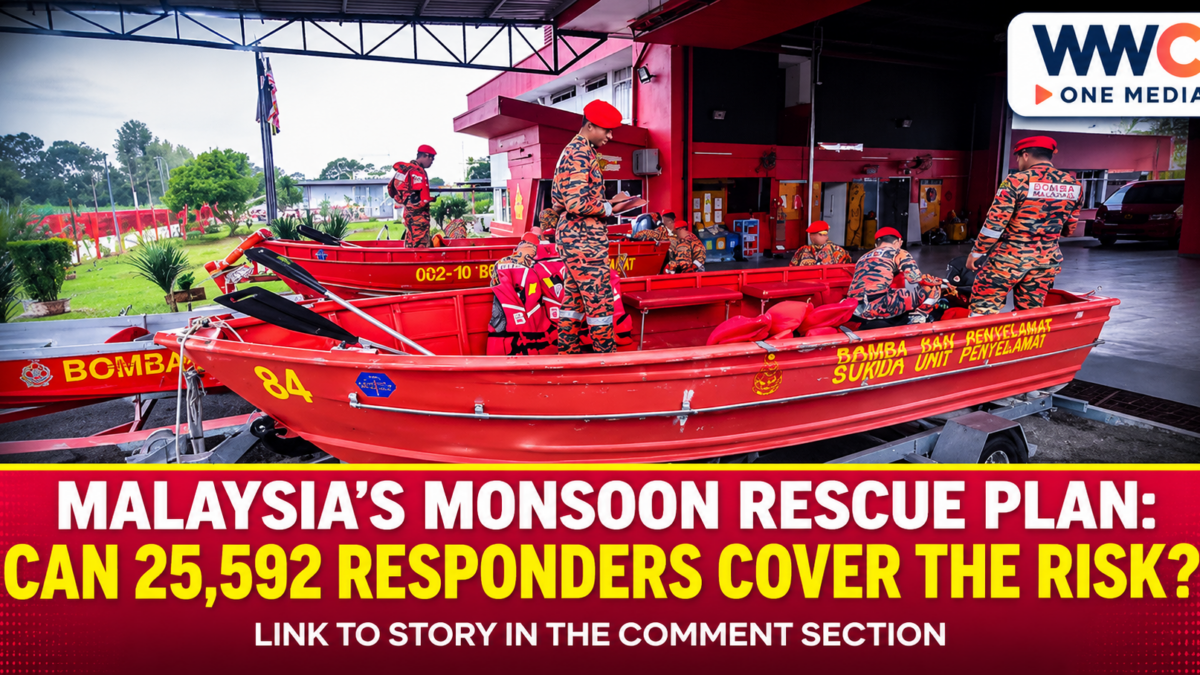
An Oct. 27 account hosted on Malaysia’s National Disaster Management Agency (NADMA) website reports that the Fire and Rescue Department, known as JBPM, placed 25,592 personnel and 1,248 assets on standby. It identifies department director-general Nor Hisham Mohammad as the official announcing the arrangements.
The government-hosted account is a republication of another publisher’s report of the department’s statement, not the original departmental release. The figure therefore requires confirmation against the original statement before it can pass a primary-record-only publication standard.
More importantly, standby does not mean everyone is simultaneously at a flood site. The national total is a planning measure; deployment to a particular community depends on local hazards, available transport, instructions and the demands of simultaneous emergencies.
A separate, original NADMA preparedness announcement dated Nov. 3 documents 101,901 personnel across the national emergency network. That broader number includes multiple agencies and should not be added to the JBPM total or treated as another count of firefighters.
Why Two Officially Circulated Firefighter Counts Differ
A further NADMA-hosted Oct. 30 account of a government briefing gives 15,145 fire-and-rescue personnel within a five-agency operational breakdown. The larger 25,592 figure comes from the department’s wider monsoon staffing description.
The published material does not expressly reconcile the counting methods. Different categories of eligible staff, volunteers or operational assignments might explain a difference, but that possibility remains an interpretation rather than an established explanation.
There is another arithmetic issue: the four component staffing categories in the Oct. 27 account total 24,876, not 25,592. The gap is 716. Until the original department roster or statement explains the difference, WWC should not present the component categories as a complete verified breakdown of the 25,592 headline figure.
The lesson for readers is that operational readiness is best measured against clearly defined categories, not simply the biggest number in circulation.
Rescue Assets and Shelters Are Part of the Same System
NADMA’s original Oct. 30 preparedness briefing, published on its own site on Nov. 3, confirms 2,425 rescue boats and 8,321 temporary evacuation centres nationwide. The shelters have a stated combined capacity of up to 1.9 million people.
The same announcement describes 60,000 food kits and 170,000 ready-to-eat food packs as part of the response preparations. Those are resources prepared for potential emergencies, not totals of assistance already delivered to flood victims this season.
WWC has separately examined Malaysia’s 8,321-centre flood shelter programme. That national shelter inventory provides context, but a centre’s existence is not proof that it is open or accessible at a particular moment.
Boats and vehicles likewise have different operational uses. Their practical value depends on whether crews can reach threatened locations, maintain communication and move households safely to suitable accommodation.
From National Plans to District-Level Flood Response
Disaster management relies on matching national capacity to changing local conditions. Heavy rainfall may affect several districts at once, making the placement of trained people and usable equipment more important than an undifferentiated national total.
The government has identified the need for coordination across rescue agencies, technical services and local authorities. That is especially relevant when roads are flooded, river levels are rising or an evacuation centre must accommodate more households than expected.
WWC’s earlier report on parliamentary questions about Malaysia’s monsoon readiness addressed the same accountability issue: whether public commitments translate into assistance where it is needed.
A separate WWC examination of Bentong flood updates also highlights the distinction between an evacuation-centre snapshot and the complete history of a local emergency. No figures from that event should be transferred to the national deployment plan.
What the Figures Do Not Yet Establish
The records reviewed do not offer a current district-by-district roster demonstrating how many of the reported 25,592 personnel were actively assigned on Nov. 22. Nor do they establish average response times, rescue outcomes or the precise number of people moved to safety by these teams.
Those measures would help determine whether the plans are working. A meaningful assessment would compare emergency-call response, resource availability, evacuation access and the needs of residents in areas facing repeat flooding.
Public safety also depends on residents using current weather alerts and following instructions from local disaster authorities. A national preparedness announcement is not a substitute for a real-time river warning or an evacuation order.
What Happens Next?
The next useful documents would be the Fire and Rescue Department’s original staffing statement, a reconciliation of the different personnel counts and updated district deployment reports as flood incidents develop.
Malaysia’s national disaster programme has clearly identified considerable resources in advance. Its effectiveness, however, will be judged less by headline totals than by whether people facing rising water receive timely warnings, safe transport and practical assistance.
Frequently Asked Questions
How many fire-and-rescue personnel are listed for Malaysia’s 2026–2027 monsoon?
A report hosted on NADMA’s website gives 25,592 personnel. The original Fire and Rescue Department statement was not independently retrieved for this review, so the figure remains subject to final primary-record verification.
Does 25,592 mean that many firefighters are actively rescuing people?
No. The figure describes a nationwide standby or readiness pool, not the number working at one flood scene.
How many temporary flood shelters has Malaysia prepared?
NADMA’s original preparedness announcement identifies 8,321 centres with capacity for up to 1.9 million people nationwide.
Why does another government report mention 15,145 firefighters?
That figure appears within a separate multi-agency staffing breakdown. The published material reviewed does not fully explain the different counting methods.
Where should residents check immediate flood conditions?
Residents should consult current official weather, river-level and local disaster-management updates and follow evacuation instructions when issued.