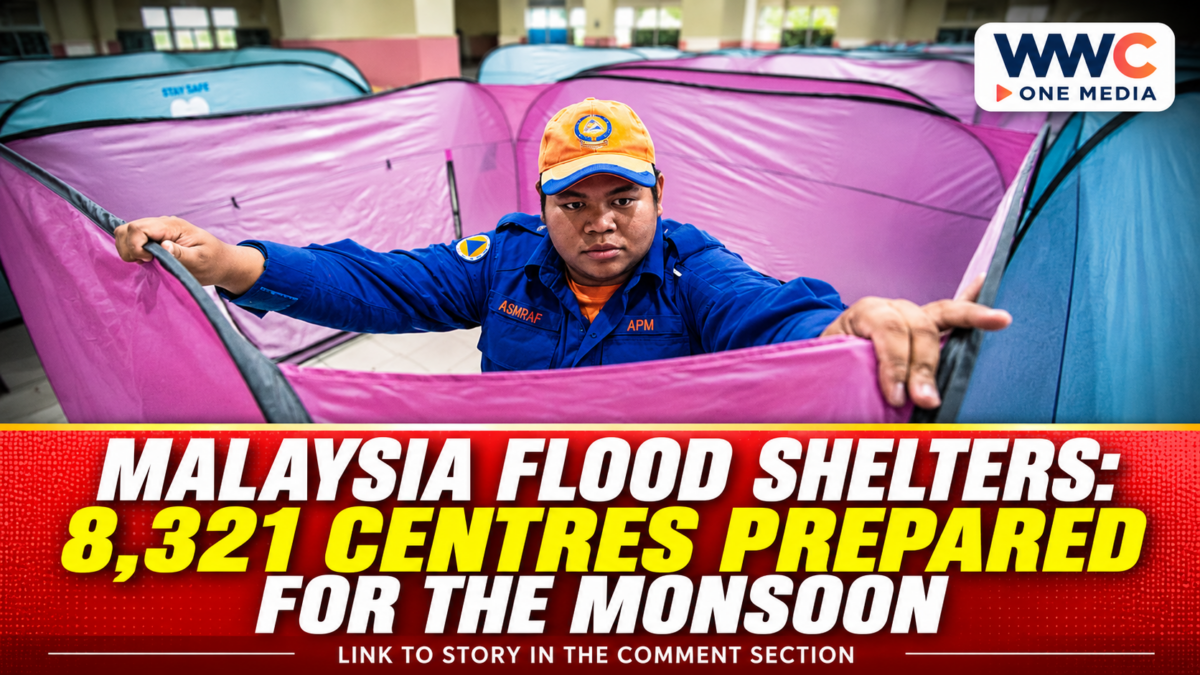
Malaysia’s National Disaster Management Agency (NADMA) reported on Nov. 12, 2026, that 8,321 temporary evacuation centres had been prepared nationwide, with combined capacity for up to 1.9 million flood victims ahead of the 2026/2027 Northeast Monsoon. The agency also reported preparations involving nearly 102,000 personnel and approximately 40,000 operational assets to support disaster response.
The preparations extend beyond providing temporary accommodation. Rescue boats, transport vehicles, emergency meals, food assistance and digital disaster information systems form part of a broader effort to manage evacuations and support communities affected by flooding.
The scale of the operation matters because the Northeast Monsoon regularly brings heavy rainfall to parts of Malaysia, particularly the east coast of Peninsular Malaysia, western Sarawak and eastern Sabah. The effectiveness of the response will ultimately depend on whether resources reach vulnerable communities when they are needed.
Malaysia flood shelters form part of a nationwide response
The 8,321 temporary evacuation centres are designed to accommodate as many as 1.9 million people displaced by flooding.
The figures were provided by NADMA Deputy Director of Operations Datuk Dr Abdul Gapar Abu Bakar in an update dated Nov. 12.
The agency also reported that approximately 102,000 personnel from different departments and government agencies were on standby, supported by around 40,000 operational assets.
These figures represent a nationwide preparedness arrangement rather than confirmation that every shelter is already occupied or that all facilities have been activated.
For families living in flood-prone communities, temporary evacuation centres provide a place to stay when remaining at home becomes unsafe.
However, the actual effectiveness of a shelter depends on more than its nominal capacity. Access routes, sanitation, drinking water, food distribution, electricity, medical support and coordination with rescue teams also matter.
The distinction between available capacity and operational readiness is therefore important when evaluating the country’s disaster preparations. nadma.gov.my
Rescue boats, vehicles and food supplies prepared
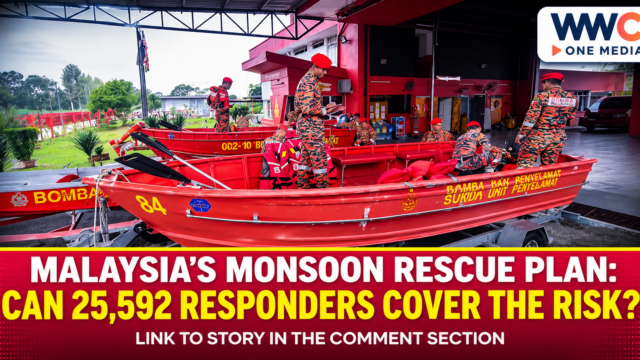
NADMA’s preparations also cover the equipment needed to reach communities affected by rising floodwaters.
The agency reported that its operational resources included approximately 2,450 boats and more than 3,000 four-wheel-drive vehicles and lorries, alongside other supporting equipment.
These resources serve different purposes during emergencies.
Boats can assist rescue teams in reaching locations where roads have become submerged. Four-wheel-drive vehicles and trucks can support transportation, evacuation and the movement of relief supplies.
Food provisions are another major component.
The government reported preparations involving 170,000 ready-to-eat meals for people arriving at temporary evacuation centres. It also prepared 60,000 food kits containing essential items intended for distribution when affected families return home.
This arrangement addresses two different stages of disaster response: immediate assistance during displacement and support during the initial return-home period.
Still, the announced quantities should not be mistaken for proof that every affected household will receive supplies immediately. Distribution will depend on the number of victims, location, accessibility and operational requirements.
The availability of transport and food resources is especially important when floods interrupt normal supply routes and prevent residents from accessing shops or essential services. nadma.gov.my
Malaysia is investing in permanent disaster relief centres
Temporary evacuation facilities are only one part of Malaysia’s longer-term disaster preparedness strategy.
On Oct. 12, 2026, NADMA reported that its RM260 million allocation under Budget 2027 would support additional Permanent Disaster Relief Centres, known as PPKBs, and the acquisition of essential disaster-response equipment.
Deputy Prime Minister Datuk Seri Dr Ahmad Zahid Hamidi also outlined a target of establishing two permanent disaster relief centres in each state, with priority given to areas exposed to recurring floods and mass evacuations.
The same announcement provided an update on 15 previously scheduled permanent centres across nine states.
Two facilities in Johor and Pahang had been completed, nine remained under construction, and four were in procurement and planning stages.
The government also identified boats and high-capacity water pumps among the equipment intended for responding agencies.
For families living in repeatedly flooded communities, permanent facilities could provide more reliable infrastructure than temporary arrangements established during an emergency.
However, planned facilities, construction projects and completed centres must be evaluated separately. The existence of a funding allocation does not automatically mean every proposed facility is already available for use. nadma.gov.my
Flood losses show why preparedness remains important
Malaysia’s preparedness programme comes against a measurable economic and social impact from previous flooding.
The Department of Statistics Malaysia reported in September 2026 that losses associated with the 2025/2026 Northeast Monsoon reached RM581.3 million.
The assessment covered the period from November 2025 to March 2026.
Public assets and infrastructure accounted for RM430.7 million of the reported losses, while damage to residential properties reached RM116.4 million.
The total was lower than the RM1 billion recorded during the 2024/2025 Northeast Monsoon period.
Nevertheless, the figures demonstrate that flooding can create substantial costs beyond immediate damage to household possessions.
Roads, public facilities and infrastructure are essential to the movement of residents, rescue teams and relief supplies. Damage to these assets can complicate emergency operations and slow recovery.
The economic consequences also extend to businesses and households that lose access to workplaces, transportation and essential services. dosm.gov.my
The Philippines faces similar challenges during its own rainy season. WWC previously examined the scale of flooding affecting millions of Filipinos during the Habagat season, illustrating how prolonged rainfall can put pressure on evacuation facilities and public services.
Digital alerts and local coordination are part of the plan
Disaster preparation also depends on how quickly residents receive information.
NADMA identified the Malaysia Disaster Information Management System, or MyDIMS, as a tool for sharing disaster-related information.
The application was launched on April 24, 2026. Its reported functions include notifications when users are within 10 kilometres of a disaster area, access to weather and disaster updates, locations of temporary evacuation centres and navigation guidance.
The agency also described the responsibilities of local authorities during flood operations.
District officers are responsible for taking early action when flooding occurs, including activating district-level Disaster Operations Control Centres.
Police, fire and rescue personnel and the Malaysian Civil Defence Force also have defined roles in coordinating emergency response and evacuation activities.
Community organisations, non-governmental organisations and local leaders are included in community-based disaster risk reduction initiatives.
This approach recognises that national resources alone cannot manage every emergency. Local coordination is essential because the first response often begins within the affected district.
WWC’s earlier coverage of the Metro Manila Flood Management Project’s remaining pumping-station work also highlights why infrastructure, operational readiness and local response coordination must work together.
What happens next
The immediate priority is the implementation of Malaysia’s Northeast Monsoon preparedness arrangements throughout the 2026/2027 season.
The number of available evacuation centres and the amount of equipment prepared provide an indication of the government’s planned response capacity. Actual performance will depend on timely deployment, accessibility and coordination among agencies.
The next important measures will include the progress of permanent relief-centre construction, the distribution of emergency supplies and the ability of local authorities to issue timely evacuation instructions.
For residents in high-risk areas, NADMA has encouraged households to prepare emergency bags containing identification documents, basic medicines, food, drinking water and suitable clothing.
Malaysia’s preparedness effort therefore involves both government resources and individual readiness.
The ultimate test will not simply be how many people the country can accommodate on paper, but how effectively assistance reaches those who need it during an actual flood emergency.
Frequently asked questions
1. How many flood evacuation centres has Malaysia prepared for 2026/2027?
NADMA reported 8,321 temporary evacuation centres nationwide as of Nov. 12, 2026.
2. How many people can Malaysia’s temporary evacuation centres accommodate?
Their combined reported capacity is up to 1.9 million flood victims.
3. How many rescue personnel and operational assets are prepared?
NADMA reported nearly 102,000 personnel and approximately 40,000 operational assets.
4. What is Malaysia’s MyDIMS application?
MyDIMS is the Malaysia Disaster Information Management System. It provides disaster notifications, weather and emergency information, evacuation-centre locations and navigation guidance.
5. How much has Malaysia allocated for permanent disaster relief centres under Budget 2027?
NADMA reported an allocation of RM260 million for permanent relief centres and essential disaster preparedness equipment.
Additional internal link for the Markdown article: Add this paragraph immediately after the Philippines comparison paragraph:
A local example of how evacuation arrangements work during severe rainfall can be seen in Parañaque’s evacuation-centre response during Habagat flooding, where residents sought temporary shelter as flood conditions affected Metro Manila.