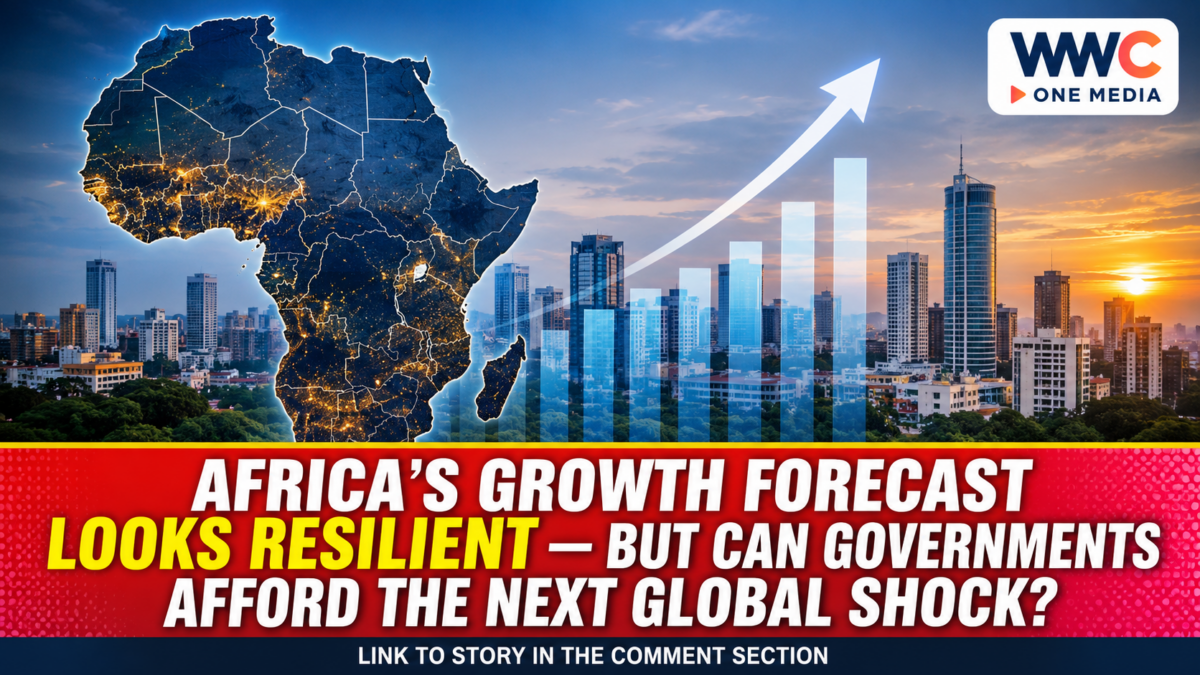
African policymakers, economists and development partners gathered in Nairobi from November 23 to 25, 2026, for the African Economic Research Consortium’s annual workshop on economic growth, macroeconomic policy and democratic governance. The meeting opened as international institutions continued to project positive growth across sub-Saharan Africa, while warning that debt costs, declining development assistance and external disruptions could limit governments’ ability to respond to another crisis.
The central issue for Africa economic resilience is no longer simply whether the region can keep expanding. It is whether governments can protect households, investment and public services when higher energy prices, climate events, trade disruption or tighter international financing put pressure on national budgets.
The African Economic Research Consortium, or AERC, said its workshop opened with 2,969 registered participants from 68 countries. Its programme covered macroeconomic stability, industrial policy, development aid, democratic governance and ways to manage economic and climate-related shocks.
Africa economic resilience faces two different growth forecasts
The regional outlook is positive, but the latest estimates are not identical.
The International Monetary Fund’s October 2026 Regional Economic Outlook Update projected sub-Saharan Africa’s economy to grow by 4.5% in both 2026 and 2027. The IMF said earlier reforms, adjustments in global supply chains and favourable export receipts in some countries had helped the region withstand external pressures.
The World Bank’s October 6 Africa Economic Update presented a more cautious projection. It estimated that regional growth would increase from 4.1% in 2025 to 4.3% in 2026.
The two figures come from separate forecasting exercises and should not be treated as competing measurements of an already completed economic result. Both are projections based on institutional assumptions and assessments of economic conditions.
The World Bank also warned that the region’s growth remained insufficient to substantially reduce extreme poverty or create enough jobs for its rapidly expanding labour force.
That distinction matters. A region can record positive gross domestic product growth while still struggling to generate enough employment, raise household incomes and improve access to essential services.
Debt costs and falling aid narrow governments’ options
One of the strongest warnings in the IMF’s October outlook concerns the limited financial room available to many governments.
The IMF identified high interest burdens, low foreign-exchange reserves in several countries and falling aid as vulnerabilities that could make another external shock more difficult to absorb.
In practical terms, governments facing large debt-service obligations have less flexibility to redirect money towards emergency support, infrastructure repairs or essential services. A sudden increase in borrowing costs can also make new financing more expensive precisely when additional spending may be needed.
The World Bank identified a similar challenge in its October regional update. It said public debt had broadly stabilised at around 57% of GDP, but high debt-service costs continued to constrain spending on health, education and infrastructure.
The pressure is not only about how much a government owes. It is also about how much of its annual revenue must be used to meet interest and repayment obligations instead of financing public priorities.
WWC previously examined Africa’s return to international bond markets and the cost of new borrowing. That financing trend illustrates why renewed investor access does not automatically mean governments have secured affordable or sustainable funding.
Inflation can weaken the benefits of economic growth
Economic growth does not necessarily translate into stronger purchasing power.
The IMF projected median inflation in sub-Saharan Africa to rise from 3.4% in 2025 to 4.3% in 2026 and 5.0% in 2027. It identified fuel and transport costs as immediate sources of pressure, with higher fertilizer and imported-input costs potentially feeding into food prices later.
These pressures can affect households and businesses at the same time.
Higher transport costs can increase the expense of moving food and manufactured goods. More expensive fertilizer can raise agricultural production costs. Businesses may also face higher operating expenses when energy, imported materials and financing become more expensive.
For households, the result can be a smaller amount of money available for other needs, even when the economy continues to expand.
The IMF’s recommendations include containing persistent inflation, targeting support towards vulnerable households and protecting productive investment. Those priorities reflect the need to manage price pressures without undermining the foundations of future growth.
Why one economic policy cannot fit every African country
Africa’s economic conditions differ substantially across countries. Export structures, debt profiles, currency arrangements, inflation levels and access to international financing all influence how governments respond to external shocks.
The IMF’s October assessment illustrates this variation. It projected growth of 4.1% for oil exporters in 2026, while other resource-intensive economies were projected to grow by 3.8%. Non-resource-intensive economies were projected to expand by 6.0%, down from 6.4% in 2025.
Those differences show why a single regional growth rate cannot describe the experience of every economy.
A country that benefits from stronger commodity export receipts may have a different set of fiscal choices from a country that imports most of its fuel and faces higher external financing costs.
Monetary policy also differs. WWC has previously examined how African central banks are setting different interest-rate policies. Those differences underline why regional policy discussions must account for national conditions rather than assume that one interest-rate or fiscal response will work everywhere.
Domestic revenue and accountable institutions become more important
When external development assistance declines, governments face greater pressure to finance development through domestic resources and more sustainable funding arrangements.
The World Bank has identified domestic resource mobilisation and deeper local capital markets as important parts of the response to tighter external financing conditions.
That task involves more than raising taxes. Governments also need reliable revenue administration, transparent public spending, effective institutions and confidence that public funds are being used for their intended purposes.
The AERC workshop’s focus on democratic governance is therefore connected to the economic debate. Fiscal policy depends not only on the amount of money a government collects, but also on the credibility of the institutions responsible for allocating and monitoring it.
Analysis: Stronger domestic revenue collection can give governments greater control over development priorities. However, poorly designed tax increases can place additional pressure on households and businesses already facing high costs. The challenge is to broaden the revenue base while improving public spending efficiency and maintaining a stable environment for private investment.
WWC has also examined Afreximbank’s exploration of alternative financing through offshore yuan borrowing. Alternative funding can broaden financing options, but the currency, repayment terms and cost of borrowing remain important risks.
What happens next
The Nairobi workshop runs through November 25, with its programme covering research presentations and discussions on macroeconomic stability, industrial policy, aid and democratic governance.
The more important test will come through national policy decisions and economic results after the discussions end.
Governments will need to demonstrate whether they can improve revenue collection, manage debt obligations, contain inflation and maintain investment in infrastructure and public services. They will also need to prepare for climate-related disruptions and changes in international financing conditions.
For investors and businesses, the regional growth outlook remains relevant, but it should not be interpreted as a guarantee of stronger performance in every country or sector.
Africa’s economic resilience will ultimately be measured not only by its ability to maintain growth during difficult conditions, but by whether that growth creates jobs, supports household purchasing power and leaves governments better prepared for the next shock.
Frequently asked questions
What is the projected economic growth rate for sub-Saharan Africa in 2026?
The IMF’s October 2026 outlook projected 4.5% growth, while the World Bank’s October update projected 4.3%.
Why are African governments concerned about global economic shocks?
External disruptions can increase fuel and food costs, weaken export earnings, raise borrowing expenses and put pressure on government budgets.
How does public debt affect Africa’s economic resilience?
High debt-service costs can reduce the money available for infrastructure, health, education and emergency support when another crisis occurs.
Why is development assistance important to African economies?
External assistance supports development programmes and public priorities. When it declines, governments face greater pressure to mobilise domestic revenue and find sustainable financing.
What was the purpose of the AERC Annual Workshop 2026?
The November 23–25 workshop in Nairobi brought together researchers, policymakers and development partners to discuss the macroeconomy, economic growth, democratic governance and ways to address economic shocks.