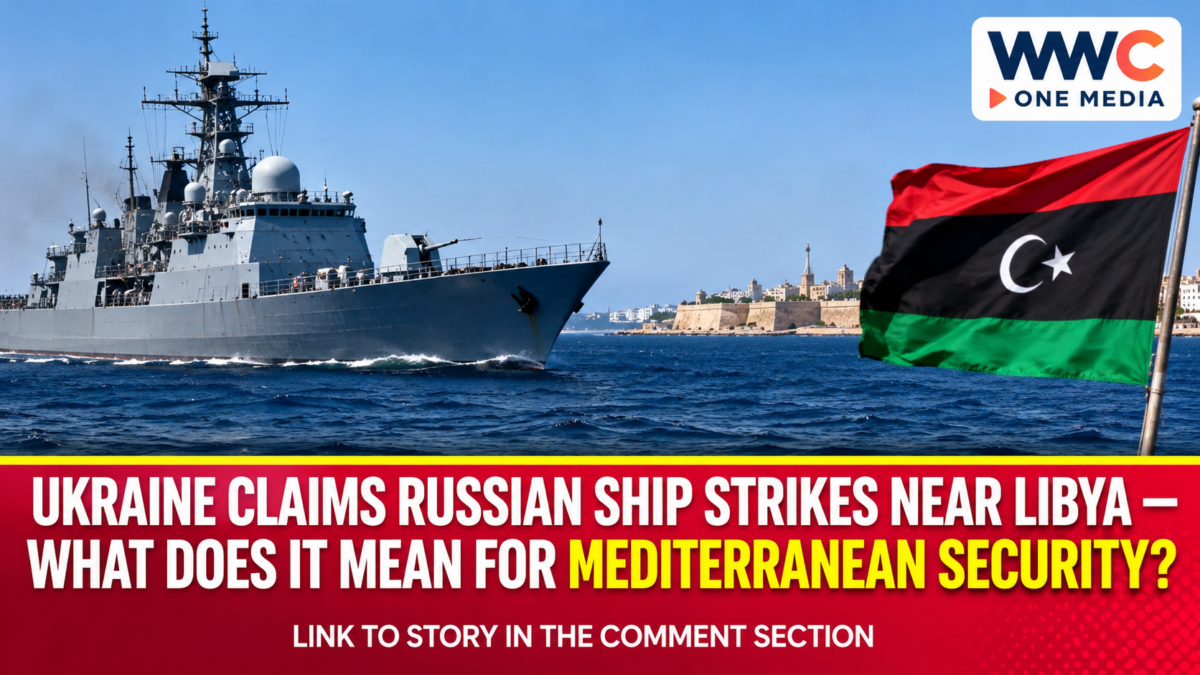
KYIV, Ukraine — Ukraine publicly acknowledged on Nov. 23, 2026, that its forces had targeted two Russian vessels in the vicinity of Libya, bringing renewed attention to maritime security in the Mediterranean. Ukrainian President Volodymyr Zelenskyy said the operation resulted in the sinking of a Russian naval vessel and the disruption of a cargo ship allegedly supporting Moscow’s military activities.
The Russian ship strikes introduce another dimension to a conflict whose consequences extend beyond Eastern Europe.
For governments, shipping companies and maritime workers, the development raises questions about civilian vessel protection, national sovereignty and the potential economic consequences of geographically expanding hostilities.
Although Ukraine has officially acknowledged responsibility, independent confirmation of the full extent of the damage remains necessary.
Russian ship strikes receive official Ukrainian acknowledgement
Ukraine’s Security Service issued a statement identifying the vessels involved as the Russian naval corvette Merkuriy and the cargo ship MV Angara.
The agency described the operation as a joint undertaking involving Ukrainian security personnel and defence forces.
It maintained that both vessels supported Russia’s military activities. Zelenskyy subsequently reiterated that position in his presidential address and indicated that Ukraine intended to continue its maritime operations.
The announcement establishes Kyiv’s official account of the incident. It does not independently resolve questions about the precise consequences, the condition of the vessels or the legal circumstances surrounding the operation.
No independently authenticated assessment of casualties or environmental damage was established in the primary records reviewed for this report.
The distinction matters because statements issued by governments involved in armed conflicts represent their respective accounts and must be evaluated accordingly.
US sanctions records provide additional context
The MV Angara was identified in a US Treasury Department sanctions announcement dated May 8, 2022.
The official record lists the Russian-flagged vessel in connection with M Leasing LLC under Executive Order 14024.
That designation establishes a documented sanctions history predating the latest incident.
However, financial sanctions and the legal status of a vessel during armed conflict are separate matters.
A sanctions listing does not, by itself, establish what cargo a ship was carrying during a particular voyage. Nor does it independently establish whether an attack against that vessel complied with international law.
Ukraine’s assertion that the Angara was supporting Russian military activities must therefore remain attributed to Ukrainian authorities.
This distinction is particularly important for businesses involved in maritime transport, where regulatory restrictions and security risks can overlap without being legally identical.
Libya incident raises questions about regional stability
The reported operation near Libya places greater attention on the relationship between military activities and the security interests of countries outside the principal battlefield.
An incident involving foreign military assets can create diplomatic questions for coastal authorities even when they are not directly involved in the wider conflict.
WWC analysis: The immediate issue is whether the governments concerned can establish a reliable account of events without allowing the incident to generate additional regional tensions.
Questions about jurisdiction, the status of the vessels and the legal circumstances of the operation require evidence beyond the public declaration of responsibility.
The Ukrainian government’s position establishes its stated justification. It does not substitute for an independent legal assessment.
For Libya, the broader challenge is maintaining maritime security while managing its relationships with foreign governments.
Maritime workers face risks beyond military confrontation
The International Maritime Organization had already expressed concern about threats to international shipping before the latest Ukrainian announcement.
During its council meeting in London from Nov. 2 to 6, the organisation reaffirmed the importance of protecting maritime workers regardless of their nationality and maintaining safe international navigation.
The council also condemned attacks affecting commercial shipping in the Black Sea and Red Sea.
These earlier statements provide broader context for the security environment facing maritime businesses. They were not specific findings concerning the Libya incident.
WWC ONE MEDIA previously examined related regional concerns in its coverage of Bulgaria’s warnings about deteriorating Black Sea maritime security.
The Mediterranean development raises a similar policy question: how can governments protect civilian maritime activity when military confrontations occur in areas also used for international trade?
The nationality of a ship or its crew should not automatically determine whether an individual maritime worker receives protection.
What the developments could mean for shipping businesses
WWC analysis: Maritime incidents can create commercial uncertainty before their full consequences become known.
Shipowners may need to review available security information, contractual obligations and insurance arrangements when assessing whether changes to operations are necessary.
The financial implications depend on the circumstances of individual voyages and the decisions of insurers, regulators and port authorities.
WWC’s earlier examination of Black Sea war-risk insurance and shipping reporting requirements illustrates how maritime security developments can become relevant to commercial decision-making.
For Philippine readers, the welfare of maritime workers deserves particular attention. Previous WWC coverage of Filipino seafarers returning home after a tanker incident in the Strait of Hormuz highlights the human consequences of conflicts affecting international shipping.
Those earlier incidents are separate from the latest developments near Libya.
There is no independently verified information in the records examined establishing Filipino crew involvement, a Mediterranean shipping suspension or an increase in insurance premiums specifically attributable to the latest operation.
What happens next
The next meaningful developments will depend on additional official statements, independent damage assessments and any findings issued by relevant maritime or investigative authorities.
Russian and Libyan responses will also be important to understanding the diplomatic consequences of Ukraine’s announcement.
For the international shipping industry, reliable official safety information will be more useful than speculation about the likelihood of further incidents.
Ukraine has publicly acknowledged an operation beyond the Black Sea. Whether the development leads to sustained changes in Mediterranean shipping conditions remains an open question.
The immediate priority for governments and maritime institutions is establishing the facts while protecting civilian shipping and preventing further regional instability.
Frequently asked questions
Did Ukraine acknowledge the Russian ship strikes near Libya?
Yes. Ukraine’s Security Service and President Volodymyr Zelenskyy issued official statements on Nov. 23, 2026, acknowledging the operation.
Which Russian vessels did Ukraine identify?
Ukrainian authorities identified the naval corvette Merkuriy and the cargo vessel MV Angara.
Was the MV Angara previously sanctioned?
Yes. A US Treasury Department announcement dated May 8, 2022, identified the vessel under Russia-related sanctions.
Have Mediterranean shipping costs increased because of the incident?
No independently verified evidence reviewed for this report establishes a specific increase attributable to the incident.
Does the incident mean Libya has entered the Russia-Ukraine war?
No. Ukraine’s announcement alone does not establish that Libya has become a party to the armed conflict.