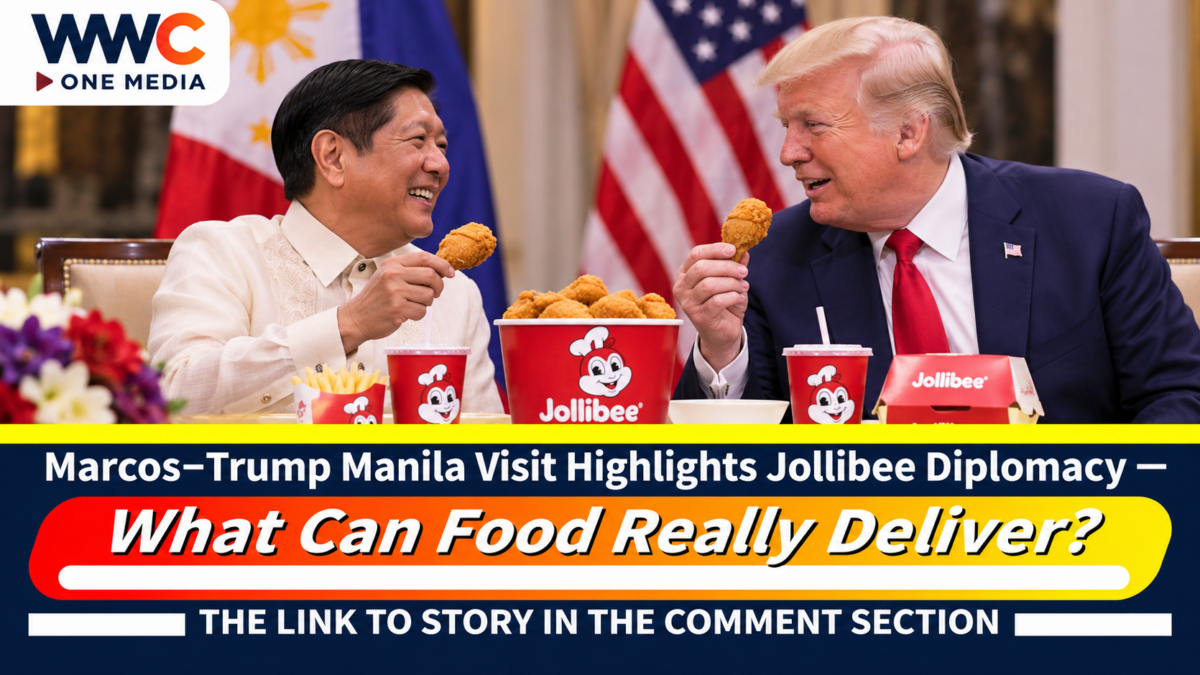
MANILA — US President Donald Trump arrived in the Philippines for the ASEAN summit on Nov. 17, 2026, as President Ferdinand Marcos Jr. prepared for another round of high-level engagement with Washington. The attention around Jollibee diplomacy illustrates how a familiar Philippine food brand can become part of a presidential visit, although an official account confirming the reported late-night delivery to Trump was not available in the primary records reviewed.
The confirmed story has two layers: a government using hospitality to present Filipino culture and a restaurant group building a business far beyond its home market. Neither a friendly gesture nor an iconic menu item, however, substitutes for a documented trade agreement or a measurable commercial gain.
Jollibee Diplomacy Has an Official Precedent
In July 2026, Marcos and Canadian Prime Minister Mark Carney visited a Jollibee restaurant in Vancouver after bilateral discussions. The Philippine government’s published account described the visit as an introduction to Filipino food and a recognition of connections between the two countries’ people.
That episode provides an official example of a sitting Philippine president placing a home-grown restaurant brand alongside formal diplomacy. It does not prove that the same menu, setting or conversation occurred with Trump in Manila.
Reports published on Nov. 18 describe Jollibee food being sent to the US delegation as a late-night snack. Without an accessible official transcript, presidential statement or independently opened first-party record documenting the delivery, this article cannot establish who ordered it, what was served or how Trump responded.
Analysis: Food can make an unfamiliar country feel recognisable during a packed diplomatic schedule. Its symbolic role is credible; a claimed effect on negotiations is a different matter and needs documentary evidence.
The Manila Summit Had a Substantive Agenda
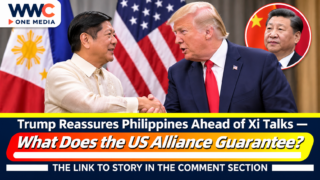
The White House published a video record of Trump’s arrival in Manila dated Nov. 17. It also issued a joint statement on the Quad leaders’ meeting that day with Australia, India and Japan, covering maritime security, economic resilience, digital infrastructure and supply-chain cooperation.
These official activities establish that the visit was part of an extensive regional diplomatic programme. They do not confirm that informal hospitality changed any participant’s position on trade or security.
WWC’s guide to what the Trump Manila visit could and could not deliver previously distinguished attendance at an ASEAN meeting from negotiated bilateral results. That separation is especially important when a memorable culinary detail risks overshadowing the documents that matter to exporters and investors.
A photograph of leaders sharing food may have an immediate public audience. A tariff change, investment commitment or security arrangement requires clearer evidence, including agreed terms, dates and implementation measures.
Jollibee Is Already an International Business
Jollibee Foods Corporation’s official disclosures describe a large restaurant group with operations in the Philippines and numerous overseas markets. Its Aug. 11, 2026, results announcement reported continued international sales growth, including positive second-quarter same-store performance in North America.
Those results establish commercial activity independent of any presidential visit. They do not show that a diplomatic mention caused a rise in orders, share prices or American brand awareness.
The company’s May 2026 North American update reported 109 Jollibee restaurants in the region, including 81 in the United States and 28 in Canada at that time. The figure is dated and should not be represented as today’s live store count.
WWC has separately examined Jollibee’s proposed expansion in Australia, showing how international growth depends on franchise partners, locations and operational execution. That is a different form of evidence from the publicity generated when a president mentions a meal.
Cultural Visibility Is Not the Same as a Trade Concession
Analysis: A well-known Filipino restaurant can act as an informal cultural reference point because it is accessible and familiar to people overseas. But cultural visibility does not guarantee market access for exporters, nor does it change customs rules automatically.
The Philippines and United States have significant commercial and security interests to discuss. Changes to the treatment of Philippine products require official policy instruments, not a meal shared or delivered during a summit.
WWC has reported on the tariff questions facing Marcos and Trump in Manila. The existence of a bilateral meeting does not establish that either side has accepted a new tariff rate or other concession.
The same distinction applies to Jollibee’s corporate prospects. A foreign dignitary encountering the brand could generate attention, yet the company’s longer-term performance depends on repeat customers, costs, franchise execution and the restaurants it actually operates.
What Investors and Consumers Can Verify
For a listed Philippine company, the strongest indicators of commercial success are audited financial results, regulatory disclosures and operational updates. Store counts need dates; sales growth needs a defined comparison period; planned openings must not be described as completed restaurants.
The company’s official 2026 results discuss changes in pricing, customer transactions and operating margins. Such evidence provides a firmer starting point for evaluating its international business than speculation about what one official lunch might be worth.
For readers interested in the political side, government statements and signed agreements provide the corresponding evidence. A hospitality anecdote and a commercial transaction serve different purposes, and they should not be measured by the same standard.
Analysis: The clearest value of food diplomacy is cultural representation, not a measurable promise of new investment. Any claim of an economic windfall would need subsequent company figures or specific government commitments.
What Happens Next
A presidential transcript, official social-media post from the government, or a documented account from Jollibee could clarify the reported delivery to Trump’s delegation. Until then, the menu, timing and reaction remain unverified in this primary-record review.
The more consequential public documents will be any joint Philippine-US statement, formal trade measures or implementation notices following the meetings. Jollibee’s subsequent earnings reports will separately show whether its operating performance changes.
Frequently Asked Questions
Did Marcos send Jollibee to President Trump?
The delivery was reported on Nov. 18, 2026, but no directly accessible official first-party account confirming its details was verified for this article. It should not be treated as an established fact on this record alone.
Has Marcos used Jollibee in diplomacy before?
Yes. The Philippine government published an account of Marcos and Canadian Prime Minister Mark Carney visiting a Jollibee branch in Vancouver in July 2026.
Was Trump in Manila for the 2026 ASEAN summit?
Yes. The White House published an official record of his arrival dated Nov. 17, 2026.
Did the Jollibee gesture produce a US trade deal?
No such outcome was established in the official materials reviewed. Trade concessions require separately documented government decisions.
Is Jollibee operating in North America?
Yes. Its company material reported 109 North American Jollibee locations in May 2026, including 81 in the United States and 28 in Canada. That is a historical count, not a live total.