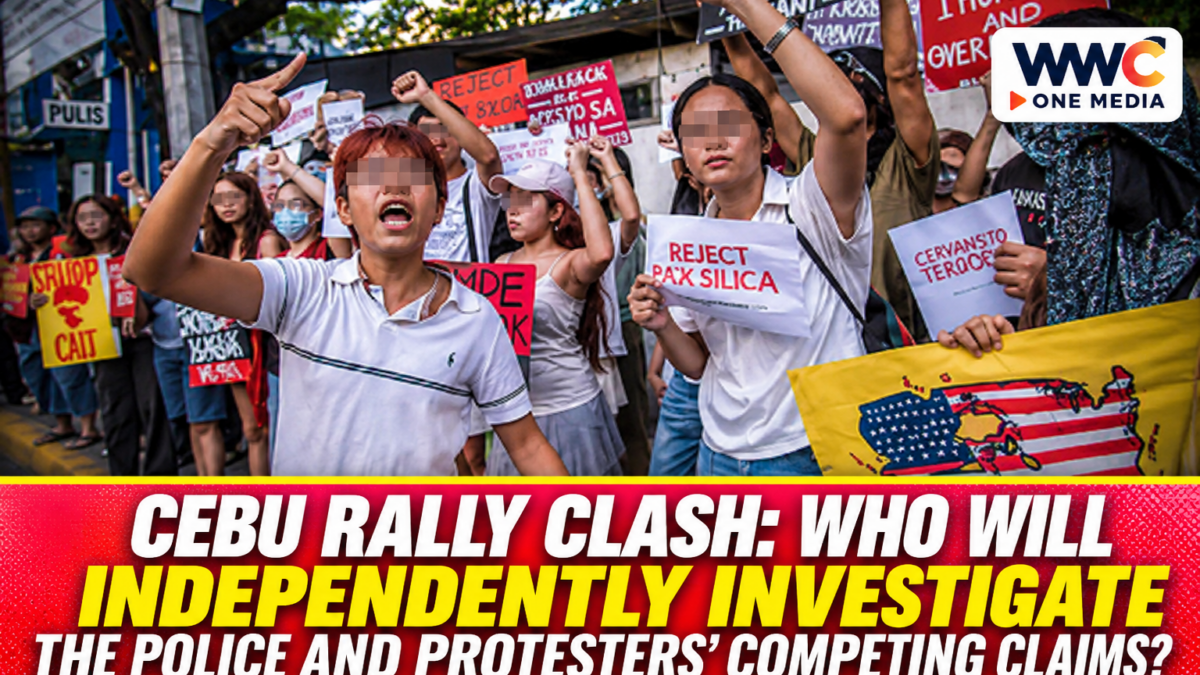
The confrontation between police officers and demonstrators along Colon Street in Cebu City on Nov. 16, 2026, has raised questions about the limits of police intervention during public assemblies and the protection of journalists covering demonstrations.
The incident has prompted competing accounts of what happened. Protesters have condemned what they describe as police abuse, while the Cebu City Police Office has maintained that its personnel acted to protect public safety and has expressed willingness to undergo an impartial investigation. These are allegations and official positions, not findings that establish who was responsible for the confrontation.
The legal standard governing public demonstrations is clear. Batas Pambansa Blg. 880, or the Public Assembly Act of 1985, recognises the right to peaceful assembly and defines maximum tolerance as the highest degree of restraint that police and other peacekeeping authorities must observe during an assembly or its dispersal. Lawphil
The law also sets out circumstances governing police intervention. Section 10 requires law enforcement personnel to observe maximum tolerance, while Section 11 provides procedures for dispersing assemblies with permits when violence occurs. Section 12 addresses assemblies held without a required permit. The absence of a permit does not remove the need to follow the applicable legal safeguards.
The Supreme Court’s ruling in Bayan v. Ermita further explains that maximum tolerance is a legal obligation, not simply a matter of police discretion. The Court said the standard must be observed in handling public assemblies. Lawphil
Why an independent investigation matters
The key issue is not simply whether police had a reason to intervene. It is whether the response followed the law, whether force was necessary and proportionate, and whether the rights of demonstrators and journalists were respected.
The CCPO’s reported willingness to cooperate with an impartial investigation is an important starting point. However, an investigation must examine the conduct of everyone involved, preserve available video footage and other evidence, and establish the sequence of events before responsibility is assigned.
Claims that journalists were injured also require proper documentation and investigation. Journalists covering public events must be able to perform their work without unlawful interference, regardless of the political position or cause being covered.
Cebu City has previously experienced demonstrations in which police presence and crowd management became points of public debate. The broader question of how authorities protect both public order and civil liberties remains relevant to the city’s handling of future rallies.
What happens next
A complete report should be based on the original statements issued by the protest organisers, the University of the Philippines Cebu College of Communication, Art and Design, the CCPO and Police Regional Office 7. It should also establish whether formal complaints have been filed and whether an independent inquiry has been opened.
The original incident-specific statements and investigation records were not independently accessible for verification in this review. Consequently, the reported injuries, allegations of excessive force, police account of the events and any planned disciplinary or criminal proceedings should not be presented as established findings.