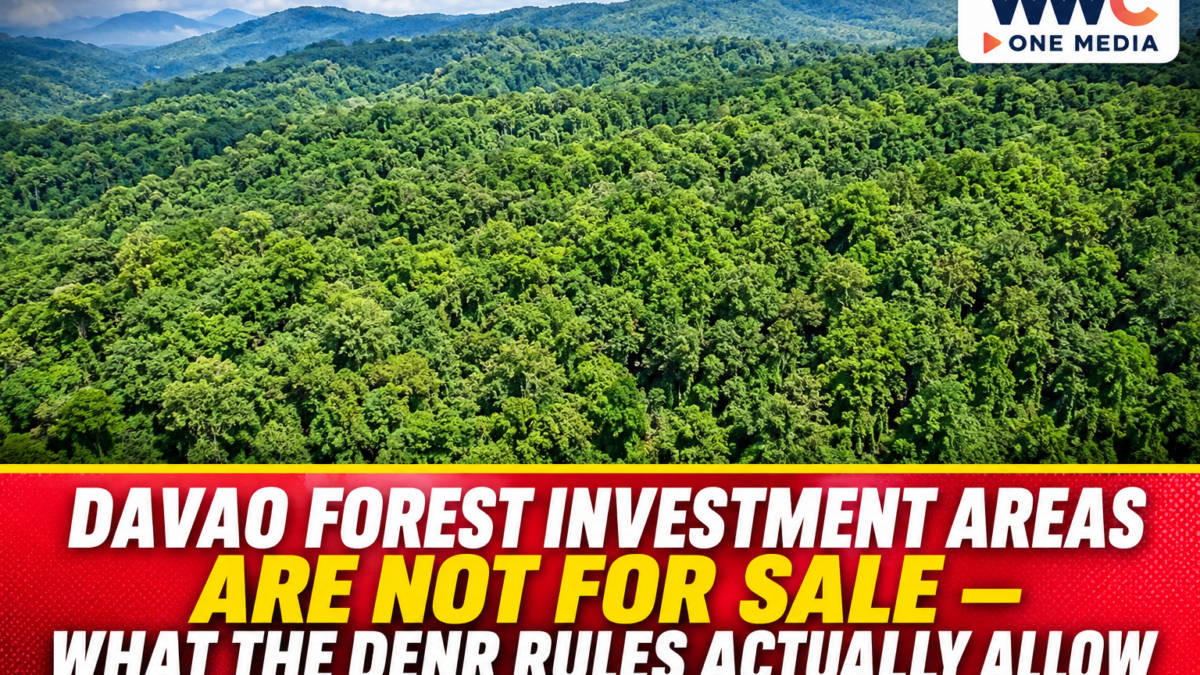
The distinction between forest land investment and private land ownership is central to understanding the DENR’s programme in the Davao Region.
The 1987 Philippine Constitution establishes State ownership over forests and other natural resources. Article XII, Section 2 provides that, except for agricultural lands, natural resources shall not be alienated. Section 3 classifies public lands into agricultural, forest or timber, mineral lands and national parks, and limits alienable public-domain land to agricultural areas. The LawPhil Project
This means an investor cannot treat a forest-land investment designation as an offer to purchase the property. A government-authorised land-use arrangement is different from a transfer of ownership.
The DENR’s published policy framework includes Administrative Order No. 2025-22, which establishes the Sustainable Forest Land Management Agreement, Administrative Order No. 2026-07, which amends its provisions, and Administrative Order No. 2026-34, which sets guidelines for Potential Investment Areas within forest land. Administrative Order No. 2026-38 provides further amendments to the SFLMA rules. These issuances are listed in the Forest Management Bureau’s official policy records. databank.denr.gov.ph+1
For prospective investors, the practical implication is that identifying a parcel as a potential investment area does not automatically grant permission to occupy or develop it. Applicants must go through the prescribed application, evaluation and approval process and comply with the conditions attached to any approved agreement.
The distinction is equally important for communities and Indigenous Peoples whose livelihoods, ancestral domains and access to natural resources may be affected by proposed projects. Land-use approvals must be assessed against applicable environmental requirements and legal protections, not simply the commercial potential of a site.
The programme’s success will therefore depend on more than attracting investors. Transparent parcel identification, careful project evaluation, meaningful community safeguards and continuing environmental monitoring will determine whether economic activity can proceed without compromising the public interest.