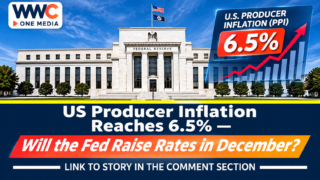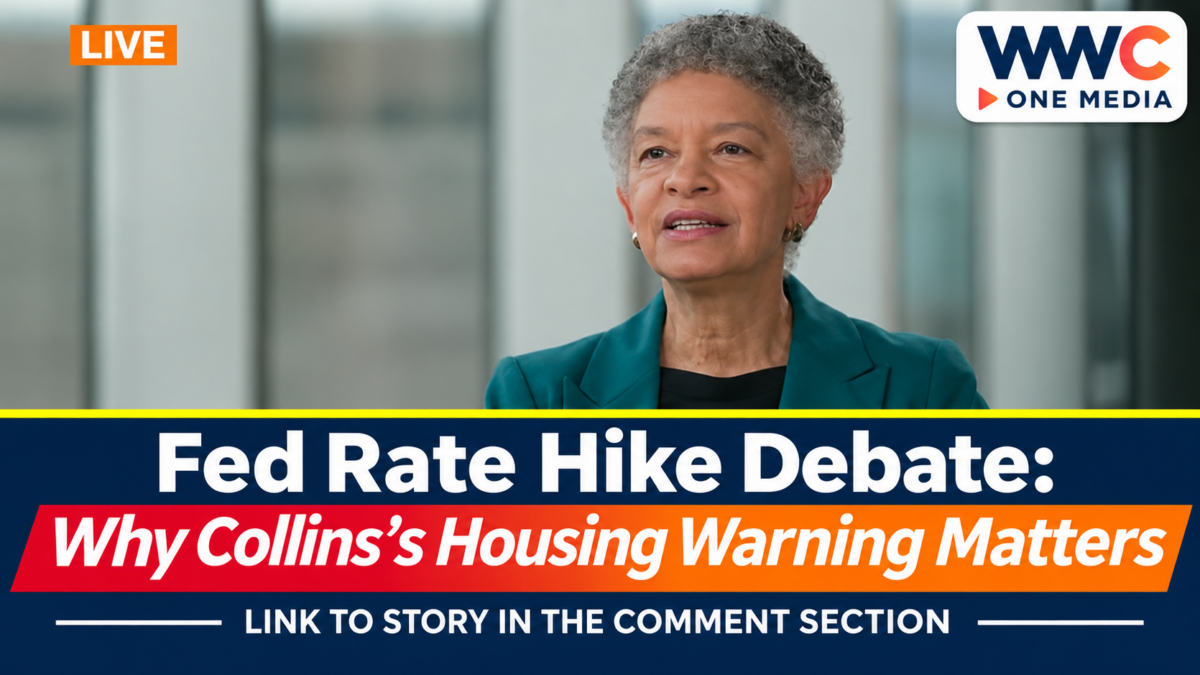
WASHINGTON— Nov. 15, 2026. The Federal Reserve’s next interest-rate decision remains open after officials held the federal funds target at 3.75%–4.00% on Oct. 28, with inflation still above their long-run goal. Boston Federal Reserve President Susan M. Collins used prepared remarks at a Nov. 13 housing conference to explain why restoring price stability and understanding the pressures on housing are central to that policy challenge.
The Fed rate hike debate is about more than whether borrowing costs increase at the next meeting. The central bank must weigh inflation against the possible strain that interest rates impose on homebuyers, builders, businesses and workers. A regional Fed president’s speech is useful evidence of those competing concerns, but it does not announce a committee decision.
Fed rate hike debate starts with the October vote
The Federal Open Market Committee (FOMC) held its benchmark target range at 3.75%–4.00% on Oct. 28. The 10–2 decision followed a quarter-percentage-point increase on Sept. 16, bringing the range to its current level.
Lisa D. Cook and Beth M. Hammack opposed the October hold and preferred a further quarter-point increase. That split demonstrates a policy disagreement at the meeting, not an advance vote on what the committee will do in December.
The October statement described economic activity as expanding strongly, with resilient domestic spending and little change in unemployment. It also said inflation remained elevated and that additional evidence would guide the policy stance required to return inflation to the 2% goal.
As WWC previously explained in its review of the October Fed hold and Philip Jefferson’s cautious approach, the difference between an individual policymaker’s assessment and a formal committee action matters. Markets can react to speeches, but only an FOMC decision changes the target range.
What Collins’s published housing remarks actually establish
Collins, president and chief executive officer of the Federal Reserve Bank of Boston, delivered prepared opening remarks to its 70th Economic Conference on Nov. 13. The published remarks emphasised housing’s importance to households and the wider economy, the effects of monetary policy and the role of research in understanding housing challenges.
Housing is particularly sensitive to financing conditions. When borrowing becomes more expensive, a prospective buyer may qualify for a smaller mortgage; higher development financing costs may also affect construction choices.
There is also a policy tension: reducing inflation can improve purchasing-power stability over time, while more restrictive financing conditions may hurt housing affordability in the nearer term.
The publicly available prepared address does not independently verify the precise wording of Collins’s separate Nov. 14 answers to reporters. The remarks attributed to her in that exchange should not be treated as direct quotations from the published speech.
October inflation shows why the question remains live
The Bureau of Labor Statistics reported on Nov. 10 that the consumer price index rose 0.4% in October on a seasonally adjusted basis, following a 0.6% increase in September. The core index, excluding food and energy, advanced 0.3% in October.
Shelter prices increased 0.3% for the month and accounted for more than 30% of the rise in the overall index. Food prices increased 0.5% and energy prices increased 0.7%.
Inflation data also need careful interpretation. A slower monthly increase than September is not the same thing as falling prices, nor does one report establish that inflation has returned sustainably to target. The FOMC’s own statement describes elevated inflation as an unresolved issue.
Related WWC coverage of Anna Paulson’s approach to further tightening after the October CPI release provides context for how officials can agree that inflation is too high while differing over the pace of the response.
Why gradual tightening is not an automatic timetable
The Fed’s published framework gives the committee two enduring goals: maximum employment and stable prices. Its policy choices affect credit conditions with delays, and the effects can vary across households and sectors.
In analysis, a measured sequence of decisions offers officials opportunities to reassess the evidence between meetings. Yet caution carries a competing risk: if underlying inflation remains persistent, delaying action could eventually require a more restrictive response. Neither argument proves that a particular increase is already scheduled.
The October dissenters preferred immediate tightening; neither position commits the next meeting.
WWC’s earlier examination of Mary Daly’s remarks on the US interest-rate outlook offers a further illustration of how regional officials discuss the same trade-off from different starting points. Individual views are not committee decisions.
What higher US rates could mean for Philippine readers
US rate increases can influence dollar-denominated borrowing costs, international investment flows and currency markets. For Philippine businesses with foreign-currency debts or US-dollar purchases, shifts in global financing conditions can be relevant to budgets and risk management.
Those effects are not mechanical. The peso’s exchange rate responds to many forces, and the Bangko Sentral ng Pilipinas sets its own policy for domestic conditions. It would therefore be misleading to claim that a US quarter-point increase must generate an identical change in Philippine bank lending rates.
Local firms can test financing plans against alternative interest-rate and exchange-rate scenarios.
What happens next
The FOMC’s next scheduled meeting is Dec. 8–9, 2026. Before then, officials will have further information about the US economy, including scheduled releases. The Bureau of Labor Statistics has scheduled the November employment report for Dec. 4; the November consumer-price report is not scheduled until Dec. 10, after that policy meeting.
A fresh decision will require a committee vote. Until the statement is issued, forecasts and commentary remain expectations rather than settled policy. The confirmed facts are October’s hold, September’s increase, the latest published inflation readings and Collins’s documented emphasis on housing and price stability.
Frequently asked questions
What is the current Federal Reserve interest rate?
As of Nov. 15, 2026, the FOMC’s target range for the federal funds rate is 3.75%–4.00%, following its Oct. 28 decision to hold.
Did Susan Collins announce a December rate hike?
No formal December decision has been announced. Collins’s published Nov. 13 housing remarks are not an FOMC vote, and a verified transcript of her separate Nov. 14 press comments was not available for this review.
Why do Fed interest rates matter to housing?
Interest-rate changes can influence mortgage costs, construction financing and housing demand. Their actual effects depend on broader market and household conditions.
Is US inflation falling now?
The monthly CPI increase slowed from 0.6% in September to 0.4% in October. Prices still rose overall in October; a slower increase is not a decline in the price level.
When is the next Fed decision?
The next scheduled FOMC meeting is Dec. 8–9, 2026. The outcome has not yet been decided.