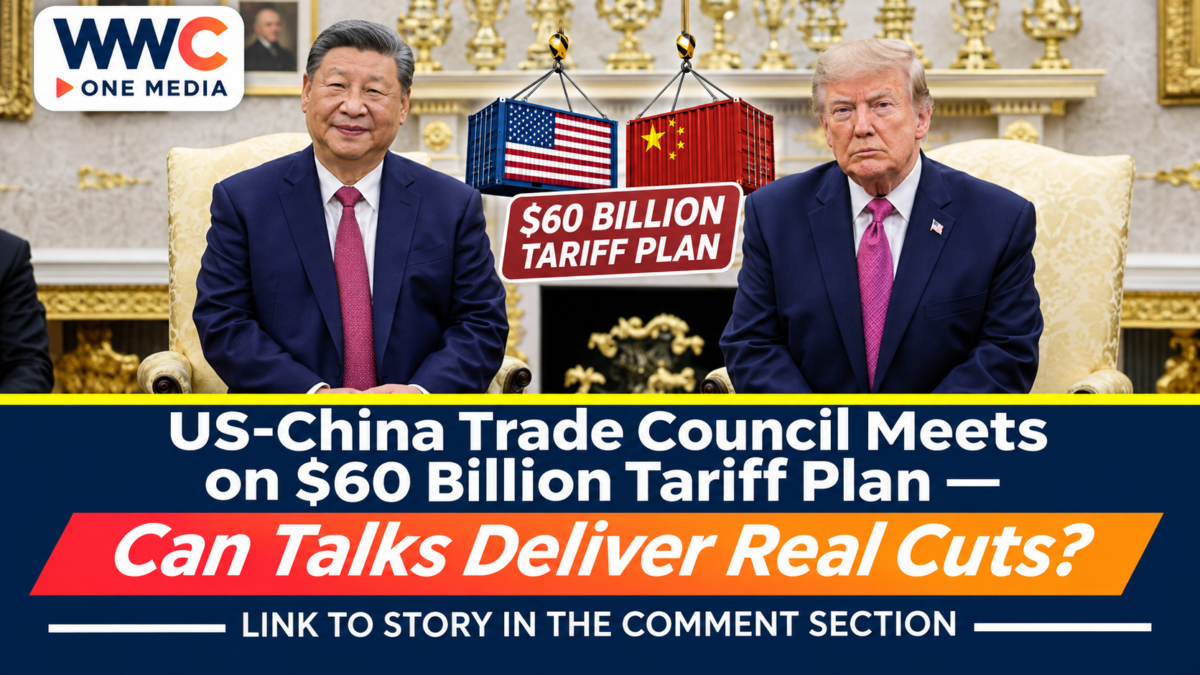
BEIJING, Nov. 15, 2026 — The United States and China held the first meeting of their bilateral trade council by video link on Nov. 13, discussing tariff reductions and agricultural trade, China’s Ministry of Commerce confirmed on Nov. 14. The meeting followed a September framework covering roughly US$30 billion of imports in each direction, but the new announcement did not say those proposed reductions had taken effect.
The distinction matters to importers and exporters planning contracts across the world’s two largest economies. A working-level discussion can move an agreement forward; actual tariffs change only through the applicable legal and customs procedures.
US-China Trade Council Begins Work on Tariff Commitments
The Nov. 13 meeting was the first under the established economic and trade consultation mechanism. China’s commerce ministry identified tariffs, reciprocal tariff reductions and agricultural commerce as subjects discussed, alongside implementation of earlier negotiating outcomes.
Its Nov. 14 statement committed to continuing dialogue and addressing outstanding issues. It did not identify a new product-by-product tariff schedule, a fresh deadline for the proposed reductions, or a signed agreement reached during that meeting.
The two governments had laid out the trade council’s structure in September. US government documents describe a government-to-government body operating under senior officials, with deputies developing recommendations for consideration by the principals.
Analysis: Establishing a regular channel matters because commercial disagreements need repeated technical decisions. But the test of its effectiveness is whether recommendations turn into enforceable customs rules, not how often officials meet.
The $30 Billion Each-Way Proposal Is Not a $60 Billion Payment
The September terms of reference describe lists of imports valued at about US$30 billion on each side, using 2024 annual bilateral trade values as the reference. That produces approximately US$60 billion in combined covered trade, not US$60 billion in tariff revenue, subsidies or payments between governments.
The US Trade Representative said the lists were recommendations for preferential treatment of selected non-sensitive goods. The White House identified potential Chinese imports into the US such as toys, small appliances and household products, while the corresponding US goods included farm products, seafood, timber, cosmetics and medical devices.
China’s September explanation said tariffs on around 90% of covered products were expected to fall to most-favoured-nation levels after each government completed its domestic procedures. That is a description of the intended arrangement, not proof that the scheduled rates already apply at ports.
WWC’s earlier examination of the extended US-China trade truce explained why the preliminary framework left major implementation questions unresolved. The inaugural meeting moves the process forward without itself closing them.
Some Chinese Countermeasures Have Already Been Suspended
A separate Chinese tariff notice dated Nov. 9 extended the suspension of an additional 24-percentage-point tariff on covered US-origin imports for two months from Nov. 10, while retaining a 10% additional rate under that measure.
This is a specific, effective adjustment announced through China’s tariff authorities. It should not be conflated with the broader 30-for-30 tariff-reduction framework, which concerns lists of selected products awaiting the respective countries’ procedures.
China also announced on Nov. 9 that measures affecting 16 US entities on an export-control list would remain suspended for two more months beginning Nov. 10. The commerce ministry explained that exports of controlled dual-use items could still require applications and official review.
These limited suspensions demonstrate why headlines about a trade truce can oversimplify the legal situation. Different import duties, licences and restrictions operate under different instruments, and each can have its own expiry and conditions.
WWC has separately covered China’s extension of certain rare-earth export-control suspensions. That development is related to the negotiating environment but is not itself evidence that the new tariff lists have been implemented.
Farm Trade Remains a Major Test of Cooperation
The September negotiating record provides for an agricultural working group led by China’s Ministry of Commerce and the Office of the US Trade Representative, with participation from relevant regulators. Its remit includes two-way market access and regulatory barriers.
China’s ministry said the group was expected to hold its first meeting before the end of 2026. That schedule is distinct from the trade council’s Nov. 13 inaugural session; neither event should be presented as proof of specific new purchases.
US Trade Representative Jamieson Greer’s September statement named agricultural products among goods that could receive better treatment. China similarly listed agriculture among the areas of potential reciprocal concessions.
Analysis: Lower duties may improve the economics of some imports, but a commitment to discuss tariffs is not a purchase order. Actual farm sales also depend on market access, prices, buyers, logistics and regulatory requirements.
The wider disagreements were already visible in WWC’s report on US concerns over Chinese farm purchases and critical minerals. The newest official meeting announcement shows talks continuing, not an independently verified settlement of every concern.
What This Could Mean for Philippine Businesses
The Philippines is not a party to these bilateral negotiations. Nevertheless, companies that purchase finished goods, components or agricultural inputs connected to US-China supply chains have a practical interest in the resulting tariff schedules.
Analysis: A reduction on selected products could influence sourcing decisions and relative prices, but there is no sound basis yet for predicting a specific peso saving or a guaranteed change to Philippine consumer prices. Product coverage, implementation dates, transport costs and exchange rates would all matter.
The programme also deliberately distinguishes non-sensitive commerce from unresolved technology and national-security disputes. Progress on toys or farm goods should not be mistaken for a comprehensive end to trade restrictions.
What Happens Next
The decisive evidence will be published tariff actions identifying covered products, rates and effective dates in each jurisdiction. The agricultural working group is also expected to convene by the end of 2026 under the September arrangements.
As of Nov. 15, the confirmed result is that the new council has met and reviewed existing commitments. The Nov. 13 session did not announce a fully implemented US$60 billion tariff-cut package. For businesses, the difference between a recommended list and a legally effective duty remains the most important detail.
Frequently Asked Questions
When did the US-China trade council first meet?
The two countries held its inaugural video meeting on Nov. 13, 2026, and China’s Ministry of Commerce announced it on Nov. 14.
Did the meeting eliminate US-China tariffs?
No. Officials discussed tariff reductions, but the meeting announcement did not establish that the proposed 30-for-30 reductions had taken effect.
What does the US$60 billion figure mean?
It refers to approximately US$30 billion in annual import trade on each side potentially receiving better tariff treatment, not money paid by either government.
Are agricultural products included in the discussions?
Yes. The framework includes selected agricultural goods and a dedicated working group on market access and regulatory issues.