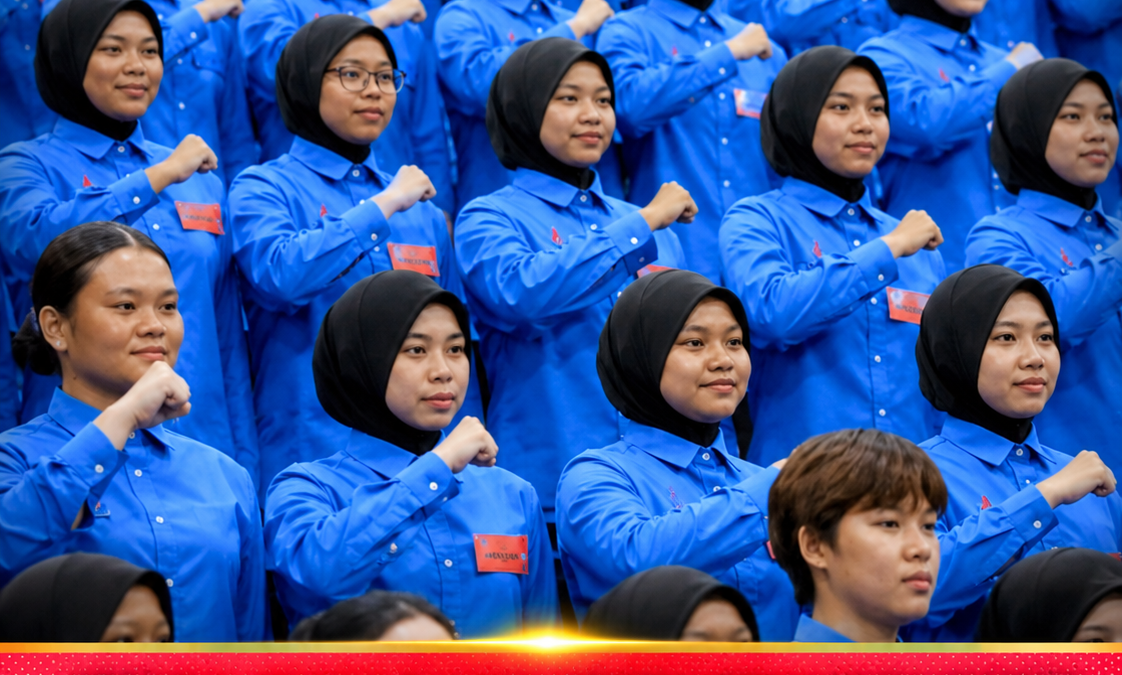
KUALA LUMPUR — Malaysian Prime Minister Anwar Ibrahim said women should have a meaningful place in the country’s security and defence institutions during a discussion with National Service Training Programme participants on Nov. 14, 2026. His remarks come as official defence figures show women account for approximately 8.2% of Malaysia’s serving armed forces, despite a government target to raise their participation to 15%.
The figures highlight a challenge that goes beyond encouraging women to apply for military careers. Malaysia must also consider recruitment, training, promotion and retention if it wants women to become a larger part of the institutions responsible for national security.
Women in the military remain a small share of Malaysia’s forces
A written parliamentary answer from the Defence Ministry provides a snapshot of women’s representation in the Malaysian Armed Forces as of Dec. 31, 2025.
The ministry reported approximately 10,000 women serving across the armed forces, equivalent to 8.2% of total personnel. Around 2,000 held officer ranks, while nearly 8,000 were classified under other ranks.
The distribution across the three services was also uneven in absolute numbers.
The Malaysian Army had approximately 6,700 female personnel. The Royal Malaysian Navy had around 1,800, while the Royal Malaysian Air Force had approximately 1,200.
These figures establish the scale of women’s current participation, but they do not show how many hold senior command positions, occupy operational roles or serve in specialist units. Those details matter because a larger overall headcount does not automatically translate into equal access to leadership.
The parliamentary answer also states that the Defence Ministry and armed forces are committed to improving women’s participation through more inclusive recruitment, training and welfare initiatives.
Anwar’s remarks put the question of opportunity on the table
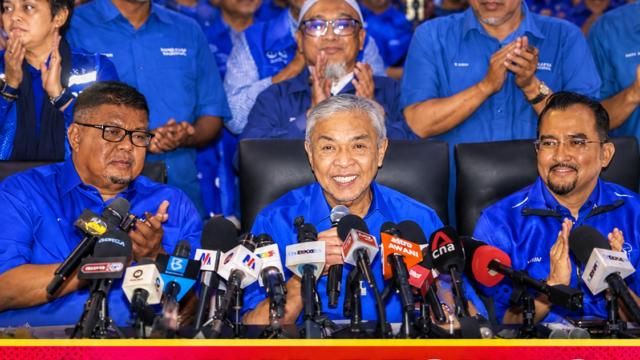
Anwar addressed the issue after a participant at the Nov. 14 session asked how Malaysia could develop more women leaders in national security and defence.
The Prime Minister acknowledged that the military and police are predominantly male institutions but said women have important roles to play in both.
He also referred to the participation of women in higher education, saying they make up more than half of students in higher-learning institutions and perform better than men in examinations and tests.
The Prime Minister’s Office transcript contains an awkwardly worded sentence immediately after that observation. Because the published wording does not clearly express the intended meaning, it should not be presented as a precise declaration that Anwar announced a new equal-opportunity policy.
What is clear from the recorded exchange is that he recognised the need to make room for women in security institutions and responded positively to a participant who expressed interest in joining the Army.
That exchange is significant as a public discussion of career access. But it should be distinguished from an official recruitment order, a change in military eligibility rules or a new appointment policy. None of those measures was announced in the transcript.
The government’s 15% target gives the discussion a measurable benchmark
The more concrete policy commitment appears in the Defence Ministry’s parliamentary response.
The ministry said the target for women’s participation in the armed forces had been increased to 15% through the Mid-Term Review of the Defence White Paper.
It linked the goal to the United Nations Women, Peace and Security agenda, Malaysia’s National Action Plan on Women, Peace and Security for 2025–2030, and the National Women’s Policy.
The ministry also identified merit-based promotion without gender discrimination as part of its commitment. Other areas include welfare, training and more inclusive recruitment, particularly in technology and cyber-related fields.
The target creates a benchmark against which future progress can be assessed. At 8.2%, the reported share remains below 15%, meaning the government still has a substantial participation gap to address.
However, the parliamentary response does not specify a separate annual timetable for reaching the target. Without published milestones, it may be difficult for the public to determine whether recruitment and retention are progressing quickly enough.
More women in uniform also means opening pathways to leadership
Increasing women’s representation is not only a matter of adding recruits.
Military careers involve different stages, from initial training and specialist assignments to promotion and command responsibilities. If women enter the service but encounter barriers to advancement or retention, the overall participation rate may not translate into a stronger leadership pipeline.
The Defence Ministry’s reference to merit-based promotion is therefore important. It places career progression alongside recruitment, rather than treating the issue as a numbers exercise alone.
The discussion also reflects a wider regional question about women’s participation in security decision-making.
WWC previously examined the debate over women’s military training in Iran, where civilian preparedness and military-related training have become part of a different national security discussion. Malaysia’s policy is not the same, but both cases underline the importance of distinguishing participation, training and formal military service.
At the regional level, ASEAN’s push for greater women’s leadership has also brought attention to women’s role in decision-making, peace and security. The challenge is turning broad commitments into measurable changes within national institutions.
The same question applies outside defence. A Quezon City initiative placing women in leadership roles in urban farming shows how participation can be built into training and community programmes. The sector is different, but the underlying issue is similar: opportunities need structures that allow people to enter, develop skills and take on responsibility.
What happens next
The next important test for Malaysia is whether the 15% target is supported by clear recruitment, training, promotion and retention measures.
Future parliamentary disclosures could provide a way to track progress by service branch and rank. More detailed reporting on senior appointments and specialist roles would also help establish whether increased participation is translating into leadership opportunities.
For now, the official figures provide a baseline: approximately 10,000 women, or 8.2% of the armed forces, were serving at the end of 2025. The government has set a 15% target, but the public record reviewed does not yet provide a specific annual pathway for reaching it.
Anwar’s exchange with a young participant has put the issue into the public conversation. Whether that translates into a lasting change will depend on the policies and opportunities available inside the armed forces.
Frequently asked questions
What percentage of Malaysia’s armed forces are women?
Women accounted for approximately 8.2% of Malaysia’s armed forces as of Dec. 31, 2025, based on the Defence Ministry’s parliamentary answer.
How many women serve in the Malaysian military?
The Defence Ministry reported approximately 10,000 women serving across the Malaysian Armed Forces at the end of 2025.
What is Malaysia’s target for women in the armed forces?
Malaysia has raised its target for women’s participation in the armed forces to 15%, according to the Defence Ministry’s parliamentary response.
What did Anwar Ibrahim say about women in defence?
During a Nov. 14, 2026 discussion with National Service Training Programme participants, Anwar said women should have an important role in the military and police, which he described as male-dominated institutions.
Does Malaysia have a policy for promoting women in the military?
The Defence Ministry said it supports merit-based promotion without gender discrimination, alongside more inclusive recruitment, training and welfare initiatives.