Iran Opens New Military Training Center for Women as U.S. Tensions Persist — But Is Tehran Preparing Civilians for Another War?
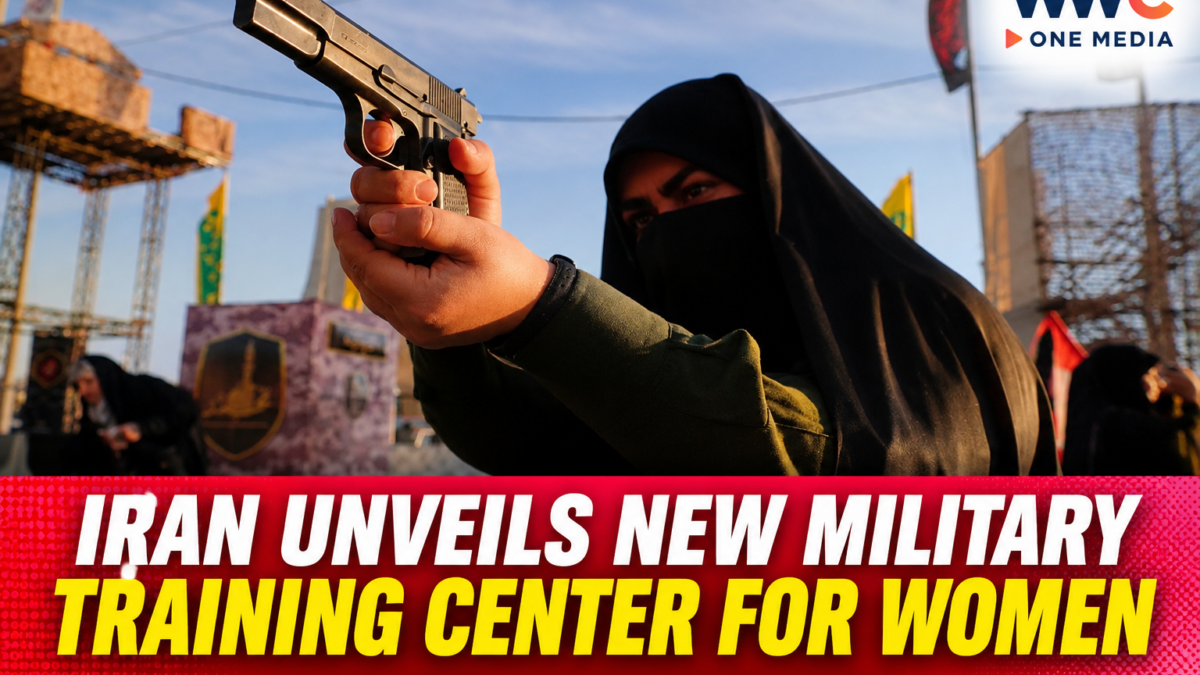
TEHRAN, Iran — November 11, 2026 — Women carrying rifles, practicing rappelling exercises and riding zip lines are appearing in striking images from Tehran, where Iran has opened another military training center specifically for female volunteers.
The facility, inaugurated on Tuesday, November 10, at Azadi Square — also known as Freedom Square — is part of a wider campaign to prepare Iranian civilians for a possible military confrontation with the United States.
Photographs published by The Associated Press show women participating in weapons demonstrations, receiving instructions from military personnel and practicing physical training exercises. Some were seen handling pistols and rifles, while others demonstrated rappelling and zip-line activities.
Iranian authorities describe the initiative as part of a nationwide effort to strengthen national defense, emergency preparedness and logistical support.
But the opening carries a larger message: Tehran is continuing to mobilize civilian volunteers as tensions with Washington remain unresolved.
And while the photographs show women learning military skills, the campaign raises important questions about Iran’s broader security strategy, the role of women in its volunteer forces and how seriously the country is preparing for another possible confrontation.
A New Training Center Opens at Tehran’s Azadi Square
The new facility opened on November 10 at Azadi Square, one of Tehran’s most recognizable public spaces.
The Associated Press documented the inauguration through photographs taken by photographer Vahid Salemi.
The images show women attending training sessions, listening to instructors and participating in demonstrations involving firearms and obstacle-based exercises.
Other photographs capture women climbing or descending training structures and using a zip line.
Iranian authorities say the center is intended to prepare female volunteers to help defend the country in the event of a possible U.S. ground assault.
The program also includes wider civilian-preparedness objectives, including emergency relief and logistical assistance.
The opening is significant, but it is not the first time women have participated in military-related training in Tehran.
Similar activities had already been documented at other locations in the capital during October.
The Janfada Campaign: Iran’s Wider Civilian Mobilization Effort
The women’s training center is connected to Iran’s broader Janfada campaign, a mobilization initiative whose name is commonly translated as “self-sacrifice” or “those who sacrifice their lives.”
The campaign emerged during the conflict involving Iran, the United States and Israel in 2026.
Its stated purpose is to encourage civilians to participate in national defense and preparedness activities.
According to Al Jazeera’s October 25 reporting, the campaign has expanded across multiple Iranian cities, with the Islamic Revolutionary Guard Corps (IRGC) and its Basij volunteer militia organizing public training activities.
The initiative is not limited to women. Both male and female volunteers are being encouraged to participate.
Training activities have included weapons familiarization, emergency preparedness and other skills intended to support civilian defense.
Iranian officials have also discussed expanding the campaign into public squares throughout the country’s 31 provinces.
However, the scale of participation remains difficult to establish independently.
Al Jazeera reported that Iranian authorities claimed 33 million people had registered through the campaign’s website but had not provided evidence supporting that figure.
That distinction matters: official registration claims should not automatically be interpreted as proof that millions of people have completed military training or joined operational military units.
Women Are Volunteering, Not Being Compulsorily Drafted
The photographs may create the impression that Iran is preparing to send women directly into military combat.
But the country’s military-service system requires an important distinction.
Iran’s compulsory military service applies to men. Women are not subject to the same mandatory conscription requirement, according to the UK government’s August 2026 country policy and information note, updated in October.
Women can nevertheless participate in voluntary military-related activities, including programs associated with the Basij.
The distinction between voluntary training and compulsory military service is essential.
The opening of a women’s training center does not establish that Iran has introduced mandatory military service for women, nor does it prove that the participants will be deployed as regular combat soldiers.
It demonstrates that authorities are making military and emergency-preparedness training available to female volunteers as part of a broader national mobilization effort.
Why Is Iran Training More Civilians?
The timing is closely connected to the country’s continuing security concerns.
Iran has experienced a prolonged confrontation with the United States and Israel, and the possibility of renewed military operations has remained part of the political and security debate.
The government is presenting civilian training as a way to strengthen national preparedness.
However, analysts have also questioned the political significance of the mobilization campaign.
In its October 25 report, Al Jazeera described the initiative as more than a conventional military-training program. It cited an academic assessment that the campaign also provides an opportunity for revolutionary elements within Iran’s political system to demonstrate loyalty and reinforce their influence.
This suggests that the initiative may serve several purposes at once:
- National defense messaging: Demonstrating that civilians are being prepared to support the country during a potential attack.
- Volunteer mobilization: Encouraging citizens to participate in state-organized defense and emergency activities.
- Political messaging: Showing public support for the Islamic Republic and its leadership.
- Civilian preparedness: Providing training related to emergency response, rescue and logistical support.
The photographs alone cannot establish how many participants would actually be assigned military responsibilities during a conflict.
They do, however, show that the campaign is becoming increasingly visible in public spaces.
The Basij’s Role in Iran’s Volunteer Network
The Basij is a volunteer paramilitary organization associated with Iran’s Islamic Revolutionary Guard Corps.
It has a nationwide presence and has long played a role in organizing supporters of the Islamic Republic.
The organization is involved in activities beyond conventional military operations, including social, political and community-based programs.
The Basij’s participation in the Janfada campaign provides an existing organizational structure through which authorities can recruit volunteers, arrange training and coordinate activities.
That structure helps explain why the campaign can expand beyond a single military facility.
However, participation in a Basij-linked training activity should not automatically be equated with membership in Iran’s regular armed forces or assignment to a combat unit.
The organization and the regular military have distinct roles, even though both are part of Iran’s broader national security structure.
Could the Training Signal Preparation for a U.S. Ground Assault?
Iranian authorities have said the new center is intended to prepare volunteers for a possible U.S. ground assault.
That statement reflects Tehran’s security concerns, but it does not establish that Washington has decided to invade Iran.
Military preparedness, public warnings and actual military deployment are different things.
A country can organize civilian training as a deterrence measure, a political signal or an emergency-preparedness effort without an invasion being imminent.
The scale and nature of any potential ground operation would depend on decisions by political leaders, military assessments and developments in the wider conflict.
The training center should therefore be understood as evidence of Iran’s civilian mobilization efforts — not confirmation that a U.S. ground invasion is about to happen.
What Happens Next?
The next important development will be whether Iran continues opening similar facilities and expanding the Janfada campaign into more cities.
Several questions remain:
- How many women will participate in the new training programs?
- Will the courses remain focused on basic weapons familiarization and emergency preparedness, or expand into more advanced instruction?
- How much of the campaign will be coordinated through the Basij and the regular armed forces?
- Will the government provide independently verifiable information about volunteer registrations and completed training?
- Will tensions with Washington ease through diplomacy, or will renewed military confrontation increase pressure for further mobilization?
For now, the opening of the Azadi Square facility is another visible sign that Iran wants its civilian population to be prepared for a potentially dangerous security environment.
The Bigger Picture: A Training Center With a Message Beyond the Battlefield
Iran’s new military training center for women is more than a striking collection of photographs.
It is part of a broader effort to organize civilian volunteers, reinforce national defense messaging and demonstrate public readiness amid continuing tensions with the United States.
The initiative also highlights the changing visibility of women’s participation in Iran’s volunteer defense activities, even as the country’s compulsory military-service system remains directed at men.
But important questions remain about the number of actual participants, the extent of their training and whether they would ever be assigned operational military roles.
For Washington, the opening is another indication that Tehran is continuing to prepare for possible escalation.
For Iran, it is an opportunity to demonstrate that national defense is not being presented as the responsibility of uniformed soldiers alone.
The central question is no longer simply why Iranian women are learning to handle weapons. It is whether the expanding civilian mobilization campaign is primarily a defensive precaution, a political show of unity, or preparation for a conflict that could become much more dangerous.