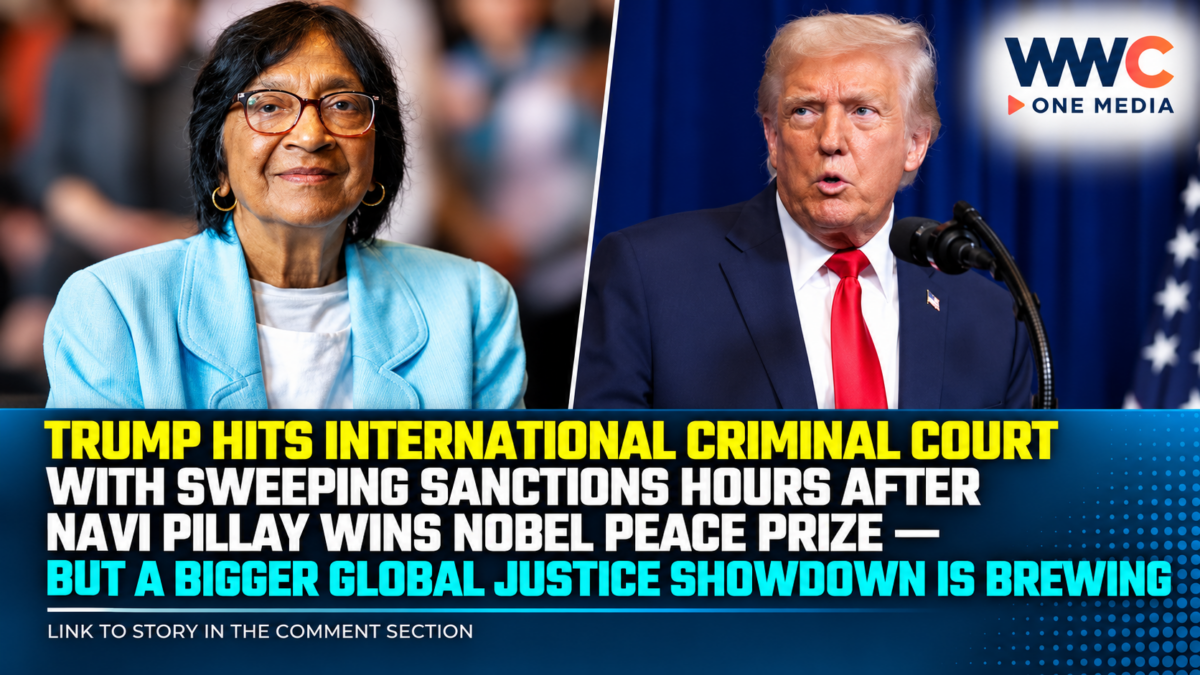
WASHINGTON — US President Donald Trump’s administration has launched an unprecedented sanctions campaign against the International Criminal Court (ICC), threatening to cut off the global war crimes tribunal from American financial services, technology and business transactions. The October 9 announcement came just hours after former ICC judge Navi Pillay won the 2026 Nobel Peace Prize for defending international law. But as Washington vows to pressure the court into changing course, the United Nations, European powers and human rights organizations are warning that the confrontation could undermine international justice and leave victims of atrocities without effective accountability.
The United States has dramatically escalated its confrontation with the International Criminal Court, moving beyond sanctions on individual judges and prosecutors to target the institution itself.
Secretary of State Marco Rubio announced the measures on Friday, October 9, describing the Hague-based court as a threat to American sovereignty.
Under the restrictions, US individuals and businesses face prohibitions on certain transactions involving the court.
The measures could disrupt financial services, technology access and commercial relationships that support the ICC’s operations.
Washington introduced exemptions providing an effective six-month transition period, allowing time for diplomatic negotiations and for affected American entities to adjust their arrangements.
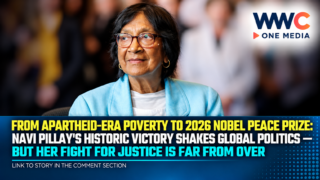
The announcement came on the same day South African human rights lawyer and former international judge Navanethem “Navi” Pillay was named the 2026 Nobel Peace Prize laureate.
The striking timing has intensified attention on the growing conflict between the Trump administration and international institutions.
However, Rubio did not mention Pillay or the Nobel award in his statement.
There is no confirmed evidence that the Nobel announcement directly caused the sanctions.
The dispute predates this week’s developments and centers on the ICC’s authority to investigate alleged international crimes involving nationals of countries that have not joined the court.
Washington Moves to Sanction the Entire ICC
The most significant aspect of the October 9 announcement is its institutional scope.
The Trump administration previously imposed sanctions on individual ICC officials.
The new measures target the court as an organization.
This could have much broader consequences.
International institutions depend on banking services, payment networks, software, communications systems and relationships with outside suppliers.
Restrictions involving those services can affect operations even when the organization is physically located outside the United States.
According to Reuters and Associated Press, the new sanctions seek to prevent American businesses and financial institutions from providing covered services to the ICC.
The government says the measures will restrict resources available to the court.
The precise impact will depend on the sanctions’ implementation, applicable exemptions and how the ICC and its partners respond.
The sanctions do not mean that the ICC has already closed.
The court remains operational and says it intends to continue its judicial work.
Marco Rubio Issues Stark Warning to International Court
Rubio framed the sanctions as a measure to protect Americans from prosecution by an international tribunal that Washington does not recognize as having authority over its nationals in the circumstances it contests.
He argued that the ICC has exceeded its legitimate jurisdiction.
The US government maintains that American military personnel and elected officials should not be subject to proceedings before a court to which the United States has not consented.
Rubio also criticized countries that belong to the ICC while depending on the United States for security assistance.
He urged them to address Washington’s concerns.
The administration’s position is that international criminal accountability must not infringe upon American sovereignty.
Critics disagree.
They argue that the ICC’s treaty-based jurisdiction can extend to certain crimes committed on the territory of member states even when the suspects are nationals of non-member countries.
This legal disagreement is central to the confrontation.
The dispute cannot be reduced simply to whether the United States supports punishment for war crimes.
It concerns who has the authority to investigate and prosecute them.
Six-Month Grace Period Creates Diplomatic Opening
Although the sanctions are extensive, the administration has provided exemptions amounting to an approximately six-month transition period.
The State Department said the arrangements were intended to give ICC member states an opportunity to make progress toward addressing US concerns.
The grace period may be adjusted depending on diplomatic developments.
This creates a limited opportunity for negotiations.
European governments have indicated that they want to preserve the court’s ability to function.
Washington, meanwhile, is seeking assurances about the treatment of American personnel and officials.
However, the transition period does not mean the sanctions have been cancelled or that a compromise has been reached.
The restrictions were formally announced on October 9.
The coming months will determine whether diplomatic talks can narrow the dispute or whether broader operational disruption follows.
Navi Pillay Wins 2026 Nobel Peace Prize on Same Day
The sanctions announcement coincided with one of the most prestigious international recognitions of the year.
On October 9, the Norwegian Nobel Committee awarded the 2026 Nobel Peace Prize to Navi Pillay.
The 85-year-old South African jurist was honored for her lifelong contributions to peace, human rights and international law.
Pillay grew up under apartheid and became a pioneering lawyer who challenged racial discrimination.
She later served in senior international judicial and human rights roles.
Her career includes work at the International Criminal Tribunal for Rwanda, service as an ICC judge and leadership of the United Nations human rights office.
The Norwegian Nobel Committee emphasized her contributions to developing legal principles that support accountability for the gravest international crimes.
Her selection gives the current political confrontation added significance.
At the very moment Washington was expanding sanctions against an international criminal tribunal, the Nobel Committee was recognizing a jurist whose career has helped strengthen such institutions.
The timing is historically notable.
But it should not be presented as proof of coordination between the two announcements.
Why Navi Pillay Is Such an Important Figure in International Justice
Pillay’s career spans several major developments in international human rights law.
Born in Durban, South Africa, she entered the legal profession at a time when apartheid severely restricted opportunities for non-white citizens.
She became a prominent defender of human rights and later served as a judge in landmark international proceedings.
At the International Criminal Tribunal for Rwanda, Pillay contributed to jurisprudence recognizing that sexual violence can constitute genocide and other grave international crimes.
Her work helped establish legal precedents that remain significant in international criminal law.
She later served on the International Criminal Court and became United Nations High Commissioner for Human Rights.
Pillay also chaired a UN commission investigating alleged violations in the occupied Palestinian territories.
That commission concluded that Israeli conduct in Gaza amounted to genocide, a finding strongly rejected by Israel.
The commission’s conclusions should not be confused with a final genocide judgment by the International Court of Justice.
The Nobel Committee’s decision recognizes Pillay’s broader career rather than one specific judgment or investigation.
Trump Reacts Angrily to Nobel Peace Prize Decision
The Nobel announcement also attracted a sharp reaction from President Trump.
According to reporting by The Washington Post and Axios, Trump criticized the decision not to award him the prize.
He argued that his diplomatic efforts deserved greater recognition.
The president also questioned Pillay’s selection and criticized the Norwegian Nobel Committee.
Trump has previously expressed his belief that his involvement in international negotiations should qualify him for the award.
However, the Nobel Peace Prize is selected by an independent Norwegian committee, not directly by Norway’s government.
The committee says its choice was based on Pillay’s commitment to international law, human dignity and accountability.
Trump’s criticism adds a separate political dimension to the controversy.
It does not establish that the sanctions decision was made in retaliation for Pillay receiving the prize.
ICC Condemns Sanctions as Attack on International Law
The International Criminal Court has strongly rejected the new restrictions.
In an official statement issued October 9, the court said the measures threaten its independence and ability to pursue justice.
The ICC argues that the sanctions are designed to disrupt its operations and intimidate people cooperating with the institution.
The court was established under the Rome Statute, which entered into force in 2002.
It is mandated to prosecute individuals accused of genocide, crimes against humanity, war crimes and the crime of aggression, subject to applicable jurisdictional requirements.
The ICC currently has 125 member states.
It operates on the principle of complementarity, meaning national judicial systems have primary responsibility for investigating and prosecuting international crimes.
The court generally intervenes when relevant states are unwilling or unable genuinely to carry out proceedings, provided its jurisdictional requirements are met.
ICC President Tomoko Akane has pledged that the court will continue its work independently and impartially.
The institution has also appealed to member states to maintain their support.
United Nations Warns of Major Blow to Global Justice
United Nations Secretary-General António Guterres expressed serious concern about the American decision.
The UN views the ICC as a key component of international accountability.
The court is legally independent of the United Nations, although the two institutions have formal cooperation arrangements.
The UN’s concerns focus on the potential consequences for victims of serious international crimes.
If sanctions prevent investigators, prosecutors and judges from performing their duties, cases involving atrocities could face additional delays or disruptions.
The broader concern is that international legal institutions may become vulnerable to political pressure from powerful governments.
However, the UN has not announced that the ICC’s existing cases are automatically invalidated by the sanctions.
The impact will depend on the institution’s ability to maintain essential operations and financial support.
European Powers, Canada and Japan Oppose US Action
The sanctions have produced an unusual diplomatic divide among longstanding allies.
Canada, France, Germany, Japan and the United Kingdom issued a joint statement opposing the announcement.
The European Union also criticized the measures.
European officials said they were prepared to consider steps necessary to ensure that the court can continue operating.
Possible responses include financial arrangements that reduce dependence on American service providers and legal protections for organizations maintaining relationships with the ICC.
The Netherlands, which hosts the court in The Hague, has a particularly strong interest in ensuring the institution remains functional.
The reaction demonstrates that Washington’s position is not shared by all its security partners.
Many of those governments support the ICC while also maintaining close military and diplomatic ties with the United States.
The challenge is determining how to defend the institution without causing a wider rupture in transatlantic relations.
Why Trump and Rubio Oppose the ICC
The dispute reflects a longstanding American position.
The United States signed the Rome Statute in 2000 but never ratified it.
Washington subsequently made clear that it did not intend to become a party to the treaty.
American administrations have differed in their approach to the ICC.
Some have cooperated with particular investigations while maintaining objections to the court’s jurisdiction over US personnel.
Others have adopted more confrontational policies.
The Trump administration has been particularly hostile toward investigations affecting American officials and US allies.
Its argument is that decisions involving American military personnel should remain subject to American constitutional and judicial institutions.
Supporters of the ICC respond that international accountability cannot depend entirely on whether powerful states consent to particular investigations.
The Rome Statute establishes specific jurisdictional rules that member states have accepted.
This disagreement has existed for years and cannot be resolved by the current sanctions announcement alone.
Israel Welcomes Washington’s Sanctions
Israeli Prime Minister Benjamin Netanyahu praised the US decision.
Netanyahu faces an ICC arrest warrant involving allegations of war crimes and crimes against humanity related to the Gaza conflict.
He rejects the court’s authority and has disputed the allegations.
Israel, like the United States, is not a party to the Rome Statute.
However, the ICC has asserted jurisdiction over alleged crimes committed in Palestinian territories based on its interpretation of the applicable legal framework.
Israeli authorities strongly contest aspects of the court’s actions and maintain that Israel has legitimate security and legal grounds for its policies.
Human rights organizations argue that alleged grave crimes must be subject to independent investigation regardless of the nationality or political position of the accused.
An ICC arrest warrant is not a criminal conviction.
The allegations against Netanyahu remain subject to judicial proceedings.
Washington’s sanctions could affect the court’s ability to pursue cases involving Israeli officials as well as other investigations.
ICC Investigations Extend Far Beyond the Middle East
The court handles cases involving conflicts and alleged atrocities in different regions.
Its work has included investigations relating to Ukraine, Sudan, the Democratic Republic of the Congo and other situations.
The ICC has also issued an arrest warrant for Russian President Vladimir Putin in connection with the alleged unlawful deportation and transfer of Ukrainian children.
Russia rejects the court’s jurisdiction and the allegations.
The institution’s mandate is global, although its authority is limited by jurisdictional rules and the practical difficulty of securing arrests.
The sanctions could therefore affect more than investigations involving the United States or Israel.
Restrictions on financial services and technology infrastructure may have consequences across the court’s broader caseload.
This is one reason ICC member states and human rights groups have expressed concern.
What the Sanctions Could Mean for the Philippines
The controversy is particularly relevant to the Philippines because of proceedings involving former President Rodrigo Duterte.
The ICC has been examining allegations arising from killings connected to the Philippine government’s anti-drug campaign.
On October 8, the ICC made public a decision finding Duterte fit to stand trial.
The court said it had adopted measures to enable him to participate effectively and exercise his fair-trial rights.
The opening of his trial is currently scheduled for November 30, 2026.
Duterte denies wrongdoing and remains entitled to the presumption of innocence.
The new American sanctions raise broader questions about whether financial, technology or service restrictions could disrupt ICC operations.
However, there is no verified announcement that the Duterte proceedings have been cancelled or suspended because of the October 9 sanctions.
The scheduled November 30 opening therefore remains the relevant published timetable unless the court announces a change.
The Philippines’ case illustrates why institutional sanctions may matter to audiences outside Europe and the Middle East.
Victims’ Assistance Programmes Could Also Be Affected
Another concern involves the ICC’s Trust Fund for Victims.
The fund supports reparations and assistance for people affected by serious international crimes.
Its work can include physical rehabilitation, psychosocial services, socioeconomic assistance and community-based recovery programmes.
On October 9, the fund warned that the US sanctions could disrupt essential financial channels, services and partnerships.
The concern extends beyond criminal prosecutions.
Even when the court has concluded a case, victims may still require long-term support.
Restrictions that complicate payments or service contracts could make those programmes harder to deliver.
The fund has not said that every assistance programme has stopped.
It has warned about the risk of disruption.
That distinction is important when assessing the real-world consequences of the sanctions.
Could Europe Protect the ICC From American Financial Pressure?
The European Union is exploring possible responses to the US action.
European governments may seek ways to maintain payments, technology services and other institutional support without violating applicable restrictions.
Some officials have discussed legal measures designed to protect entities from certain foreign sanctions.
But creating alternative arrangements can be complicated.
American financial infrastructure and technology companies play substantial roles in international commerce.
Even organizations based outside the United States may depend on American banks, payment networks, cloud services or software.
The challenge is finding lawful, reliable alternatives quickly enough to protect the court’s operations.
The six-month transition period provides an opportunity to make preparations.
Whether those preparations will be sufficient remains uncertain.
The Bigger Political Battle: Sovereignty Versus International Accountability
At the center of the confrontation are two competing principles.
The Trump administration emphasizes national sovereignty and the need to protect American personnel from judicial processes Washington considers illegitimate.
The ICC and its supporters emphasize the importance of international accountability for crimes that national authorities may be unwilling or unable to prosecute.
Both issues are significant in international law and diplomacy.
States have legitimate interests in protecting their constitutional structures and ensuring fair legal proceedings.
International justice institutions, meanwhile, seek to prevent impunity for crimes such as genocide and war crimes.
The current dispute is particularly difficult because the United States possesses enormous influence over global finance, technology and security.
Sanctions imposed by Washington can affect institutions operating far beyond American territory.
That gives the confrontation implications extending well beyond a disagreement over legal jurisdiction.
What Happens During the Next Six Months?
The immediate period will be crucial.
The US has given ICC member states an opportunity to address its concerns before the sanctions’ practical effects become more extensive.
The court and its supporters will be working to maintain operations and protect institutional independence.
European countries may explore diplomatic negotiations and alternative financial arrangements.
The Trump administration could modify its approach if it believes sufficient progress has been made.
It could also increase pressure if negotiations fail.
For the ICC, the priority is maintaining court proceedings and ensuring that existing investigations continue.
For Washington, the objective is securing changes that protect Americans from prosecution under the disputed jurisdiction.
For victims and affected communities, the central question is whether international justice can continue functioning while governments contest the court’s authority.
The Bigger Picture: Global Justice Faces a Defining Test
The October 9 developments have created a striking political contrast.
The Nobel Peace Prize was awarded to Navi Pillay for a lifetime of work strengthening international law.
Hours later, Washington announced sweeping sanctions against one of the world’s leading international criminal tribunals.
The two events were not proven to be causally connected.
But their timing has highlighted a major international divide.
The Trump administration argues that the ICC threatens American sovereignty and must be restrained.
The ICC, its member states and human rights organizations argue that political pressure threatens judicial independence and accountability.
The coming months will show whether diplomacy can prevent severe disruption to the court’s operations.
The United States has escalated its confrontation with the International Criminal Court, placing global financial and technology pressure on an institution supported by 125 countries.
But the larger question is whether international criminal justice can function when one of the world’s most powerful governments is determined to challenge its authority.
With the Nobel Peace Prize recognizing a champion of international law on the same day, the battle over the ICC has become a defining test of sovereignty, accountability and the future of global justice.