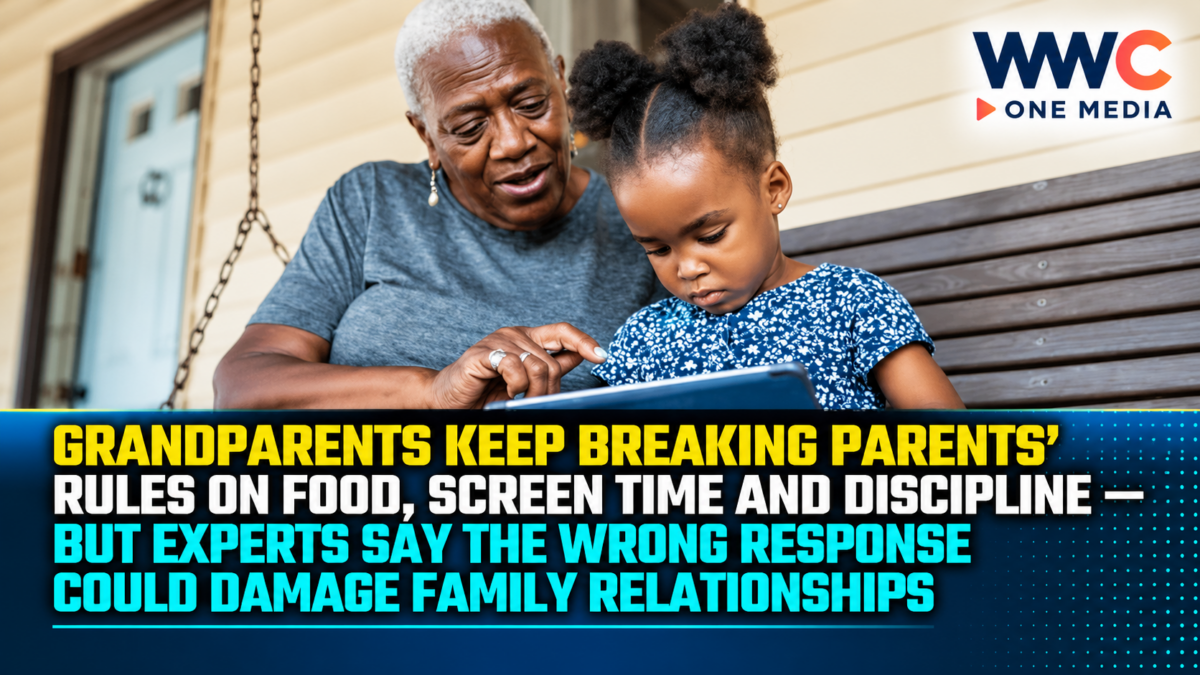
SINGAPORE — Grandparents are often the backbone of childcare in working families, preparing meals, supervising playtime and providing emotional support while parents juggle careers and household responsibilities. But when grandma secretly gives a baby fruit juice, grandpa ignores screen-time limits or bedtime rules are repeatedly broken, gratitude can quickly turn into frustration. Family counsellors say these conflicts are becoming a familiar challenge in multigenerational households — and warn that how parents respond could determine whether grandparents remain trusted caregivers or family relationships become deeply strained.
In Singapore, childcare disagreements between parents and grandparents are raising an important question: Who should have the final say when multiple generations are responsible for raising the same child?
The issue is particularly relevant in households where grandparents provide regular childcare while both parents work.
According to figures from Singapore’s General Household Survey 2025, 56.6% of married couples were dual-income households, compared with 52.5% in 2020.
That makes dependable caregiving arrangements increasingly important.
But the practical benefits of grandparent involvement can come with emotional complications.
Older family members may rely on parenting methods that worked decades ago.
Younger parents may follow updated medical advice, stricter screen-time rules and different approaches to discipline.
Neither generation necessarily intends to create conflict.
Yet even ordinary disagreements can become personal when parents feel ignored and grandparents feel their experience is being dismissed.
A Channel NewsAsia Insider feature published on October 10 examined how families can manage these tensions without sacrificing children’s well-being or damaging relationships.
Its central message is simple: not every broken parenting rule deserves a family confrontation, but safety-related boundaries must remain firm.
When Grandma Says Yes and Mum Says No
For many families, the conflict begins with a seemingly harmless decision.
A grandmother might allow extra television time.
A grandfather may insist a baby needs socks even on a warm day.
Another relative might offer larger milk feeds because that was how children were raised in the past.
These actions may come from genuine concern rather than an intention to undermine parents.
But repeated disagreements can make parents feel that their decisions carry little weight.
In her CNA Insider account, journalist Melody Zaccheus described disagreements involving her daughter’s clothing, feeding routines and other everyday caregiving practices.
One dispute arose when a grandparent insisted her baby should wear socks despite warm weather.
Another concerned feeding portions that appeared too large for the infant.
Those experiences highlighted how parenting advice can differ across generations.
More significantly, Zaccheus described a friend who stopped relying on her in-laws for childcare after discovering they had repeatedly given her infant fruit juice despite medical guidance.
That example illustrates why distinguishing harmless preferences from health-related concerns is essential.
Why Parenting Advice Changes Across Generations
Grandparents often draw on decades of practical experience.
They may have raised several children successfully and believe that experience gives them reliable judgment.
Parents, meanwhile, have access to newer medical guidance, research and professional advice.
Differences emerge when older practices no longer align with current recommendations.
For example, modern guidance emphasizes safe infant feeding, appropriate sleep practices and careful management of screen exposure.
Some approaches considered acceptable years ago may now be discouraged.
This does not mean grandparents are incapable caregivers.
It means knowledge evolves.
Families must therefore find ways to combine the grandparents’ experience with up-to-date guidance.
A disagreement becomes more difficult when either generation treats the other’s opinion as disrespectful.
Parents may feel their authority is being challenged.
Grandparents may feel that years of childcare experience are being dismissed.
The resulting conflict is often about trust and respect as much as the original parenting rule.
The Fruit Juice Dispute: Why Infant Feeding Rules Matter
Food is one of the most sensitive areas of grandparent-led childcare.
Older relatives may believe that babies need additional drinks, larger portions or particular foods.
But recommendations concerning infant nutrition are specific for good reasons.
Singapore’s HealthHub advises that infants younger than six months who are receiving adequate breast milk or formula generally do not need additional fluids.
It also discourages giving babies fruit juice because of its sugar content and potential effect on appetite and nutrition.
That means secretly giving fruit juice to a very young infant is different from occasionally offering an older child an extra treat.
One involves established health guidance.
The other may be a matter of family preference, depending on the child’s needs and dietary restrictions.
Parents and grandparents should agree on feeding instructions before a caregiving arrangement begins.
If a child has allergies, medical conditions or specific nutrition requirements, those instructions should be clearly communicated and followed.
Medical questions are best resolved through a pediatrician or qualified healthcare professional rather than a contest between generations.
Screen Time Is Becoming a Major Source of Family Conflict
Smartphones, tablets and streaming platforms have created parenting challenges that many grandparents did not face when raising their own children.
For older caregivers, playing a cartoon while preparing dinner may seem like an efficient solution.
For younger parents, it may conflict with concerns about development, sleep and online content.
Singapore’s Ministry of Health guidance, presented through HealthHub, recommends no screen use for children younger than 18 months, except interactive video calls.
For children aged 18 months to six years, screen use should be limited to less than one hour per day outside school.
HealthHub also advises against using screens during meals or in the hour before bedtime.
When young children do watch content, adults should select age-appropriate material and engage with them rather than rely on passive viewing.
These are public-health recommendations, not evidence that a single additional cartoon will automatically cause developmental harm.
The more relevant concern is children’s overall pattern of screen use and whether devices are replacing sleep, play, learning and personal interaction.
Why Grandparents Sometimes Depend on Screens
It is important to consider the caregiver’s circumstances.
Imagine a grandmother preparing dinner while supervising a restless toddler.
She may be tired, managing several household tasks and trying to ensure the child remains safe.
Allowing a short video might be the only practical option she sees at that moment.
Parents may object to the screen use without realizing how difficult the arrangement has become.
Family counsellors suggest discussing realistic alternatives rather than simply demanding compliance.
Parents could prepare books, safe toys or easy activities before leaving for work.
They could also reduce the household chores expected of the grandparent.
Where age-appropriate screen use is permitted, content and time limits can be agreed upon.
But convenience should not become a reason to ignore important health and safety guidance.
A practical family agreement must take the child’s needs and the caregiver’s capacity into account.
Experts Say Parents Must Identify Their Non-Negotiables
June Yong, a family life specialist at Focus on the Family Singapore, recommends distinguishing essential boundaries from more flexible preferences.
Non-negotiables should generally cover matters involving children’s health, safety and core family values.
Examples include appropriate infant feeding, car seats, medication, food allergies, supervision and rules against physical punishment.
Parents may be more flexible about an occasional late bedtime, a different play activity or minor deviations from a routine.
The key is to avoid treating every disagreement as equally serious.
When every issue becomes a confrontation, grandparents may feel constantly criticized.
The most important instructions can then become harder to reinforce.
A smaller number of clear, consistently enforced rules may work better than an extensive list of preferences.
Five Practical Ways to Reduce Parenting Conflicts
Families can use a simple shared-caregiving approach.
1. Agree on health and safety rules before problems occur. Discuss food restrictions, medicines, supervision and emergency contacts.
2. Explain why a rule exists. A grandparent may be more receptive to updated medical guidance than to being told that their method is outdated.
3. Offer realistic alternatives. If screen time is restricted, prepare other activities that are manageable for the caregiver.
4. Allow flexibility where consequences are minor. An occasional variation in routine does not necessarily justify an argument.
5. Review the arrangement when serious boundaries are repeatedly ignored. A caregiving plan is not sustainable if adults cannot agree on measures essential to the child’s safety.
These steps are not guaranteed to eliminate disagreements.
But they create a more respectful framework for addressing them.
Parents Should Explain Rules Rather Than Simply Demand Obedience
One of the strongest recommendations from the CNA feature concerns communication.
Counsellor James Leong, who runs Listen without Prejudice, emphasizes the importance of clear roles and boundaries.
But boundaries should not be introduced as accusations.
Instead of telling a grandparent that their methods are wrong, parents can explain the purpose behind a rule.
For example, a parent concerned about excessive television use can say that the family wants more time for reading, physical play and interaction.
The explanation communicates the child’s needs rather than assigning blame.
Parents can also share an official healthcare resource.
This may help move the conversation away from competing personal opinions.
Importantly, grandparents should have opportunities to raise practical concerns.
A rule that cannot be followed safely or realistically may require additional support from parents.
When Parents Should Stand Firm
Flexibility has limits.
If a child has a serious food allergy, the caregiver must follow the relevant food restrictions.
Appropriate restraints must be used during car travel.
Medication should be administered according to professional instructions.
Children should not be subjected to harmful punishment or unsafe supervision.
In these situations, parents should not feel pressured to compromise merely to avoid upsetting relatives.
Repeated violations require a direct conversation.
Where necessary, families may need to change their caregiving arrangement.
The goal should not be to punish grandparents.
It should be to ensure that the child’s essential needs can be met consistently.
When Parents Should Give Grandparents More Freedom
Other disagreements may have relatively minor consequences.
A grandparent may choose a different storybook, organize playtime differently or allow an occasional adjustment to an older child’s bedtime.
These differences can sometimes be accepted without undermining the family’s overall approach.
Yong encourages parents to recognize the broader value of children’s relationships with grandparents.
Grandparents may offer patience, attention, cultural traditions and forms of affection that differ from what children experience with their parents.
Allowing room for those relationships can be beneficial.
The distinction is between giving grandparents a different caregiving style and giving them permission to disregard essential boundaries.
Those are not the same.
Why Parents Should Avoid Making Every Disagreement Personal
Parenting conflicts can trigger strong emotions because they sometimes revive experiences from a parent’s own childhood.
A young mother who felt excessively controlled while growing up may react strongly when her parents challenge her decisions.
A father who experienced harsh discipline may be especially sensitive to how grandparents correct his child.
According to Yong, parents may benefit from examining whether their reaction is entirely about the present disagreement or influenced by earlier experiences.
This does not invalidate their concerns.
It helps explain why a small incident may become disproportionately upsetting.
Taking time before responding can prevent ordinary disagreements from escalating into personal attacks.
For some families, discussing the issue privately with a partner before approaching grandparents may be helpful.
Let Each Partner Speak With Their Own Parents
Another practical recommendation involves who should handle sensitive conversations.
Yong suggests that spouses speak with their own parents when disagreements arise.
The reasoning is that each partner may understand their parents’ communication style and sensitivities better.
A son may be able to discuss a recurring issue with his mother without making the conversation feel like criticism from a daughter-in-law.
Likewise, a daughter may be better placed to address disagreements involving her own parents.
This approach does not work identically for every family.
But it can reduce the perception that an in-law is rejecting family traditions.
Couples should agree on the underlying rules before speaking to grandparents.
Presenting inconsistent messages can create further confusion.
Children Also Need to Learn Boundaries
As children grow older, parents can increasingly involve them in managing routines.
Grace Lio, a senior learning and behavioural therapist at Mindful Bear, described how she adjusts expectations when her daughter spends time with grandparents.
Instead of expecting older caregivers to enforce every study or phone rule, she communicates expectations directly to her child.
If those expectations are not met, she addresses the issue with her daughter.
This approach can help children develop responsibility.
It also reduces the burden on grandparents.
For younger children, however, adults remain responsible for providing appropriate supervision and implementing essential safety rules.
A toddler cannot reasonably be expected to manage screen use or food restrictions independently.
Grandparent Caregiving Has an Emotional and Physical Cost
One issue often overlooked in parenting debates is that grandparents may already be providing substantial unpaid work.
Childcare can involve preparing meals, cleaning, helping children bathe, supervising activities and responding to emotional needs.
Older caregivers may also be managing their own health, fatigue or other responsibilities.
When parents impose strict schedules without considering these demands, the arrangement can become difficult.
Grandparents may feel treated as employees rather than respected family members.
Parents, meanwhile, may believe their detailed instructions are necessary to ensure consistent care.
Both perspectives deserve attention.
Families may need to reduce expectations, redistribute chores or consider additional childcare support when the workload becomes excessive.
Grandparents should also feel able to say when they are unable to provide care.
Their willingness to help should not be mistaken for an unlimited obligation.
What Singapore’s Working Families Can Learn
The issue reflects a broader shift in household life.
With many couples working, family caregiving arrangements often depend on cooperation between generations.
Singapore’s rising share of dual-income married couples highlights why these arrangements matter.
Similar pressures exist in the Philippines and across Southeast Asia, where grandparents and extended family members frequently contribute to childcare.
Parents may depend on that assistance financially and emotionally.
Grandparents may welcome the opportunity to develop close relationships with grandchildren.
But these relationships can become strained when expectations are not discussed.
The best arrangements recognize that the parents retain responsibility for key child-rearing decisions while grandparents deserve respect and practical support.
Neither authority nor experience should eliminate the need for communication.
The Bigger Picture: Protect the Child Without Damaging the Family
The disagreement between parents and grandparents is not simply a contest over who knows more about raising children.
It is a challenge involving changing medical advice, family traditions, respect, boundaries and the realities of unpaid caregiving.
Parents have a responsibility to safeguard their children.
Grandparents may have decades of experience and a genuine desire to help.
Both generations can contribute to a child’s well-being.
The difficulty comes when differing expectations turn cooperation into conflict.
Experts recommend focusing first on clear health and safety boundaries, explaining the reasons for important rules and allowing reasonable flexibility over less consequential preferences.
When serious boundaries are repeatedly crossed, parents may need to reconsider the caregiving arrangement.
But when the disagreement involves a minor difference in routine, patience and perspective may accomplish more than confrontation.
The biggest parenting mistake may not be allowing grandma to do things differently. It may be failing to distinguish between a harmless difference and a rule that truly protects a child.
For families relying on grandparents, the real challenge is finding a balance between parental responsibility, children’s well-being and the relationships that make shared caregiving valuable in the first place.