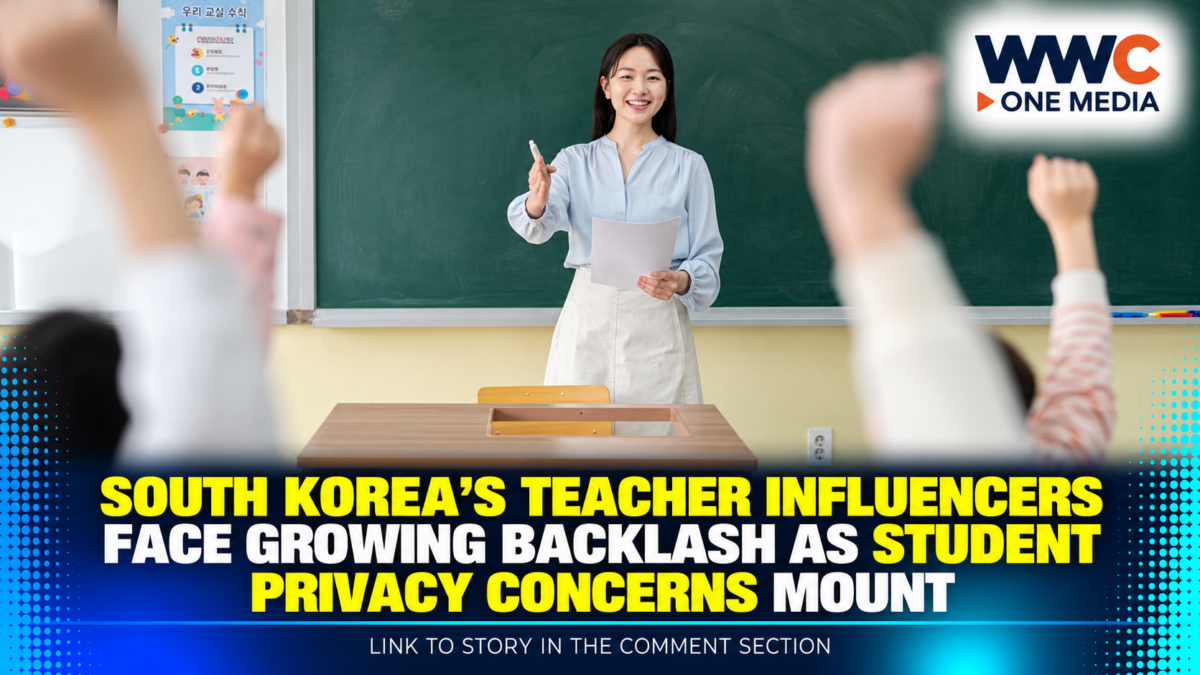
South Korea’s booming teacher-influencer culture is facing increased scrutiny as concerns grow over classroom filming, student privacy, and the use of school environments to build personal social media brands.
Known locally as “Ssaemstagram,” a blend of the Korean word for teacher and Instagram, the trend has evolved from sharing educational tips into a broader form of online entertainment featuring teachers’ routines, fashion, dance videos, school meals, and everyday school life.
While the content attracts large audiences, critics warn that the growing emphasis on personal branding could blur the line between professional teaching responsibilities and social media ambitions—particularly when students’ faces or personal information appear online without their consent.
Millions of Views, Thousands of Approvals
The popularity of teacher-created content is evident in its online reach. One South Korean elementary school teacher known for dancing has attracted nearly 100,000 YouTube subscribers, while an Instagram Reel featuring the teacher and colleagues dancing to a K-pop song in a school hallway reportedly surpassed 9 million views.
The trend has helped establish teachers as recognizable online personalities, with some content extending far beyond classroom instruction.
However, the rapid expansion of teacher-led social media activities has prompted questions about whether schools are increasingly being used as filming locations for personal channels.
According to figures from South Korea’s Ministry of Education submitted to lawmaker Kang Kyung-sook, approvals for teachers’ outside activities involving personal media rose from 891 in 2021 to 1,374 in 2025—a 54.2% increase over four years.
The number reached 1,007 in 2022, climbed to 1,114 in 2023, and peaked at 1,523 in 2024 before declining the following year.
These figures reflect approved activities, rather than the total number of teachers creating content or the number of accounts operating without authorization.
Classroom Filming Raises Questions About Professional Boundaries
One of the central concerns involves videos recorded during working hours.
Some teacher-influencer videos feature educators speaking in front of classroom blackboards or capturing school-related activities before editing the footage for online publication.
According to the report, filming material for personal social media accounts during working hours is, in principle, a violation of the applicable rules—even when editing and uploading take place after school.
The issue has raised questions about how teachers should balance their professional responsibilities with their growing presence on digital platforms.
Supporters of educational content creation argue that social media can help teachers share effective teaching methods, communicate with parents, and make learning more accessible. Critics, however, worry that the pursuit of views and followers could distract from classroom responsibilities.
Student Privacy Becomes a Major Flashpoint
The most sensitive issue is the potential exposure of students.
The report cited cases in which teachers received warnings after students’ faces or personal information appeared in social media content without consent.
For students and their families, the concern goes beyond whether a video is entertaining or educational. Images and identifying information shared online can reach audiences far beyond the original school community.
The issue also raises questions about consent, particularly when students are filmed by adults responsible for teaching and supervising them.
The Ministry of Education received 22 complaints concerning teachers’ social media use between 2022 and 2025, excluding cases transferred to local education offices.
The figures highlight the challenges facing education authorities as social media becomes an increasingly visible part of teachers’ professional and personal lives.
Sponsored Posts and Monetization Add to the Controversy
Privacy is not the only concern. Commercial activities have also prompted disciplinary action.
Eight teachers were disciplined for improper personal-media activities between 2022 and 2025, according to the report. Six cases involved violations of restrictions on profit-making activities or outside employment, including social media advertisements and sponsored product promotions.
Reported examples included teachers reviewing sponsored cosmetics and accepting advertising fees to promote restaurants through Instagram Reels.
Under South Korea’s State Public Officials Act, revenue-generating or profit-making social media activities by teachers can require approval for concurrent employment.
The cases have intensified scrutiny of how educators use their online influence and whether existing rules adequately address the business opportunities created by large digital audiences.
South Korea Faces Calls for Stronger Oversight
Despite the concerns, regulating teacher influencers presents practical challenges because social media accounts are also part of individuals’ private lives.
Education authorities cannot necessarily monitor every account or easily identify all activities that may require approval.
Lawmaker Kang Kyung-sook has called for the Ministry of Education to review whether existing guidelines are being followed and strengthen oversight to prevent filming during working hours and violations of students’ image rights.
The challenge is finding a balance between allowing teachers to communicate and share useful educational material online while protecting students who may not want their school experiences turned into public content.
The Bigger Question: Who Benefits When Classrooms Go Viral?
South Korea’s teacher-influencer phenomenon reflects a broader shift in how professionals use social media to build audiences, share expertise, and generate income.
Educational videos can offer genuine value, helping parents understand school life and giving fellow educators new ideas. But when classroom footage becomes part of a personal brand, students’ privacy and the purpose of the school environment become harder to separate from online entertainment.
The growing debate is therefore not simply about whether teachers should use Instagram or YouTube. It is about what safeguards should apply when a professional’s online popularity intersects with children’s lives.
As teacher-created content continues to attract attention, South Korea faces a difficult question: Can educators build successful online platforms without compromising students’ privacy and trust?
The answer may depend on whether existing rules can keep pace with the increasingly commercial and public nature of classroom-related content.
WWC ONE MEDIA G,A