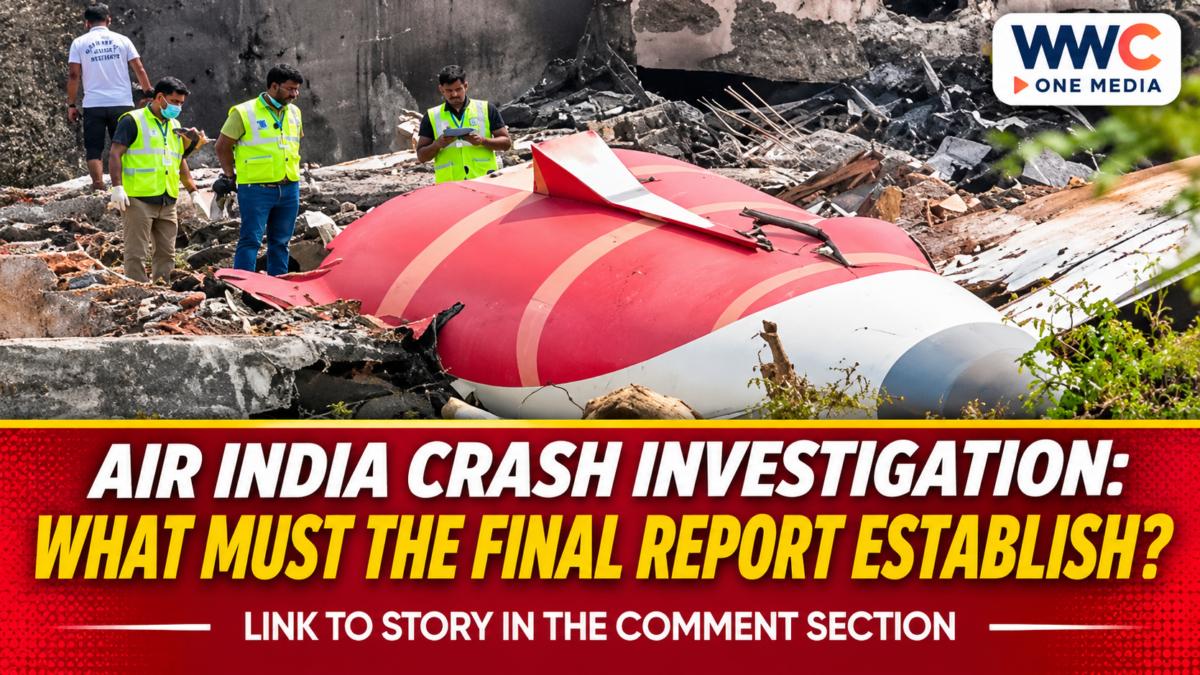
NEW DELHI, India — Nov. 21, 2026. India’s Aircraft Accident Investigation Bureau (AAIB) has not published a final investigation report on the June 12, 2025 crash of Air India Flight AI-171 in the official records reviewed for this article. In its June 12, 2026 progress statement, the bureau said it was examining technical, operational, organisational and human factors and would release conclusions after completing investigative work and international consultations.
The distinction between a nearing conclusion and a published finding matters. A final safety report is the document that can set out the investigation’s evidence-based conclusions and recommendations. Until that report is available, neither an early factual account nor commentary about the inquiry’s progress should be mistaken for a final determination of cause.
Air India Crash Investigation: The Official Timeline
The Air India Boeing 787-8 was operating from Ahmedabad to London when it crashed shortly after take-off from Sardar Vallabhbhai Patel International Airport on June 12, 2025. AAIB opened a formal investigation, and India’s Ministry of Civil Aviation announced on June 26, 2025 that an investigation team had been constituted on June 13.
The government said the team included technical specialists and representatives of the United States National Transportation Safety Board, participating as representatives of the state of design and manufacture. That international participation is part of an aviation accident investigation, not evidence for any particular explanation of the crash.
AAIB released a preliminary report on July 12, 2025. A year after the accident, on June 12, 2026, it issued an interim statement outlining the work in progress. That statement described extensive examination of aircraft systems, engines, flight recorder data, maintenance and operational records. It did not declare an established probable cause.
What Investigators Have Examined
The June 2025 ministry release detailed the recovery and handling of aircraft recording equipment. It said recorders were recovered at the accident site on June 13 and June 16, transferred to Delhi on June 24 and subjected to data extraction. Investigators accessed and downloaded data from a memory module on June 25.
Flight data and cockpit audio can help establish how an aircraft and its crew responded during an event. But the existence of recordings does not make every recorded action self-explanatory. Investigators must interpret them alongside equipment examinations, maintenance history and the operating environment.
AAIB’s anniversary statement said the team was conducting additional specialist evaluations where necessary. This is why individual observations from a preliminary report should not be used to declare a person’s responsibility or a mechanical defect before the complete analysis is released.
WWC’s separate coverage of an Air India flight’s temporary altitude loss and subsequent investigation involves another flight and another event. The cases must not be conflated merely because they involve the same airline.
Why the Final Report Is Different
AAIB’s February 12, 2026 clarification directly rejected suggestions that its investigation had already been finalised. The agency said the preliminary material represented information available at the time and that conclusions and safety recommendations would follow when the complete investigation was finished.
Its June statement added another essential requirement: international review and consultation under International Civil Aviation Organization Annex 13. This is a defined stage of the accident-investigation process, not an automatic sign that a draft’s findings have already been approved for publication.
AAIB describes its mandate as preventing future accidents, rather than allocating legal blame. That distinction is important for families seeking answers, airlines considering safety changes and readers encountering competing public interpretations. A safety finding may explain what conditions contributed to an accident without itself deciding civil or criminal liability.
WWC’s report on the Copa–UPS aircraft contact during taxiing offers a separate example of why a preliminary incident description must be distinguished from the eventual investigative conclusion.
What the Public Record Does Not Yet Settle
Recent accounts of a Supreme Court hearing describe the government as saying the Air India investigation was close to completion. However, an opened court order or official transcript confirming the precise statement was not available for this article. The timing of the expected final report therefore cannot be certified from the primary records examined.
The same limitation applies to proposed causes. The AAIB material reviewed here does not establish that any named crew member deliberately acted, that a particular component failed, or that one technical issue alone explains the accident. Such claims would require the final findings and, where relevant, supporting technical documentation.
There is also no basis in the opened records to specify a confirmed publication date. An anticipated draft, a consultation process and public release are different milestones. Families and aviation operators deserve those differences to be reported accurately.
WWC has similarly distinguished confirmed agency actions from unresolved technical questions in its coverage of a US aviation network disruption and its unresolved cause. The US incident was unrelated, and it does not provide evidence about AI-171.
What This Could Mean for Aviation Safety
Analysis: The eventual report’s most important contribution will be a coherent explanation linking verified evidence to safety recommendations. In complex accidents, analysing separate facts in isolation can create a persuasive but incomplete narrative. A credible report should make clear what is known, what remains uncertain and how any proposed preventive action follows from the findings.
Regulators and airlines may then assess whether relevant maintenance practices, equipment checks, training or operating procedures require changes. That list describes possible categories of safety response; it is not a prediction that AAIB will find problems in any one category.
Public trust also depends on clear communication. A statement that investigators are making progress is useful, but it cannot replace a published document that readers can examine and authorities can act upon.
What Happens Next
The next decisive milestone is publication of AAIB’s final AI-171 investigation report, following completion of technical work and the applicable international review. Its findings and recommendations—not unverified accounts of court proceedings—should anchor WWC’s next substantive update.
Until then, the reliable official position is that the preliminary report was issued in July 2025 and the bureau’s June 2026 interim statement described an ongoing evidence-based investigation. Neither record supplies a final cause.
Frequently Asked Questions
Has India published the final AI-171 crash report?
No final report was located in the official records reviewed as of Nov. 21, 2026. The June 2026 AAIB statement said publication would follow completion of the investigation and international consultations.
When did Flight AI-171 crash?
The Boeing 787-8 crashed shortly after departing Ahmedabad for London on June 12, 2025.
What has AAIB examined?
Its official statements identify flight recorder data, aircraft systems, engine components, maintenance and operational records, along with technical and human factors.
Does the preliminary report establish the cause?
No. AAIB said preliminary material was factual and that final conclusions and safety recommendations would come after the full investigation.