
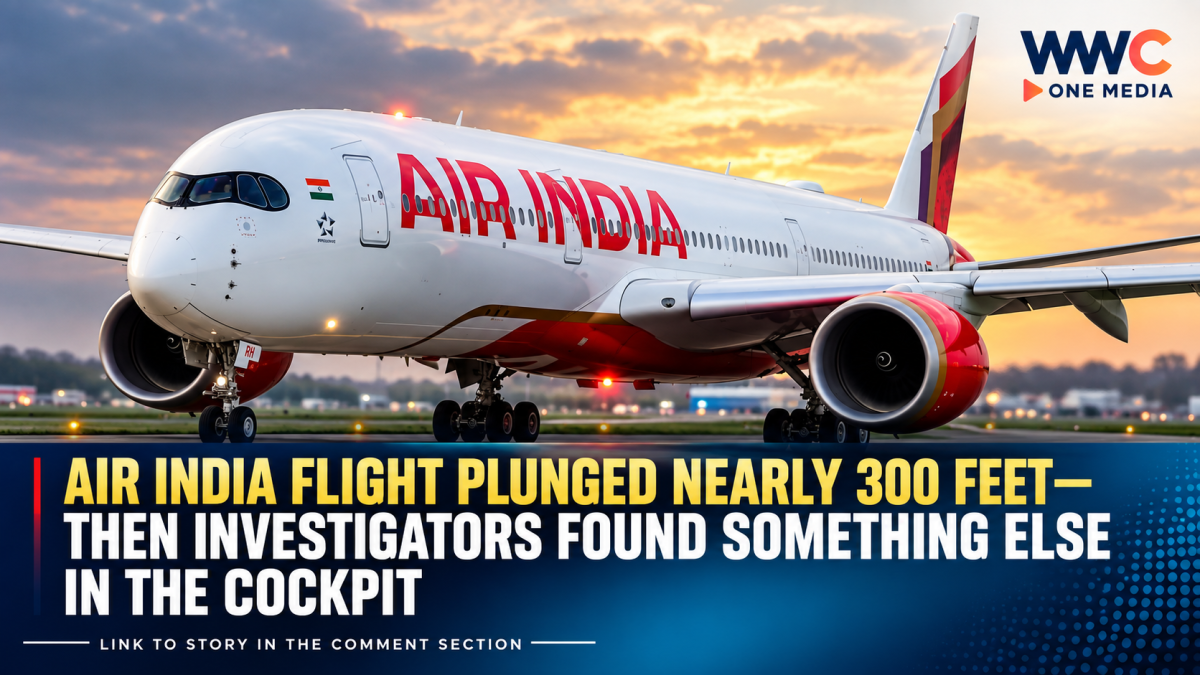
NEW DELHI — A preliminary investigation into an Air India flight that suddenly lost altitude over the region between Phuket and New Delhi has uncovered two major areas of concern: a brief failure involving all three of the aircraft’s hydraulic systems and a confirmatory drug test involving the pilot-in-command that was classified as “non-negative” for a psychoactive substance.
The findings come from India’s Aircraft Accident Investigation Bureau (AAIB), which is still investigating the August 4 incident involving Air India flight AI2379, an Airbus A320 carrying 137 passengers and eight crew members. The aircraft eventually stabilised and landed safely in Delhi, but 24 people were injured during the sudden altitude upset.
What happened in the air?
According to the preliminary report, the aircraft was cruising at Flight Level 360, or approximately 36,000 feet, when its flight-control system detected a loss of pressure in the green hydraulic system.
Within seconds, the aircraft also detected the loss of pressure in its blue and yellow hydraulic systems, temporarily leaving all three hydraulic systems affected.
The autopilot disengaged, a continuous warning sounded and a stall warning was triggered for about two seconds.
The aircraft then experienced a significant altitude upset. Investigators said it initially climbed approximately 372 feet before descending about 292 feet from its assigned cruising level. The hydraulic systems subsequently recovered, allowing the flight-control surfaces to return to normal operation.
The co-pilot, who was flying the aircraft at the time, initially responded to the situation before the captain took over the controls.
The flight ultimately continued to New Delhi and landed safely.
Why the hydraulic failure matters
The Airbus A320 uses three independent hydraulic systems—green, blue and yellow—to provide redundancy for critical flight-control functions.
The simultaneous temporary loss of all three systems is therefore a significant finding and has become a major focus of the investigation.
Indian Express reported that the aircraft had previously been operating under a Minimum Equipment List (MEL) provision connected to an issue involving its Power Transfer Unit. Dispatching an aircraft under an MEL is not automatically a safety violation; it is a regulated procedure allowing an aircraft to operate with specified equipment inoperative under defined conditions. Investigators are nevertheless examining whether the aircraft’s previous technical issues have any connection to the August 4 event.
The preliminary report has not yet identified a definitive cause for the incident.
Pilot’s confirmatory test raises another concern
The investigation has also drawn attention to the pilot-in-command’s drug screening.
The AAIB preliminary report states that the captain was found “non-negative” for a psychoactive substance in the confirmatory test and described the confirmation of psychoactive-substance use as a serious concern. The bureau recommended that India’s aviation regulator, the Directorate General of Civil Aviation (DGCA), take appropriate action to prevent abuse of psychoactive substances in aviation.
Earlier reporting had described the captain’s initial screening as non-negative and said further laboratory testing was required. AP reported at the time that both pilots had been removed from flying duties while the investigation proceeded.
Indian Express subsequently reported, citing sources, that the confirmatory result was associated with marijuana. However, the AAIB’s preliminary finding publicly characterises the result as involving a psychoactive substance rather than stating that the drug finding caused the flight incident.
That distinction is crucial: there is currently no finding that the captain was impaired while operating the aircraft, nor has investigators established that the drug-test result caused the altitude upset.
24 people were injured
The sudden movement occurred while the aircraft’s seat-belt signs were reportedly off, leaving some passengers and cabin crew vulnerable to being thrown around the cabin.
According to the preliminary findings, 20 passengers and four cabin crew members received medical attention. Seventeen of the 24 injured people were hospitalised, according to Indian Express’s reporting on the investigation.
The aircraft also sustained damage inside the cabin, including damage to overhead panels, passenger-service units, overhead-bin doors and other fittings.
Air India orders wider pilot drug screening
The incident also prompted Air India to take additional action.
In August, the airline ordered a one-time drug screening of all pilots across the Air India group, covering roughly 5,000 pilots from Air India and Air India Express, according to Indian Express and ThePrint. The move went beyond the existing random testing requirements.
Under India’s existing DGCA framework, random psychoactive-substance testing applies to safety-sensitive aviation personnel, with flight crew among the groups covered. Indian Express reported that the rules include testing for substances including cannabis, cocaine, amphetamine-type stimulants, opiates, barbiturates and benzodiazepines.
Investigators are still looking for the full answer
The investigation is being led by India’s AAIB, with Airbus and France’s Bureau of Enquiry and Analysis for Civil Aviation Safety (BEA) assisting the inquiry. Investigators are examining aircraft systems, flight data, maintenance information, operational factors and the conduct and fitness of the flight crew.
India’s Ministry of Civil Aviation has confirmed that AI2379 experienced a sudden loss of approximately 300 feet during cruise before stabilising and landing safely.
For now, the preliminary report points to a rare and temporary triple-hydraulic-system failure alongside a confirmed non-negative psychoactive-substance test involving the pilot-in-command—but it does not establish that either finding, by itself, was the definitive cause of the incident.
The final investigation is expected to provide a clearer picture of what happened during those critical seconds in the air.

Leave a Reply