
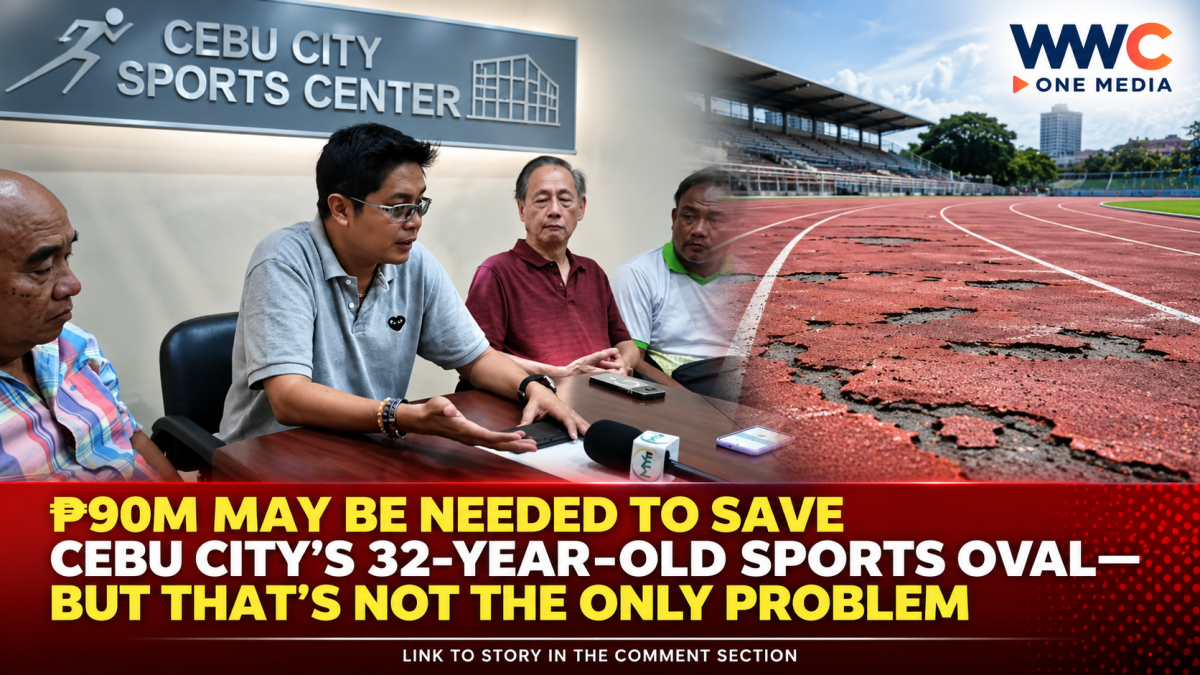
CEBU CITY, Philippines — The Cebu City Sports Center (CCSC) could be facing another multimillion-peso rehabilitation as officials consider spending between ₱70 million and ₱90 million to restore its aging rubberized track oval.
The proposed funding comes as the facility’s track continues to show signs of deterioration, raising fresh questions about its long-term durability, maintenance and previous repair work.
The oval has been in use for roughly 32 years, and officials now say a more comprehensive rehabilitation may be necessary rather than another short-term repair.
A decades-old facility facing another major overhaul
The CCSC has served as one of Cebu City’s principal public sports facilities for decades, hosting athletes, students, runners and major sporting events.
But age and heavy use have taken their toll.
The latest proposal for a ₱70-million to ₱90-million rehabilitation reflects the scale of work officials believe may now be necessary to bring the oval back to an acceptable standard.
The issue is particularly significant because the track had already undergone rehabilitation in preparation for the 2024 Palarong Pambansa, which Cebu City hosted.
That earlier project became controversial because the rehabilitation encountered delays during preparations for the national student-athlete competition. In May 2024, then-acting Mayor Raymond Alvin Garcia inspected the facility and questioned delays involving installation of the rubberized track.
The bigger concern: Why did the track deteriorate again?
The proposed new spending comes after the track reportedly developed cracks, bulges and peeling portions less than a year after its previous rehabilitation.
Cebu Daily News previously reported visible deterioration on the rubberized surface, while The Freeman also raised questions over whether the problem could involve the quality of materials, maintenance or how the facility was being used.
The issue therefore goes beyond simply asking how much another rehabilitation will cost.
The more important question for taxpayers and athletes may be:
Why did a recently rehabilitated track require attention again so soon?
COA previously flagged the rehabilitation process
The concerns surrounding the oval also gained another layer when the Commission on Audit (COA) flagged irregularities connected to the previous rehabilitation project.
According to SunStar Cebu’s report on the 2024 audit findings, civil works reportedly started before the formal contract was signed and before a notice to proceed was issued.
Auditors also raised concerns involving the contractor’s licensing and eligibility documents, as well as delays in the project.
The situation became even more troubling when portions of the track were again photographed with visible damage in July 2025, months after the previous repair work.
SunStar reported that the track had been repaired before December 2024 after sustaining damage during the 2024 Palarong Pambansa.
From Palaro showcase to another repair bill
The CCSC rehabilitation was closely tied to Cebu City’s preparations to host the 2024 Palarong Pambansa.
The city had allocated ₱400 million for hosting the national sporting event, while the track oval was among the important facilities being prepared for the competition.
The track’s condition became a major issue during those preparations.
In fact, the facility’s history during the Palaro period included another unusual controversy: officials later acknowledged concerns surrounding the track’s measurement, with a DepEd official saying some Palaro officials had known about the oval’s shortened measurement before the event.
That history makes the latest proposed rehabilitation particularly significant.
A ₱90-million question for Cebu
If approved, a rehabilitation budget approaching ₱90 million would represent a substantial public investment in a facility that has already undergone major work.
For Cebu’s athletes and ordinary residents who use the oval, the priority is obvious: they need a safe, reliable and properly maintained track.
But for city officials, the challenge is broader.
A new rehabilitation should ideally address not only the visible damage but also the underlying reasons the surface deteriorated, including construction quality, specifications, maintenance practices, usage and procurement safeguards.
Otherwise, Cebu could find itself caught in a cycle of repair, deterioration and another expensive repair.
For taxpayers, the real measure of the proposed ₱70-million to ₱90-million investment will not simply be whether the oval looks new after construction.
It will be whether the track can stay usable for years without repeatedly returning to the city’s rehabilitation budget.

Leave a Reply